Persian Culture & Iranian Traditions
A language spoken by 110 million people across three countries, a 3,000-year-old new-year festival celebrated by 300 million from the Balkans to Xinjiang, a cuisine of saffron and pomegranate, and the most poetry-saturated culture on earth.
Persian — One Tongue, Three Names, Three States

Persian (called Fārsī in Iran, Darī in Afghanistan, and Tājīkī in Tajikistan) is the official language of three countries and the historical lingua franca of a region stretching from the Bosphorus to Bengal. Spoken by roughly 110 million people, it belongs to the Western Iranian branch of the Indo-European family and is a sister language of Kurdish, Pashto, Balochi and Ossetian.
The unbroken literary tradition runs from the Achaemenid Old Persian inscriptions of the sixth century BCE, through the Middle Persian (Pahlavi) Zoroastrian and Manichaean texts of the Sasanian era, to the New Persian that emerged in the ninth century — written in a modified Arabic script and enriched, but never structurally altered, by Arabic vocabulary. The grammar of Hafez (fourteenth century) is, with minor exceptions, the grammar of any educated speaker today.
For a thousand years Persian was the language of high administration and refined literature from Anatolia to the Bay of Bengal. The Mughal court at Delhi used Persian for official business until 1837. The Ottoman elite read Persian poetry as a matter of course; the great Indian poet Mirza Ghalib considered his Persian work superior to his Urdu.

Zoroastrianism, Islam, and the Religions of Iran


The prophet Zoroaster (Zarathustra) preached on the eastern Iranian plateau sometime between 1500 and 1000 BCE — making Zoroastrianism perhaps the oldest still-living revealed religion. Its theology of cosmic dualism between Ahura Mazdā (the wise lord of light) and Angra Mainyu (the destructive spirit), its ethics summarized as "good thoughts, good words, good deeds," and its eschatology of bodily resurrection and final judgment exerted a deep influence on later Judaism, Christianity and Islam. Roughly 60,000 Zoroastrians still live in Iran, with larger communities of Parsis in India.
Today, perhaps 90% of Iranians are Twelver Shi'i Muslims — a result of Shah Ismail I's decision in 1501 to make Shi'ism the state religion of the Safavid Empire. Sunni Islam is the majority among Iran's Kurdish, Baloch, and Turkmen populations. Recognized minorities — Christians (mostly Armenian and Assyrian), Jews, and Zoroastrians — hold reserved seats in the Majles. The Bahá'í Faith, founded in nineteenth-century Iran by Bahá'u'lláh, is the largest religious minority but is not legally recognized.
"The children of Adam are limbs of one body / Created from a single essence. / When one limb suffers misfortune, / The others cannot remain at peace."
(These verses are inscribed at the entrance to the United Nations Hall of Nations in New York.)
Nowruz — A 3,000-Year-Old New Year
Nowruz ("New Day"), celebrated at the precise moment of the spring equinox, is the Iranian new year — older than Islam, older than Christianity, older than the Roman calendar. Its observance was inscribed by UNESCO on the Representative List of the Intangible Cultural Heritage of Humanity in 2009; the United Nations General Assembly recognized 21 March as International Nowruz Day in 2010. Roughly 300 million people from the Balkans, Turkey, the Caucasus, the Middle East, Central Asia and Xinjiang celebrate it in some form.
The centerpiece of every Iranian household at Nowruz is the Haft-Sin ("Seven S's") table, displaying seven symbolic items whose Persian names begin with the letter sīn: sabzeh (sprouted wheat — rebirth), samanu (wheat-pudding — affluence), senjed (oleaster fruit — love), sīr (garlic — health), sīb (apple — beauty), somāq (sumac — sunrise), and serkeh (vinegar — patience). A mirror, painted eggs, a goldfish, and a book of poetry — usually Hafez — complete the table.

Other major observances include Chaharshanbe Suri (the Wednesday-fire festival, with leaping over bonfires on the last Tuesday night of the year), Sizdah Bedar (the thirteenth day of Nowruz, spent outdoors), Yaldā Night (the winter solstice, when families read Hafez and eat pomegranates and watermelons through the longest night of the year), and the Shi'i religious calendar of Ramadan, Muharram (commemorating the martyrdom of Imam Husayn at Karbala in 680 CE), and the pilgrimage festivals.
Saffron, Pomegranate, Rice

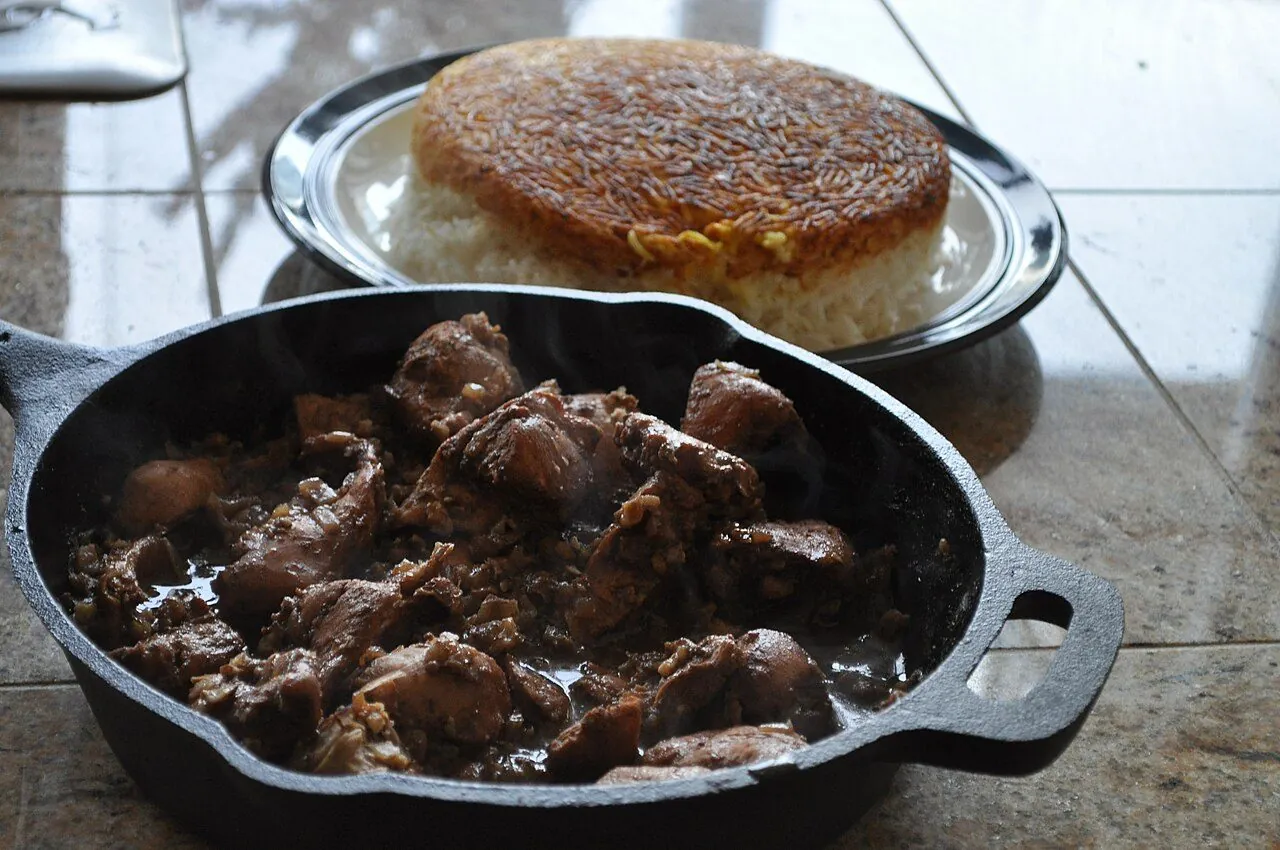
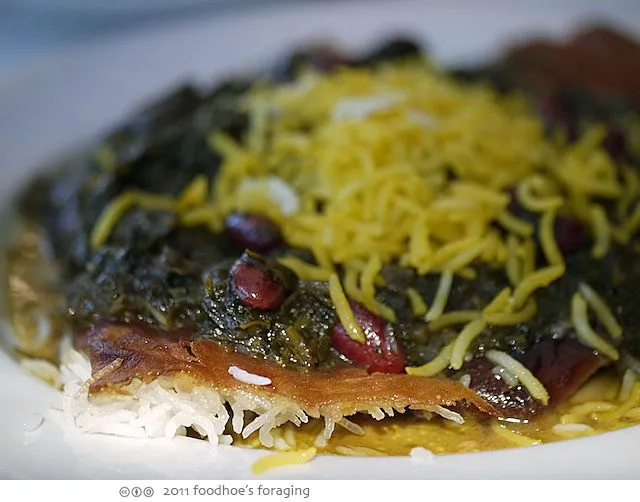
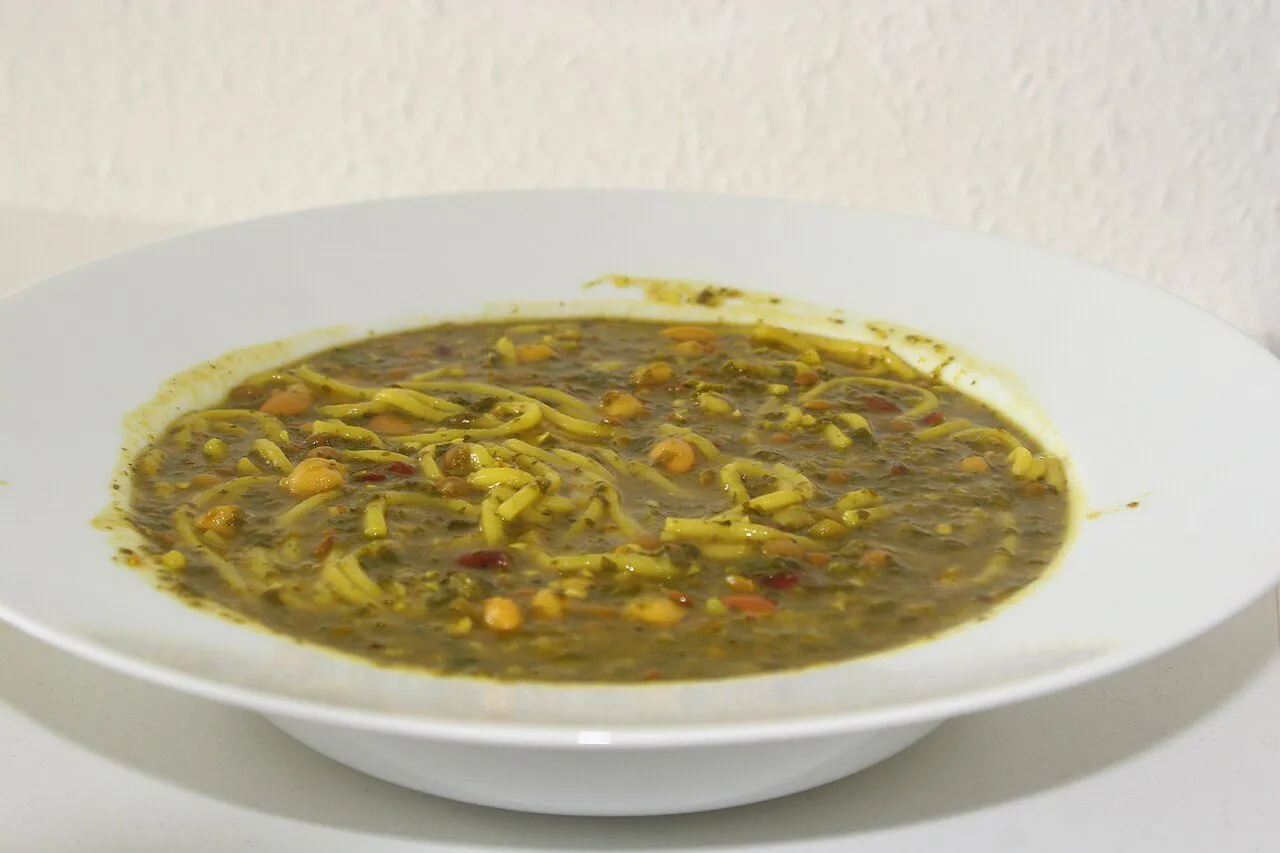
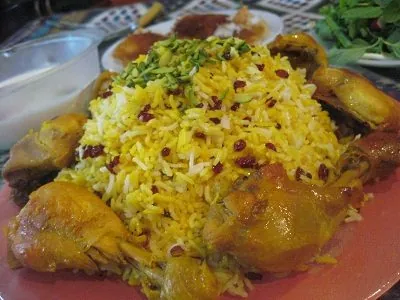
Iranian cuisine is built on a foundation of long-grain basmati-style rice (steamed to a buttery tahdig crust at the bottom of the pot), slow-simmered stews (khoresh), grilled meats (kebāb), and a herb-garden's worth of fresh greens at every meal. Sweet-and-sour combinations — pomegranate molasses with walnut in fesenjān, dried lime with split peas in gheymeh, barberries with chicken in zereshk-polo — are the signature flavor profile.
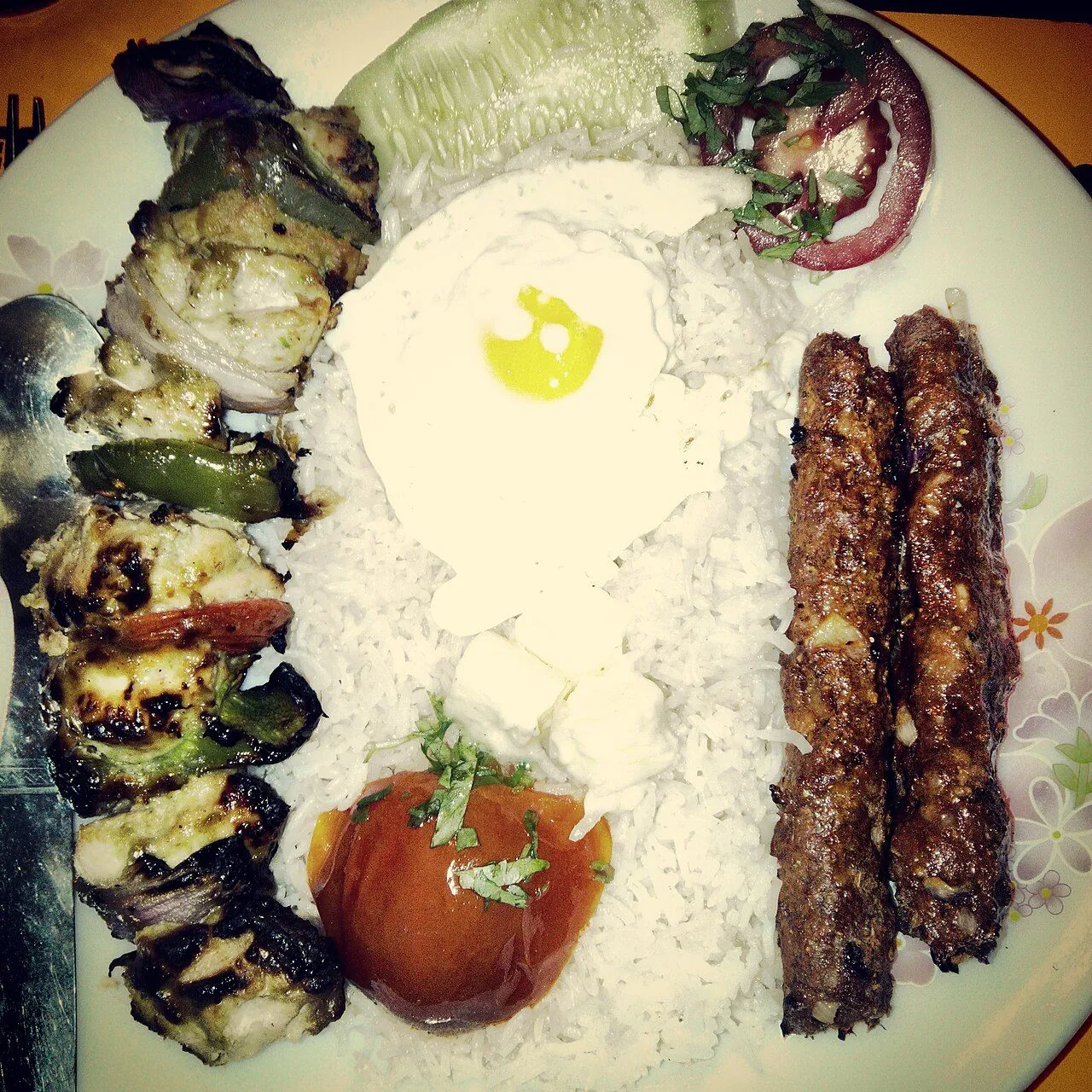
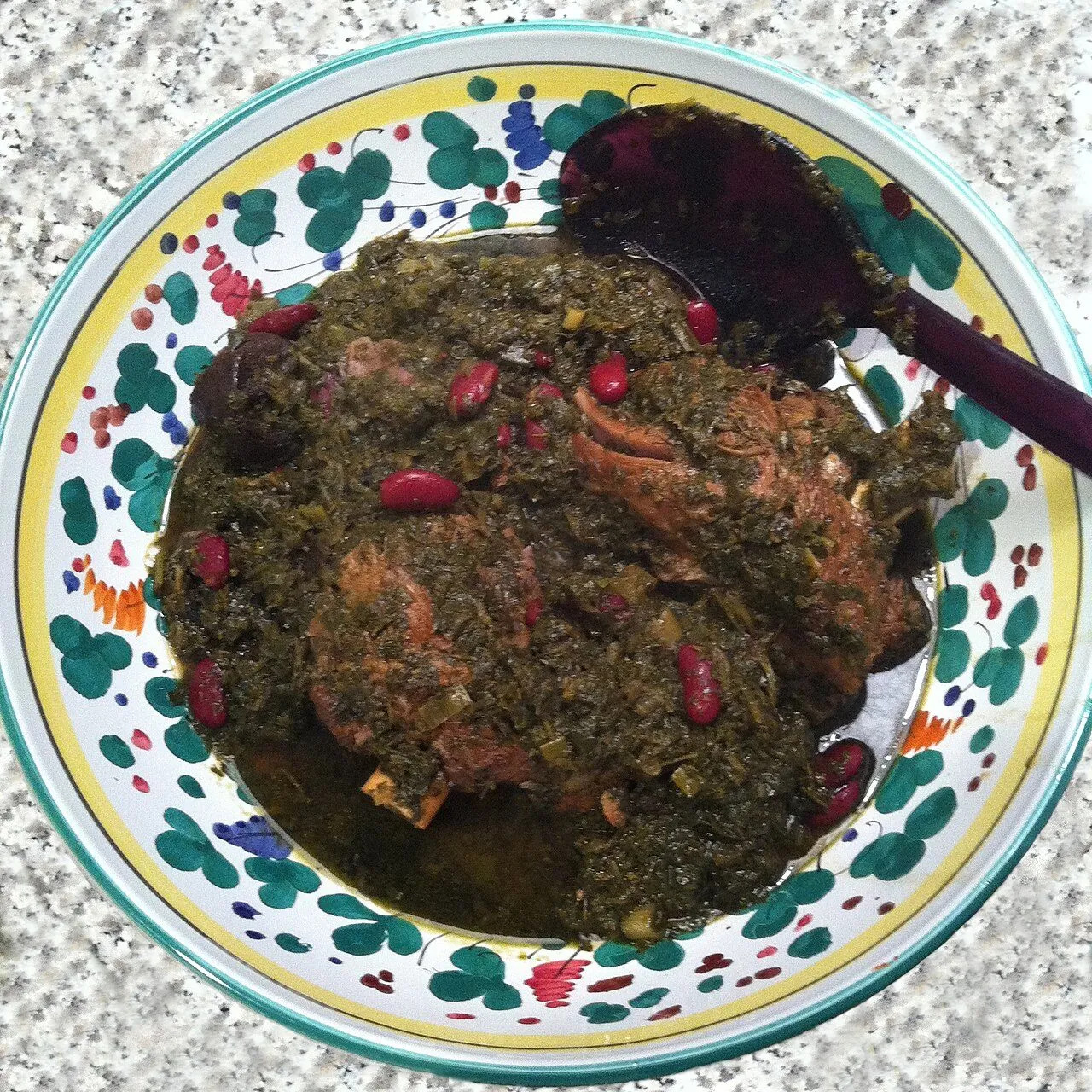
Iran produces roughly 90% of the world's saffron, harvested by hand from the autumn-blooming Crocus sativus in Khorasan. Pistachios, walnuts, pomegranates, quinces, and sour cherries are all native to or first cultivated in Iran. The dish chelo kabāb — saffron rice with grilled lamb or chicken — is the unofficial national dish; ghormeh sabzī (a stew of herbs, kidney beans and lamb with dried lime) is the second.
No meal ends without tea — black tea, brewed strong in a samovar and drunk through a sugar cube held in the teeth — and the offering of fresh fruit and pastries (sohān, bāmieh, gaz, zoolbia). The teahouse (chāykhāneh) and the long meal among extended family are the two indispensable institutions of everyday Iranian sociability.
The Most Quoted Country on Earth
No culture has integrated poetry into daily life more deeply than Iran. Ferdowsi, Saʿdi, Hafez, Rumi, Khayyam, and Nezāmī are quoted on television, in parliament, in shop windows, in WhatsApp messages, and over family dinners. Hafez's Dīvān sits beside the Qur'an on the Haft-Sin table, and the practice of fāl-e Hafez — opening the book at random for guidance — remains universal.
Saʿdi's Golestān (1258) was for centuries the standard Persian textbook from Sarajevo to Calcutta. Rumi's Masnavī-ye Maʿnavī, in 25,000 couplets, is sometimes called "the Persian Qur'an." Ferdowsi's Shahnameh, at 50,000 couplets the longest epic ever written by a single author, is the encyclopedia of Iranian myth and self-image.

Taʿārof — The Choreography of Politeness
The single Iranian social ritual most baffling to outsiders is taʿārof: a formal exchange of offer, refusal, and counter-offer that governs everything from paying the taxi driver (who will insist three times that the ride is free) to accepting a second helping of food. It is not insincerity but a shared grammar of mutual deference — a way of acknowledging that the other person matters more than the transaction. Anthropologist William Beeman has called it "the most elaborate and explicit verbal art of politeness in the modern world."
Closely linked are tārof-shekan (the friend permitted to "break" taʿārof on your behalf), the elevated pronoun shomā for elders and strangers, and the universal blessing qorbānat beravam ("may I be sacrificed for you") spoken to children and beloveds.
The Zurkhāneh — World's Oldest Gymnasium
The zurkhāneh ("house of strength") is a sunken octagonal pit where Iranian wrestlers train to the rhythm of a single drummer (morshed) reciting verses from the Shahnameh. The combined system of varzesh-e bāstānī — calisthenics with wooden clubs (mīl), iron bows (kabbādeh) and a heavy shield (sang) — is documented continuously from the Parthian era, making it perhaps the world's oldest surviving form of athletic training. UNESCO inscribed the ritual in 2010. Iranian freestyle wrestling has won more Olympic medals (45 as of 2024) than any sport other than weightlifting in the country's history.
On the cultural margins, polo — called chogān in Persian — was played on the Naqsh-e Jahan square at Isfahan in 1601; the original stone goalposts can still be seen at the square's two ends.
ʿErfān — The Sufi Inheritance

The mystical tradition of ʿerfān (Persian Sufism) gave the world Rumi, ʿAṭṭār's Conference of the Birds, Suhrawardī's "Illuminationist" philosophy and the antinomian poems of Shams of Tabriz. Major orders — the Naqshbandiyya, Niʿmatullāhiyya, Khāksāriyya and (in the Sunni regions) Qādiriyya — survive today both inside Iran and across the diaspora. The whirling samāʿ ceremony, popularized by Rumi's son in Konya, has its theoretical foundation in Iranian discussions of music as a vehicle for the unveiling of God.
Two Calendars, One Country
Iran is one of very few countries whose civil calendar is neither Gregorian nor Hijri-lunar. The Solar Hijri calendar, officially adopted in 1925 but based on the Jalali reform of 1079, begins each year at the spring equinox and computes leap years by direct astronomical observation from the meridian of Tehran. As a result it is the most accurate calendar in current use — drifting by less than one day in five million years, against the Gregorian calendar's one day in 3,300. Iranian dates run roughly 621 years behind the Common Era: 21 March 2026 CE is 1 Farvardīn 1405.
Iranians Abroad — A Second Iran
An estimated 6 to 8 million people of Iranian birth or descent live outside Iran, concentrated in Los Angeles ("Tehrangeles"), Toronto, London, Dubai, Stockholm and Berlin. The Iranian-American community has the highest median household income of any immigrant group in the United States according to the 2020 American Community Survey, and the highest share of graduate degrees of any community measured. Iranian-born émigrés include Pierre Omidyar (eBay), Anousheh Ansari (first female space tourist), Maryam Mirzakhani (the first woman to win the Fields Medal, 2014), Firoozeh Dumas, Marjane Satrapi (Persepolis), and the founders or early engineers of Uber, Dropbox, Tinder and Twitter.
The Iranian ceremonial calendar in pictures


A canonical Persian meal
Tea, not coffee
Black tea brewed in a samovar and drunk through a held sugar cube (qand pahlu) is the universal Iranian beverage.
Herbs at every plate
Sabzi khordan — a platter of fresh basil, mint, tarragon, radish and feta — is set out before every meal.
Sweet-and-sour
Pomegranate molasses, dried lime, barberry, sour grape and sumac give Persian cuisine its distinctive cool acidity.
Three rice methods
Chelo (steamed plain), polo (cooked with ingredients) and kateh (Caspian one-pot). Each has its own ceremony.
A pocket canon


References
- ↗ UNESCO — Nowruz
- ↗ Encyclopædia Iranica — Nowruz
- ↗ Encyclopædia Iranica — Persian Language
- ↗ Encyclopædia Iranica — Zoroastrianism
- ↗ Najmieh Batmanglij — Food of Life: Ancient Persian and Modern Iranian Cooking and Ceremonies
- ↗ Ehsan Yarshater — 'Iran' (Encyclopædia Iranica)
All imagery is sourced from Wikimedia Commons, public-domain museum collections (British Museum, Louvre, Metropolitan Museum of Art, National Museum of Iran), or UNESCO World Heritage records. No AI-generated images are used. Scholarly text is synthesized from Encyclopædia Iranica, the Cambridge History of Iran, and peer-reviewed publications.
Iranian culture FAQ
Related reading
Nowruz, Yalda, Mehregan, Sadeh, Tirgan — the ceremonial year.
Saffron, rice, kebab, stews, tea and sofreh — the Persian table.
Radif, dastgah, tar, setar, santur — the classical Persian tradition.
Ferdowsi, Hafez, Rumi, Saadi, Nizami, Khayyam — the masters of Persian verse.
Zoroastrianism, Mithraism, Manichaeism, Sufism, Bahá'í — historical heritage.
Miniature painting, calligraphy, carpet weaving and the decorative arts.