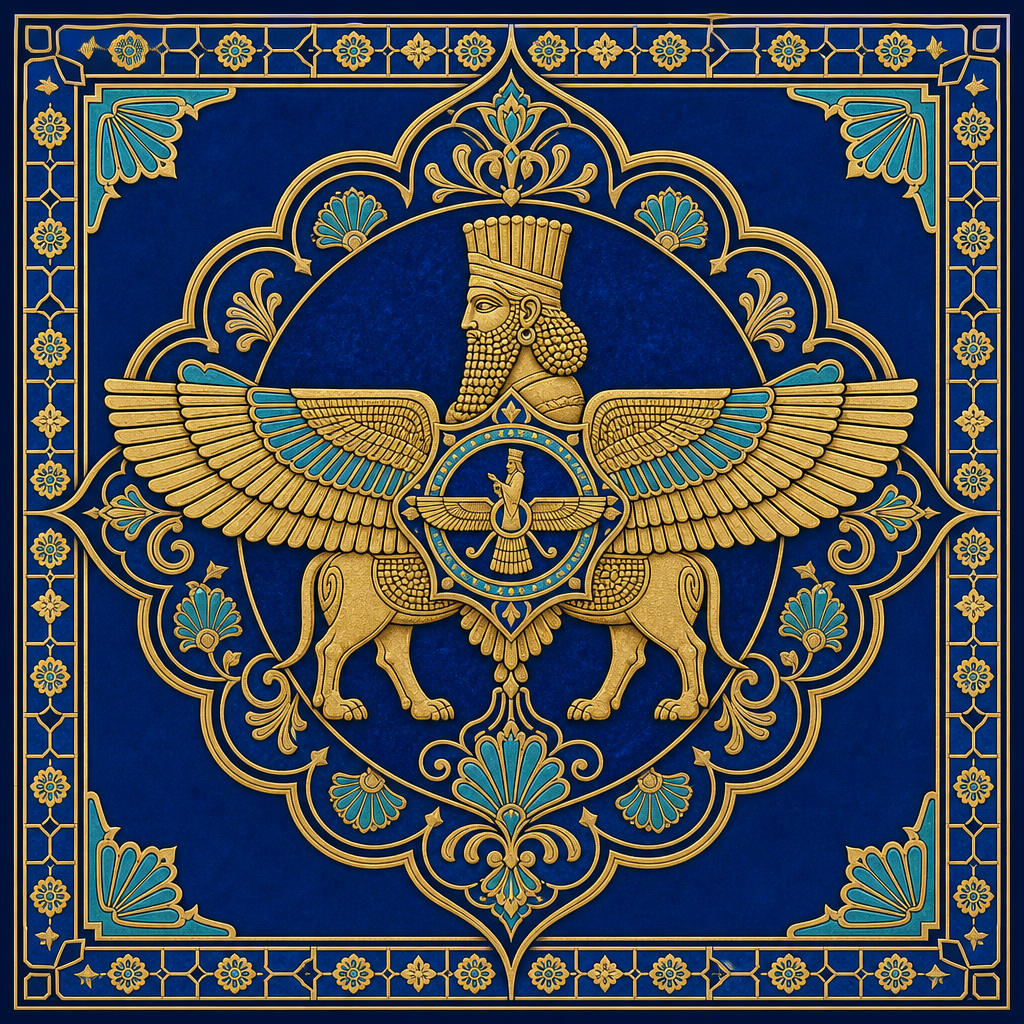
Attar of Nishapur and The Conference of the Birds
An Exploration of the Persian Sufi Masterpiece of Mystical Allegory
Delve into the life of Farid al-Din Attar, the 12th-century Persian mystic and poet from Nishapur. This article explores his enduring allegorical epic, The Conference of the Birds (Manṭiq-uṭ-Ṭayr), tracing its narrative, profound Sufi symbolism, and lasting impact on world literature and spirituality.
Key takeaways
- Farid al-Din Attar (c. 1145 – c. 1221) was a prominent Persian pharmacist, mystic, and poet from the city of Nishapur in Khurasan.
- His most famous work, *The Conference of the Birds*, is an allegorical epic poem of approximately 4,500 couplets written in the Persian language.
- The poem's central allegory involves the world's birds seeking the mythical Simorgh, representing the Sufi quest for divine realization (fanā').
- To reach their goal, the birds must traverse the Seven Valleys: Quest, Love, Understanding, Detachment, Unity, Bewilderment, and Annihilation.
- The story culminates with the thirty surviving birds realizing they themselves, collectively ('sī morgh' or 'thirty birds'), are the Simorgh they sought.
- Attar's mystical poetry profoundly influenced later Sufi writers, most notably Jalal al-Din Rumi, who considered Attar a spiritual master.

Farid al-Din Attar of Nishapur was a 12th-century Persian poet, theoretician of Sufism, and hagiographer whose work represents a pinnacle of Islamic mystical literature. His most celebrated masterpiece, *Manṭiq-uṭ-Ṭayr*, or *The Conference of the Birds*, is a vast and intricate allegorical poem that has captivated spiritual seekers and literary scholars for centuries. Composed in the *masnavi* form of rhyming couplets, the poem narrates the arduous journey of the world's birds to find their true king, the mythical Simorgh. This quest serves as a profound metaphor for the Sufi path (ṭarīqah), where the individual soul (nafs) undertakes a transformative journey of self-annihilation to achieve union with the Divine. Attar's genius lies in his ability to weave complex theological concepts into an accessible and moving narrative, filled with didactic anecdotes, parables, and piercing psychological insights that continue to resonate globally.
The Life of a Mystic Apothecary: Farid al-Din Attar
Abu Hamid bin Abu Bakr Ibrahim (c. 1145–c. 1221), better known by his pen-name Attar ('the perfumer' or 'apothecary'), was born in Nishapur, a thriving cultural and commercial center in the Khurasan province of medieval Persia (modern-day northeastern Iran). True to his name, he worked as a pharmacist, a profession that in his time combined medicine with the trade of spices and perfumes. His clinic was reportedly a successful enterprise, and it is here, amidst the worldly concerns of his patients, that Attar is said to have had his spiritual awakening. The most famous, though likely apocryphal, story of his conversion involves a wandering dervish who visited his shop and challenged his material attachment. The dervish lay down and died, shocking Attar into renouncing his worldly life to pursue the Sufi path. This narrative, while hagiographical, captures the essence of the Sufi ideal: the radical reorientation of one's life from the material to the spiritual.
Attar was an incredibly prolific writer. In addition to his poetic works, he authored a major prose hagiography, the *Tadhkirat al-Awliya* (Memorial of the Saints), a vital source for the lives and sayings of early Sufi mystics. His poetry includes several other long allegorical epics like the *Ilahi-nama* (The Book of God) and the *Musibat-nama* (The Book of Affliction). Across his works, Attar systematized the use of narrative anecdotes to illustrate mystical truths, a technique that his successor, Rumi, would later perfect. Tradition holds that Attar met the young Rumi as his family was fleeing the advancing Mongol armies, and that Attar gifted the boy a copy of one of his books, foreseeing his spiritual destiny. Like his conversion story, the historical accuracy of this meeting is debated, but it underscores the profound spiritual lineage connecting these two giants of Sufi thought. His life is said to have ended violently during the sack of Nishapur by the Mongols around 1221, an event that marked a tragic end to a golden era of Islamic civilization.
The Grand Allegory: Manṭiq-uṭ-Ṭayr (The Conference of the Birds)
The *Conference of the Birds* is structured as a frame story. The birds of the world, realizing they are without a monarch, assemble to deliberate. The wise Hoopoe (known as Hudhud in Islamic tradition, famous for its role as a messenger for King Solomon) steps forward to lead them. She announces that they do have a king—the magnificent and mysterious Simorgh, who lives far away on the cosmic mountain of Qaf. The Hoopoe urges the birds to undertake the perilous journey to his court. Initially enthusiastic, many birds soon offer excuses, each one representing a common human failing or attachment that prevents spiritual progress. The nightingale is too attached to his love for the rose, the parrot to his beautiful cage, the duck to the water, and the peacock to his pride in his own beauty. The Hoopoe patiently refutes each excuse with a series of insightful stories and parables, coaxing the birds to abandon their worldly attachments and begin the quest.
Thousands of birds begin the journey, but most perish or give up along the way, unable to endure the hardships of the path. This path consists of Seven Valleys, each an allegorical stage of spiritual development that strips the traveler of ego and illusion. The journey is one of attrition, a filtering process that tests the sincerity and resolve of the seekers. At the end of this harrowing pilgrimage, only thirty birds remain. Exhausted and stripped of their former selves, they finally reach the court of the Simorgh. Instead of a king, they are met by a lake in which they see their own reflection. A celestial voice explains the central mystery and the pun that lies at the heart of the poem.
The Perilous Journey: The Seven Valleys of the Soul
The core of *The Conference of the Birds* is the passage through the Seven Valleys, a conceptual map of the Sufi's internal transformation. Each valley represents a distinct spiritual station (*maqām*) and psychological state (*ḥāl*) that the seeker must experience and transcend. They form a progressive path from initial aspiration to the ultimate goal of *fanā'*, or annihilation of the self in God.
The Valleys of Stripping Away
- **1. The Valley of the Quest (Ṭalab):** This is the first step, where the seeker consciously renounces the world and its comforts. The bird must cast aside dogma, possessions, and ambition to begin the journey in earnest. It is a valley of yearning and active seeking, marked by a painful awareness of one's distance from the goal.
- **2. The Valley of Love (ʿIshq):** Here, reason is consumed by love. The seeker is driven by an overwhelming, all-consuming passion for the Divine Beloved. This love is not gentle but a fire that burns away all other concerns. Attar describes it as a state where the lover is willing to sacrifice everything, including reputation and life itself.
- **3. The Valley of Understanding (Maʿrifat):** After the fire of Love, the seeker attains direct, intuitive knowledge or gnosis. This is not intellectual learning but a mystical illumination that allows the soul to see the world in its true light. Each seeker's understanding is unique, reflecting their own capacity. Old certainties fall away, replaced by a deeper, more personal insight into the nature of reality.
- **4. The Valley of Detachment (Istighnāʾ):** Having gained understanding, the seeker must now become detached from it, and indeed from everything in creation. They realize the utter self-sufficiency of the Divine and the insignificance of all worldly and even spiritual phenomena. Desire for heaven and fear of hell vanish, replaced by a profound indifference to all things other than the Beloved.
The Valleys of Realization
- **5. The Valley of Unity (Tawḥīd):** In this valley, the seeker transcends the illusion of multiplicity and perceives the underlying Oneness of all existence. They see God's presence in everything and recognize that all apparent differences are but veils over a single Reality. The distinction between self and other begins to dissolve.
- **6. The Valley of Bewilderment (Ḥayrat):** Confronted with the dazzling majesty of the Divine Unity, the seeker is plunged into a state of awe, confusion, and wonder. They are dumbfounded, having lost all the knowledge and understanding they previously acquired. It is a state of painful yet beautiful disorientation, where the limited human intellect admits its incapacity before the infinite.
- **7. The Valley of Poverty and Annihilation (Faqr wa Fanāʾ):** This is the final valley, the ultimate goal of the journey. The seeker experiences true spiritual poverty (*faqr*), recognizing they possess nothing of their own. This leads to *fanā'*, the annihilation of the individual self, the ego, and the soul itself. The drop merges into the ocean. It is only by ceasing to exist as a separate entity that the bird can become part of the Simorgh.
| Valley (Persian Name) | English Meaning | Core Challenge for the Soul | Represented State |
|---|---|---|---|
| Ṭalab | Quest | Renouncing worldly attachments and ambitions. | Yearning and Aspiration |
| ʿIshq | Love | Abandoning reason for all-consuming passion. | Ecstatic Devotion |
| Maʿrifat | Understanding | Moving beyond dogma to intuitive, mystical knowledge. | Gnostic Insight |
| Istighnāʾ | Detachment | Letting go of desire for all things, worldly and otherworldly. | Spiritual Independence |
| Tawḥīd | Unity | Perceiving the Oneness behind all multiplicity. | Realization of Monism |
| Ḥayrat | Bewilderment | Experiencing awe and confusion before the Divine mystery. | Dazzled Wonder |
| Faqr wa Fanāʾ | Poverty & Annihilation | The complete dissolution of the individual self into the Divine. | Extinction and Subsistence in God |
Attar's Literary Style and Context
Attar's primary literary vehicle was the *masnavi*, a poetic form consisting of rhyming couplets, which was the standard for epic, romantic, and didactic poetry in Persian. His distinct style involved nesting hundreds of short anecdotes—drawn from the Qur'an, the lives of prophets, Sufi hagiography, and popular folklore—within his larger allegorical frame. These stories function as parables, each one illustrating a specific point or answering a character's doubt. This structure creates a rich tapestry of narrative that is both entertaining and spiritually instructive. His language is direct and powerful, less ornate than some of his predecessors but filled with potent imagery and deep psychological acuity.
He did not write in a vacuum. Attar saw himself as continuing the tradition of mystical poetry established by Sana'i of Ghazna (d. c. 1131), whom he revered as a pioneer. Sana'i's *The Walled Garden of Truth* was the first major Persian poem to systematically combine Sufi doctrine with the *masnavi* form. Attar took this model and expanded it, creating more complex and unified allegorical structures. In turn, Attar became the primary model for Jalal al-Din Rumi (d. 1273), who adopted the nested anecdote style for his own monumental *Masnavi-i Ma'navi* and praised Attar as a perfected master who had completed the spiritual journey.
The poet whom Attar considered his greatest predecessor and a pioneer of the Sufi masnavi dies.
Legacy and Global Influence
The influence of *The Conference of the Birds* within the Islamic world, particularly in Persian, Turkic, and South Asian cultures, was immediate and profound. It became a central text of Sufi orders and a beloved piece of literature, widely copied in exquisite illuminated manuscripts that are now treasures of museums like the Metropolitan Museum of Art in New York. Its allegorical power resonated deeply, providing a narrative map for the otherwise ineffable journey of the soul.
In the West, Attar's work began to gain notice in the 19th century. Edward FitzGerald, famous for his translation of Omar Khayyam, produced an abridged poetic summary in 1857. However, it wasn't until the 20th century that complete and accurate translations appeared, most notably the scholarly prose translation by Afkham Darbandi and Dick Davis (1984), which made the full scope of the work accessible to English readers. The poem has inspired a wide range of modern artists. Argentinian writer Jorge Luis Borges was fascinated by the story of the Simorgh, referencing it in his *Book of Imaginary Beings*. The most significant modern adaptation was the seminal 1971 play *La Conférence des Oiseaux* by director Peter Brook, which used experimental theater techniques to convey the poem's spiritual depth and brought its story to a broad international audience. Attar's masterpiece continues to be a source of inspiration for literature, theater, music, and personal spiritual seeking across the globe.
Attar's pen name means 'pharmacist' or 'perfumer,' reflecting his profession. He reportedly attended to hundreds of patients a day, drawing insights into the human condition from his work.
The choice of the Hoopoe (Hudhud) as the guide is significant. In the Qur'an (Surah An-Naml), the Hoopoe is a wise messenger between King Solomon and the Queen of Sheba, establishing its spiritual authority.
The Simorgh is an ancient, benevolent creature from pre-Islamic Persian mythology, appearing in Ferdowsi's epic *Shahnameh*. Attar ingeniously repurposed this folkloric figure for his Sufi allegory.
Rumi's praise for Attar was absolute. In a famous verse, he declared: 'Attar was the spirit, Sana'i his two eyes; I came after Sana'i and Attar.' This places Attar at the very heart of his own spiritual and poetic lineage.
References
- Encyclopaedia Iranica: ʿAṬṬĀR, FARĪD-AL-DĪN
- Attar, Farid al-Din. 'The Conference of the Birds.' Translated by Afkham Darbandi and Dick Davis, Penguin Classics, 1984.
- The Metropolitan Museum of Art: 'The Concourse of the Birds' from a manuscript of the Mantiq al-Tayr
- Lewis, Franklin D. 'Rumi: Past and Present, East and West: The Life, Teaching, and Poetry of Jalâl al-Din Rumi.' Oneworld Publications, 2008.
- UNESCO: The City of Nishapur
- British Library: Persian Manuscripts Collection
- Borges, Jorge Luis. 'The Book of Imaginary Beings.' Translated by Andrew Hurley, Penguin Books, 2006.
- Lewisohn, L. & Goris, H. (eds.). 'Attar and the Persian Sufi Tradition'. Cambridge University Press, 2020.
Frequently asked questions
Who was Attar of Nishapur?
Farid al-Din Attar (c. 1145–1221) was a Persian poet, Sufi mystic, and pharmacist from Nishapur, Iran. He is considered one of the three great masters of Persian Sufi poetry, alongside Sana'i and Rumi. Though a prolific author, he is best known for his allegorical epic, 'The Conference of the Birds'.
What is the main message of The Conference of the Birds?
The poem's central message is that the quest for God is an internal journey. The birds seek an external king, the Simorgh, but after a perilous journey, the survivors discover that the divine reality they sought was a reflection of their own purified, collective essence. It is an allegory for the Sufi path of annihilating the ego to realize unity with the Divine.
What is the Simorgh in the poem?
The Simorgh is a mythical bird king symbolizing the transcendent, unknowable Divine. The name is also a Persian pun pivotal to the climax: the thirty surviving birds ('sī morgh') finally understand that they themselves, collectively, are the Simorgh. The Divine is not a separate entity but the sum of the purified seekers.
What are the Seven Valleys?
The Seven Valleys are allegorical stages on the Sufi path that the birds must cross. They are the valleys of Quest, Love, Understanding, Detachment, Unity, Bewilderment, and finally, Poverty and Annihilation. Each valley represents a spiritual trial that strips away a layer of the ego, preparing the soul for its final union with the Divine.
How did Attar influence Rumi?
Attar was a profound influence on Jalal al-Din Rumi, who saw him as a perfected spiritual master. Rumi famously wrote, 'Attar has traversed the seven cities of Love, We are still at the turn of one street.' Attar's literary technique of embedding teaching stories within a larger narrative framework served as a direct model for Rumi's own epic, the Masnavi.
Is 'The Conference of the Birds' an Islamic text?
Yes, it is a foundational work of Sufism, the mystical tradition within Islam. The poem is deeply rooted in Qur'anic symbolism—its guide, the Hoopoe, is a significant bird in the story of Prophet Solomon. Its entire framework articulates the Sufi concept of fanā', the annihilation of the self to realize unity with God (Allah).
What is the literary structure of the poem?
The poem is a frame story written in about 4,500 rhyming couplets (a form called masnavi). The main narrative is the birds' journey, but within this frame, the guide tells hundreds of shorter anecdotal stories to teach lessons and overcome the birds' doubts. This nested structure makes complex Sufi philosophical ideas accessible and engaging.
Which English translation is recommended?
For a complete and highly readable version, the prose translation by Afkham Darbandi and Dick Davis (Penguin Classics, 1984) is considered the modern standard. For a more contemporary poetic interpretation, Sholeh Wolpé's 2017 translation is acclaimed for its lyricism. These provide a much fuller experience than earlier abridged versions.
How did Attar of Nishapur die?
While historical certainty is difficult, the most widely accepted tradition, recounted by later poets like Jami, holds that Attar was killed during the Mongol invasion of Nishapur in 1221. He was reportedly captured and executed by a Mongol soldier. Although possibly embellished, this account places his death at a cataclysmic moment in Persian history.