Persian Cuisine
Iranian cooking is built on patience: saffron bloomed in warm water, rice rinsed seven times and steamed to a golden crust, lamb simmered for hours with dried limes and split peas. The sofreh — the cloth on which the meal is laid — is less a table than a small theatre of hospitality.
The architecture of a Persian meal
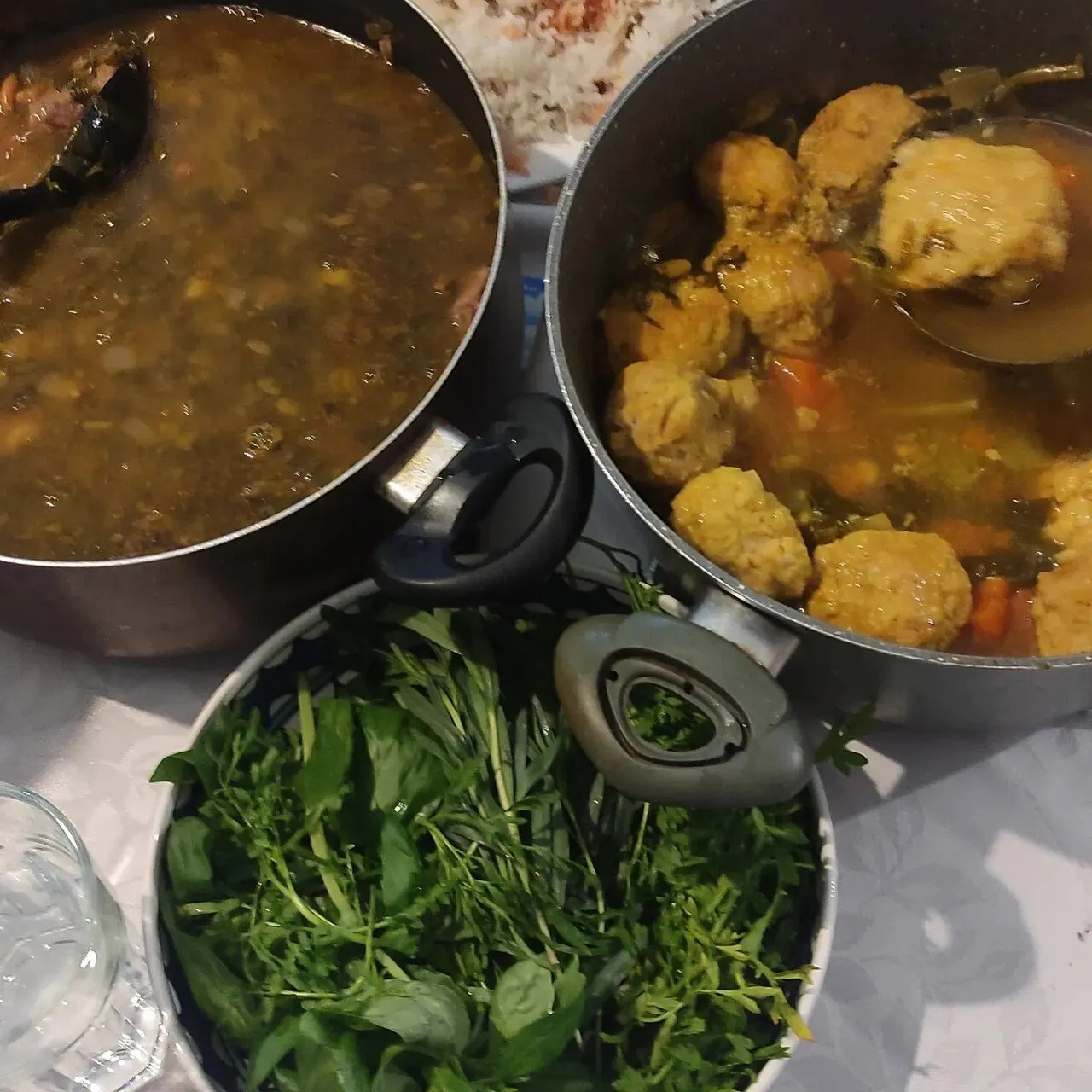
A formal Iranian meal unfolds in a sequence as deliberate as a piece of music. First the sabzi-khordan — fresh herbs, walnuts, sheep's-milk cheese, and warm flatbread — then a soup or aash, then the main course of chelow (saffron rice) crowned with one or two khoresht stews and a grilled kabab. Pickles (torshi), yogurt (maast), and a tall stack of bread accompany every course. Tea, brewed dark and served in tulip-shaped glasses, closes the meal — sometimes drunk through a sugar cube held between the teeth.
A field guide to the Persian kitchen
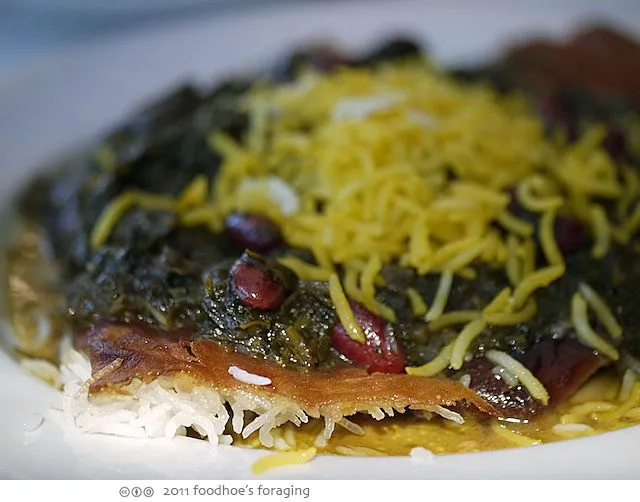
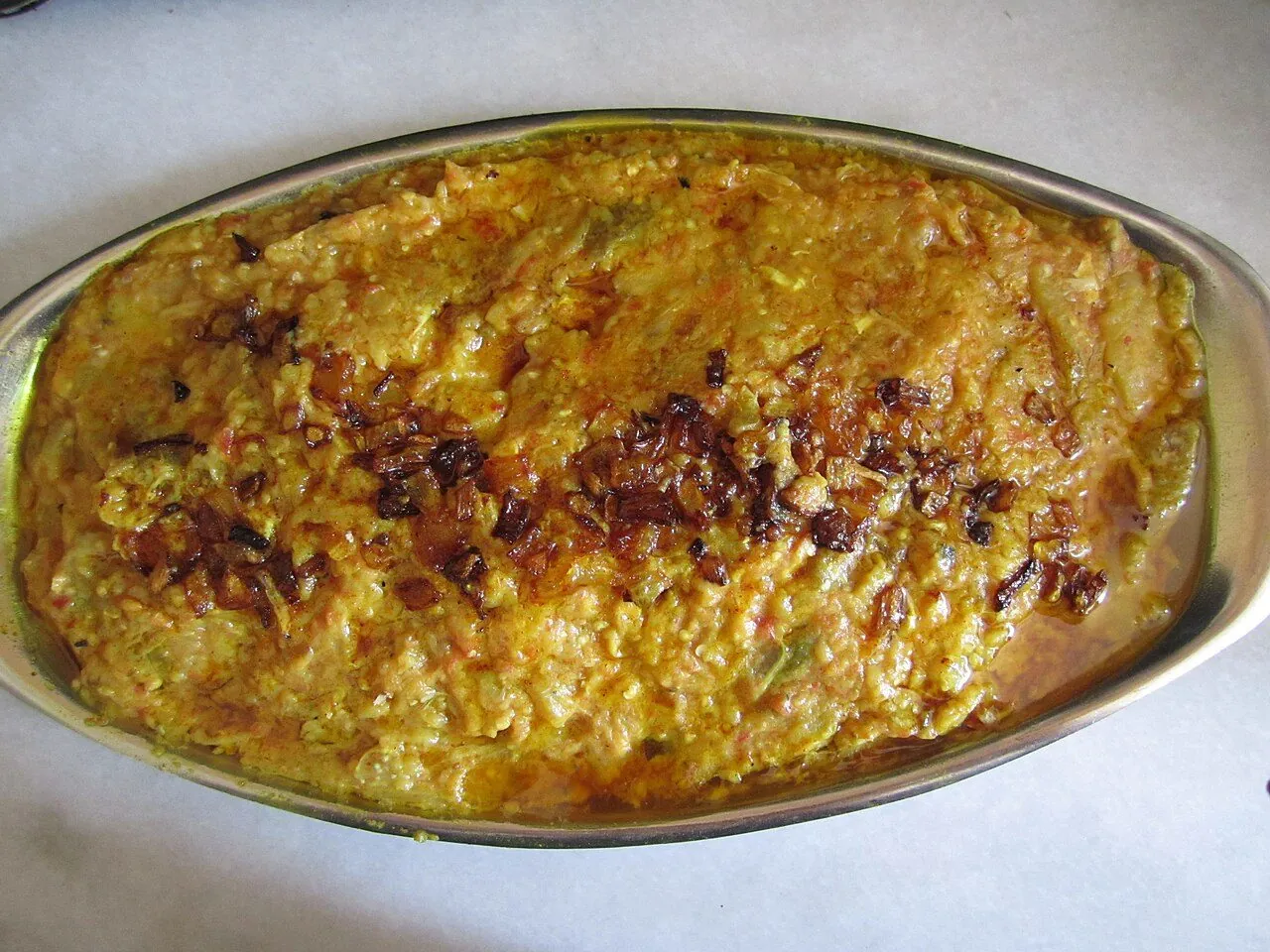
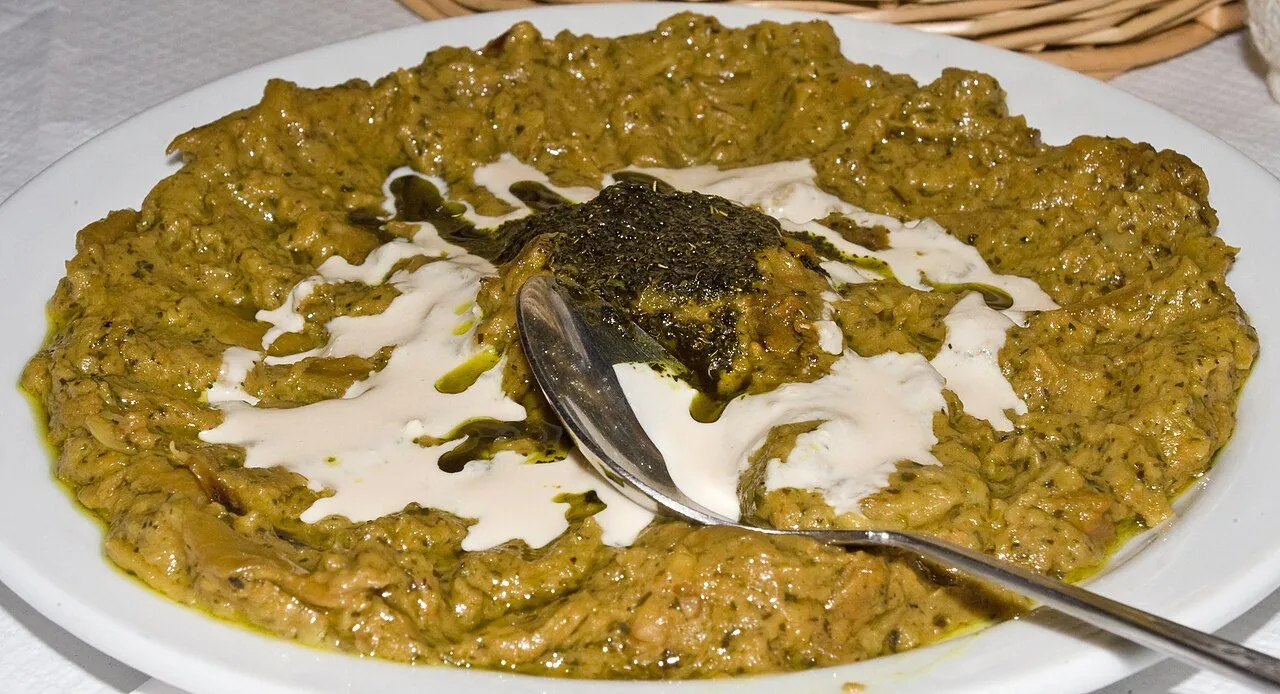
Mirza Ghasemi
Smoked aubergine, tomato, garlic and egg — the Caspian rainforest's signature dish.
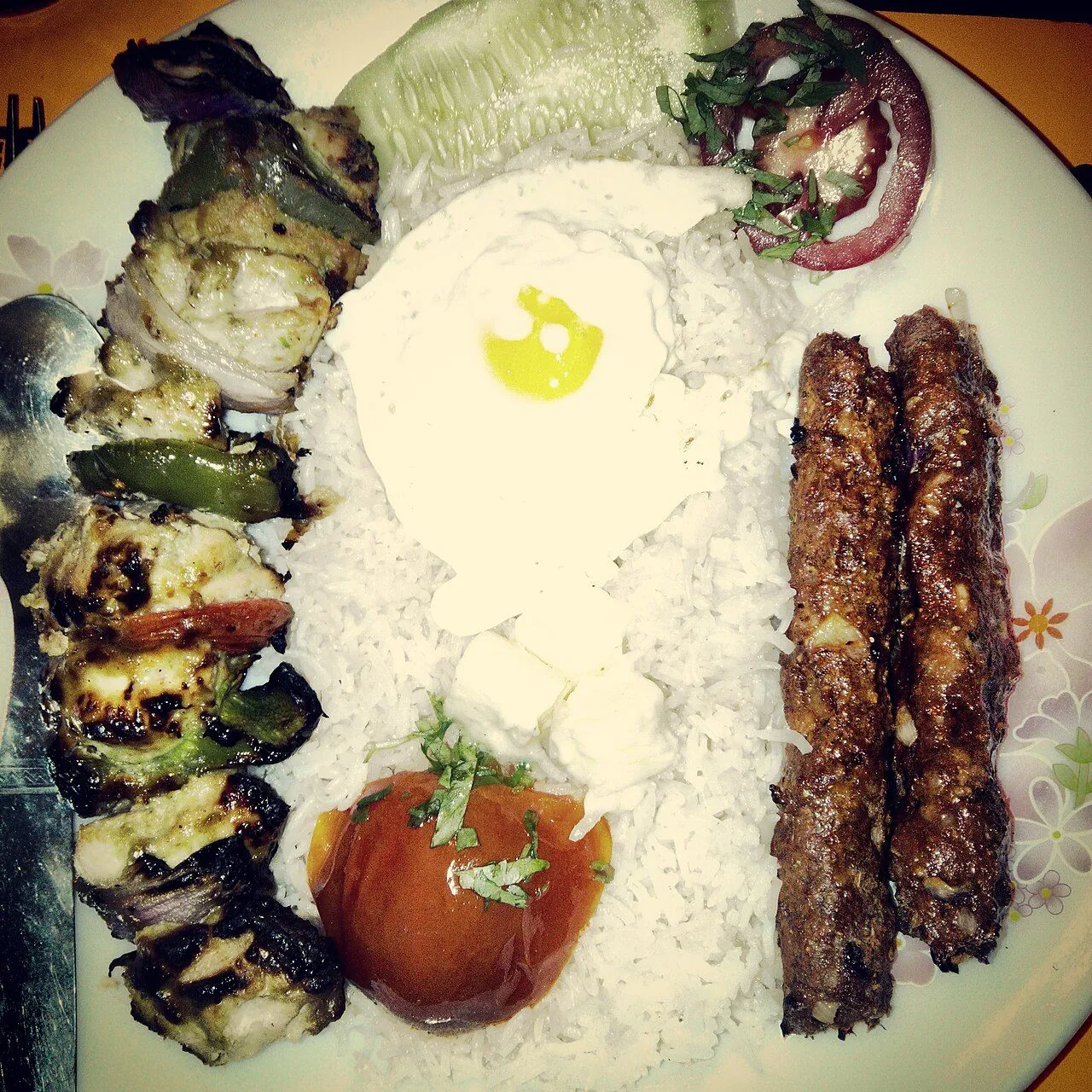
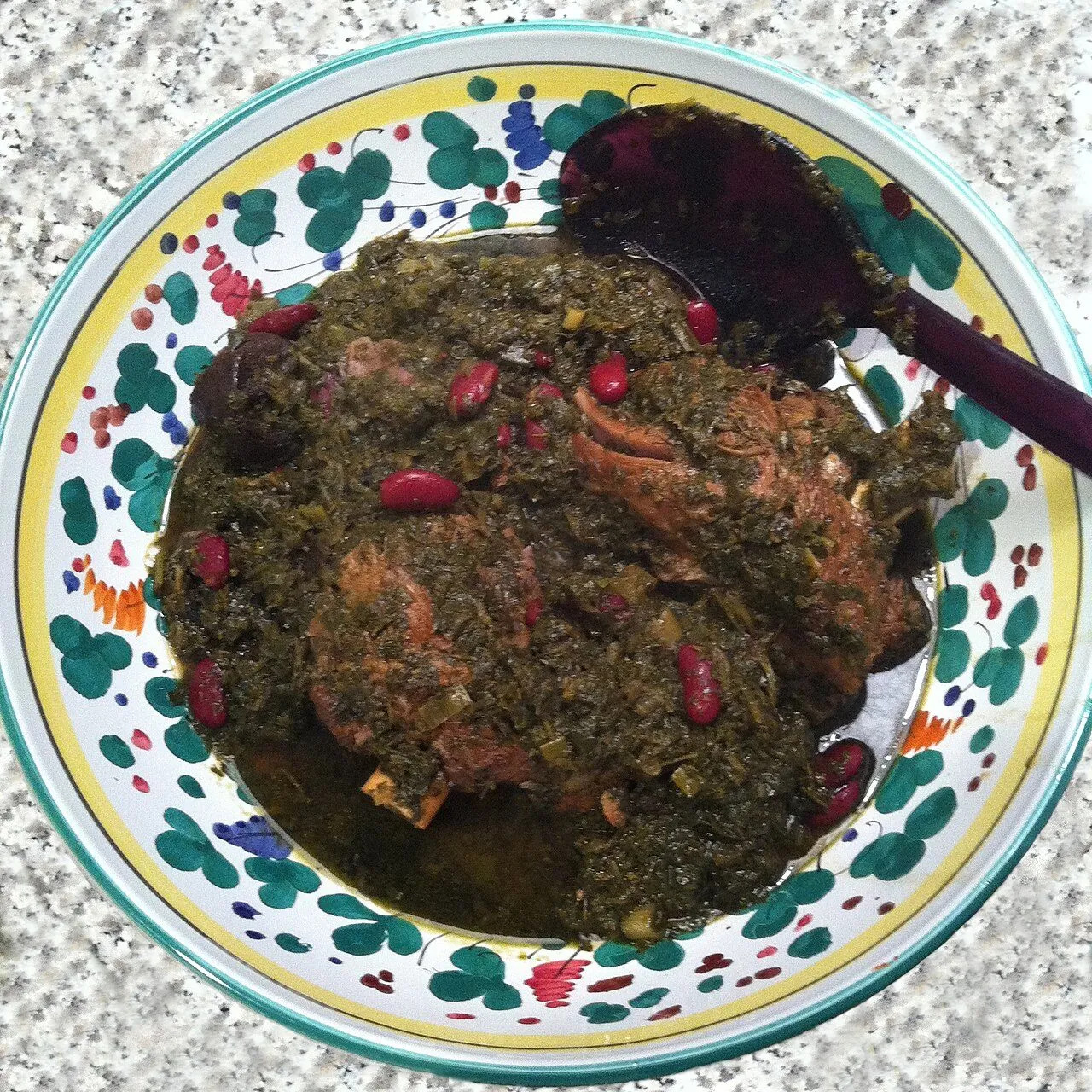
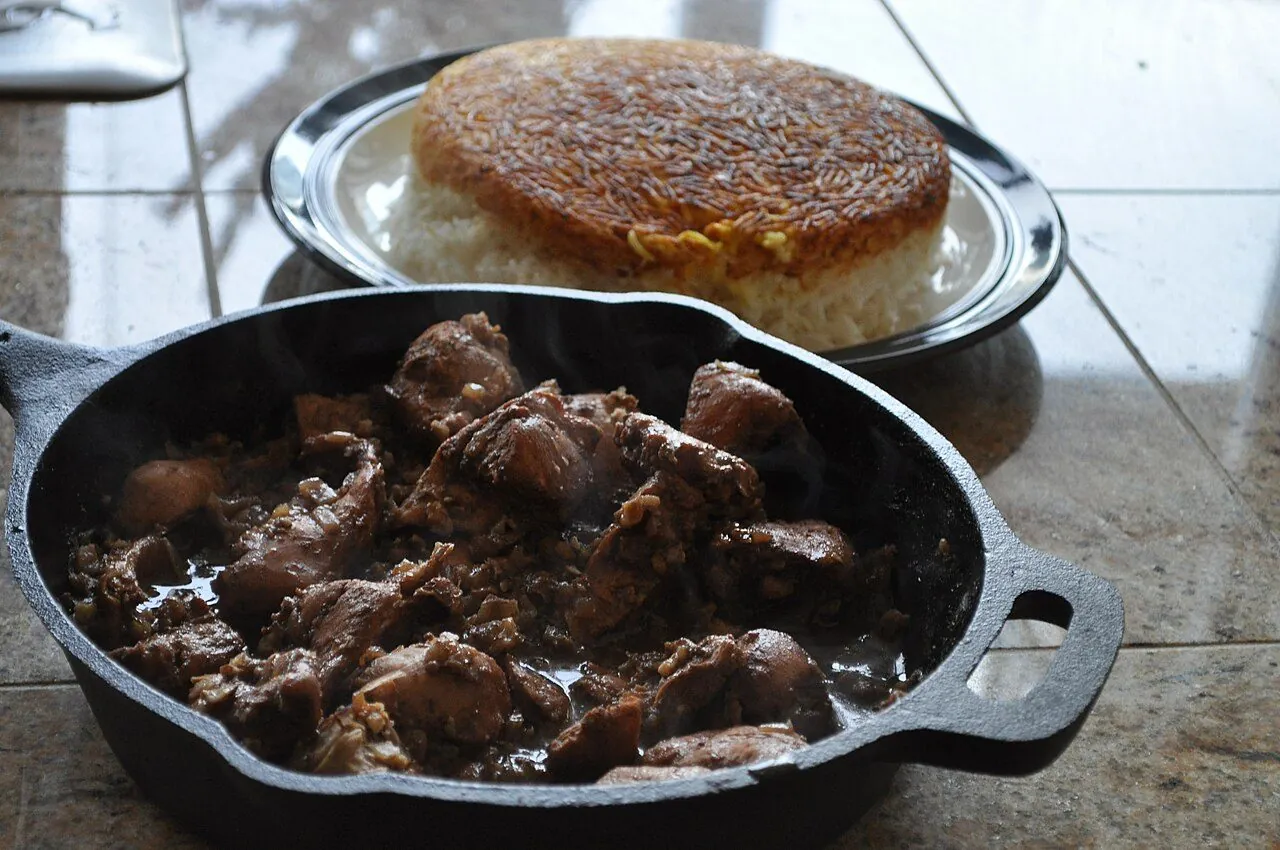
| Dish | Type | Region | Description |
|---|---|---|---|
| Chelow Kabab | Main | Tehran | National dish — saffron rice with grilled lamb or beef kebab |
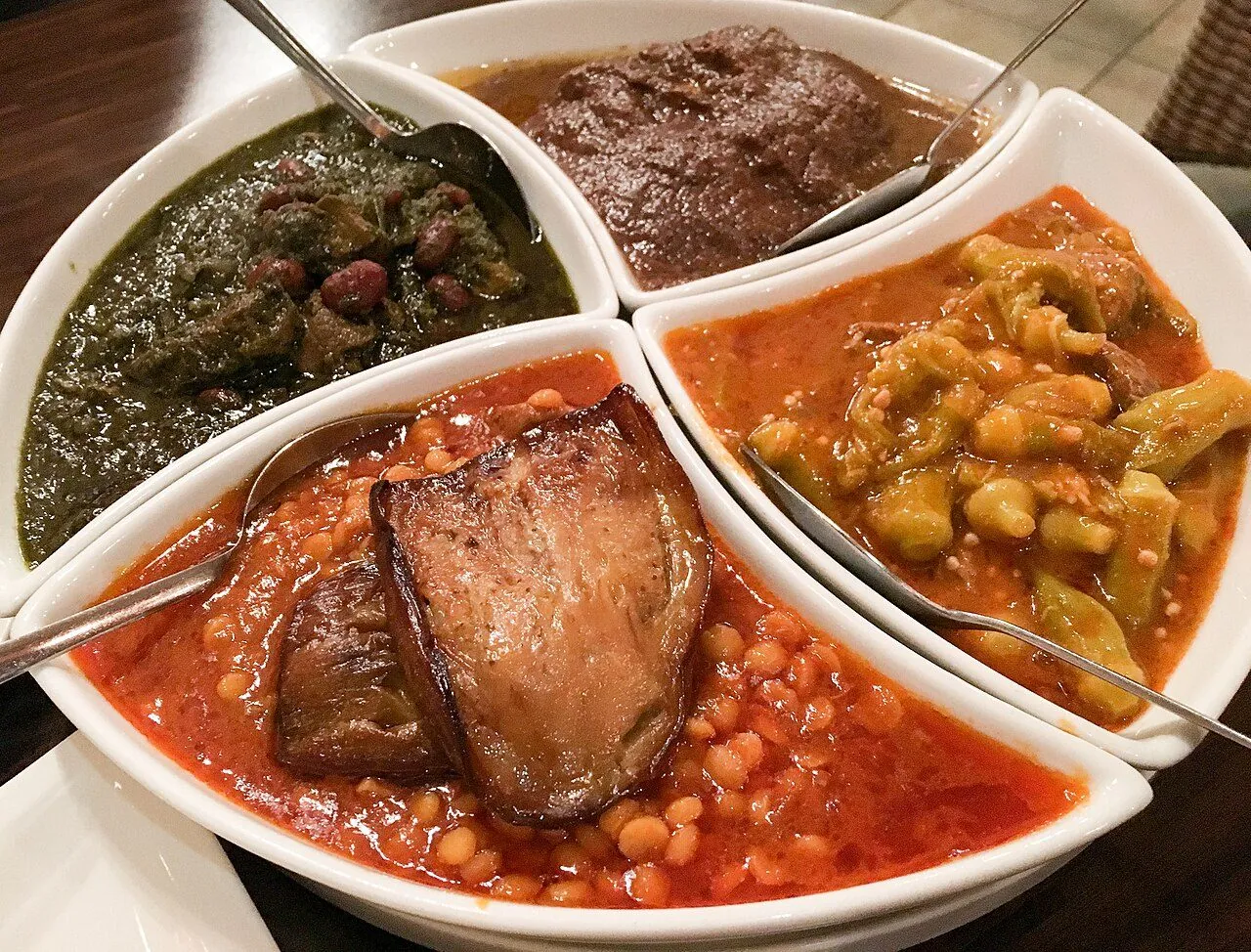
| Ghormeh Sabzi | Khoresh | All Iran | Herb stew of parsley, leek, fenugreek with lamb and dried lime |
| Fesenjān | Khoresh | Gilan | Pomegranate-walnut stew with duck or chicken — sweet, sour, deep |
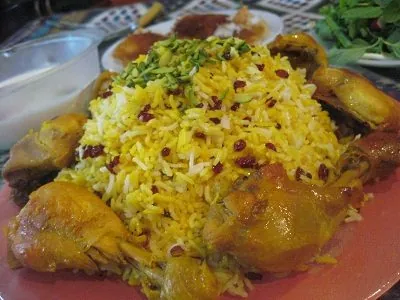
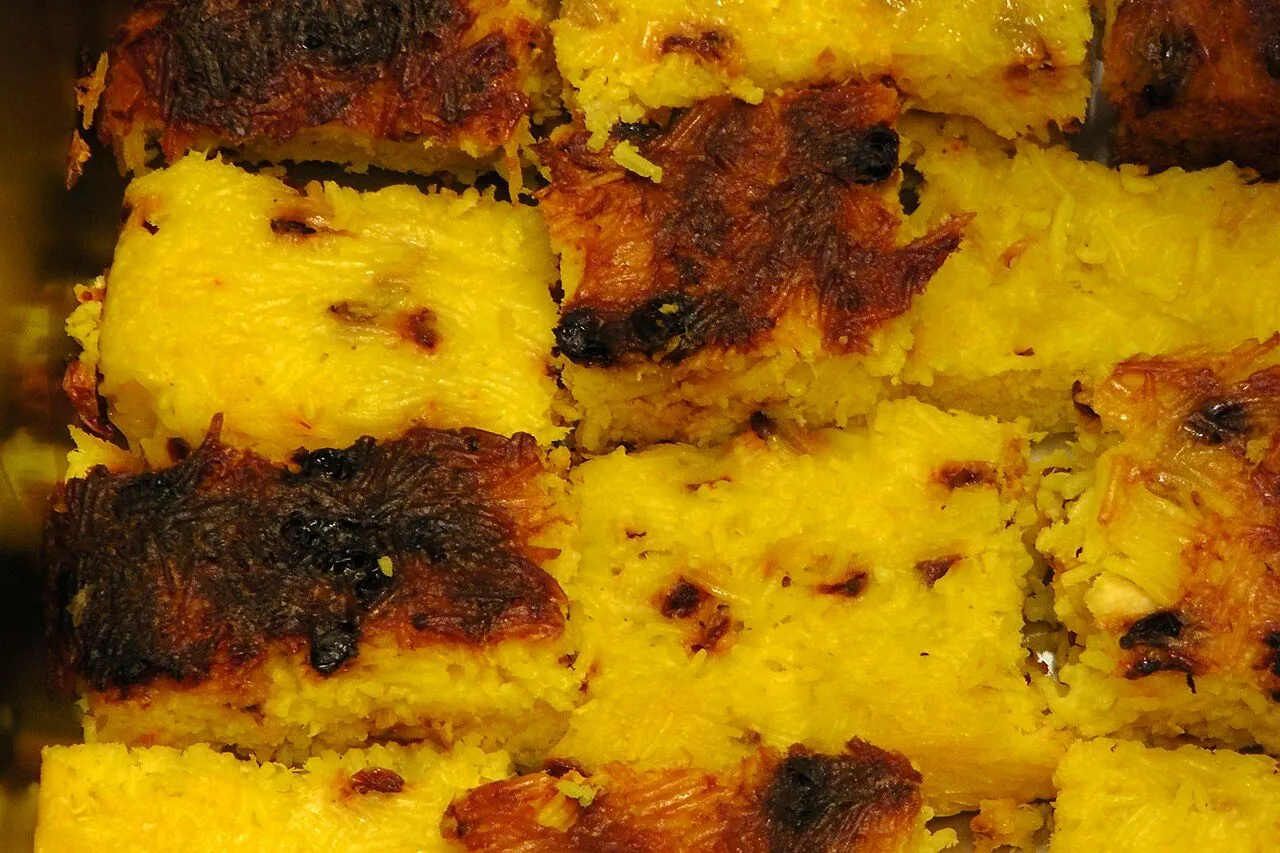
| Tahchin | Casserole | Tehran | Saffron rice cake layered with chicken, yogurt, and barberries |
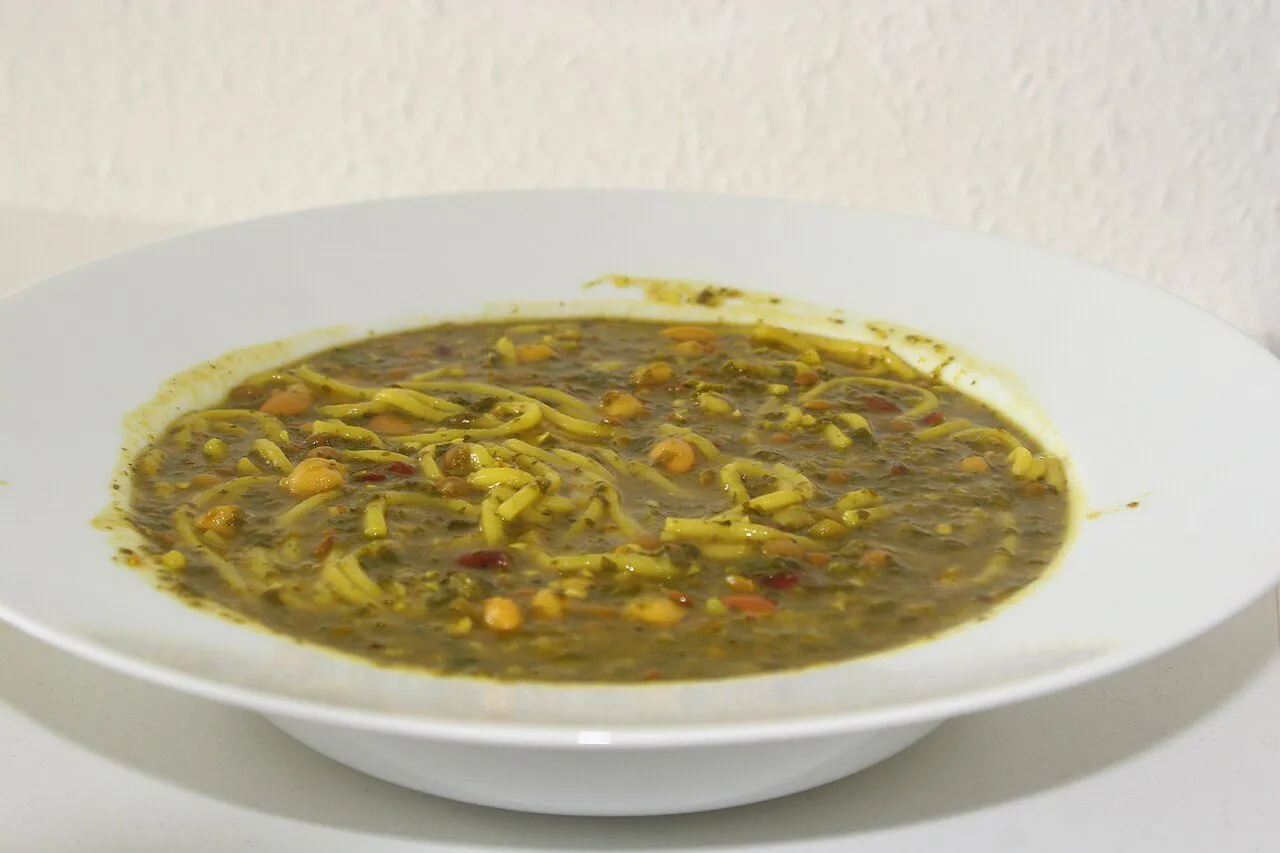
| Āsh-e Reshteh | Soup | Nationwide | Thick herb-and-noodle soup with kashk (whey) and fried mint |
| Mirza Ghassemi | Vegetarian | Gilan | Smoked eggplant, tomato, garlic, egg — Caspian comfort food |
| Kashk-e Bademjan | Appetiser | Esfahan | Roasted eggplant with kashk, walnut, mint, and fried onion |
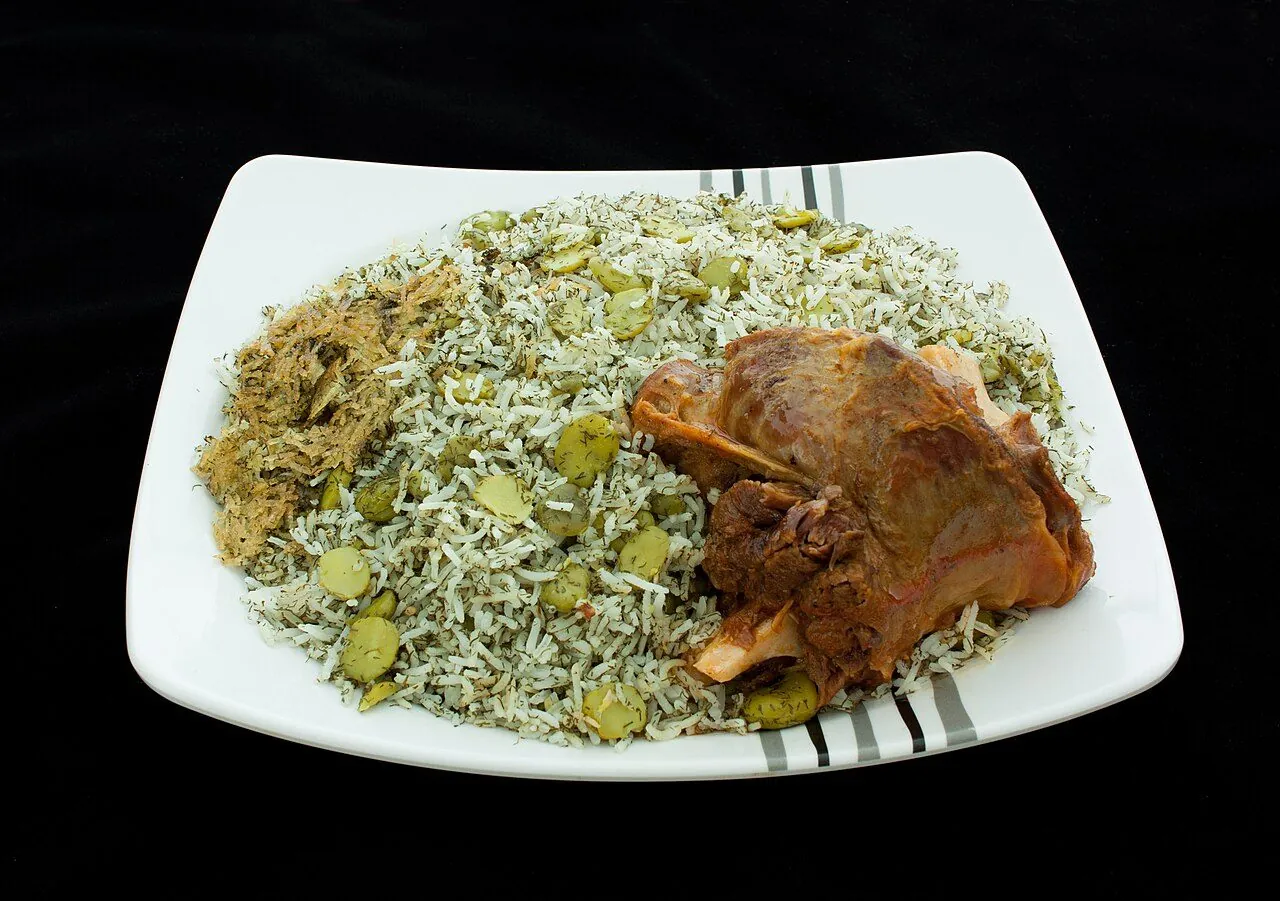
| Baghali Polo | Rice dish | Tehran | Saffron rice with dill and broad beans, served with lamb shank |
| Zereshk Polo | Rice dish | Yazd | Saffron rice with barberries and chicken |
| Khoresh-e Bademjan | Khoresh | Shiraz | Eggplant and lamb stew with unripe grape juice (ghureh) |
| Dizi (Abgoosht) | Stew | Bazaars everywhere | Lamb, chickpea, potato — eaten in two stages with a wooden pestle |
| Halim | Breakfast | Khorasan | Slow-cooked wheat and shredded lamb porridge with cinnamon |
The Persian pantry
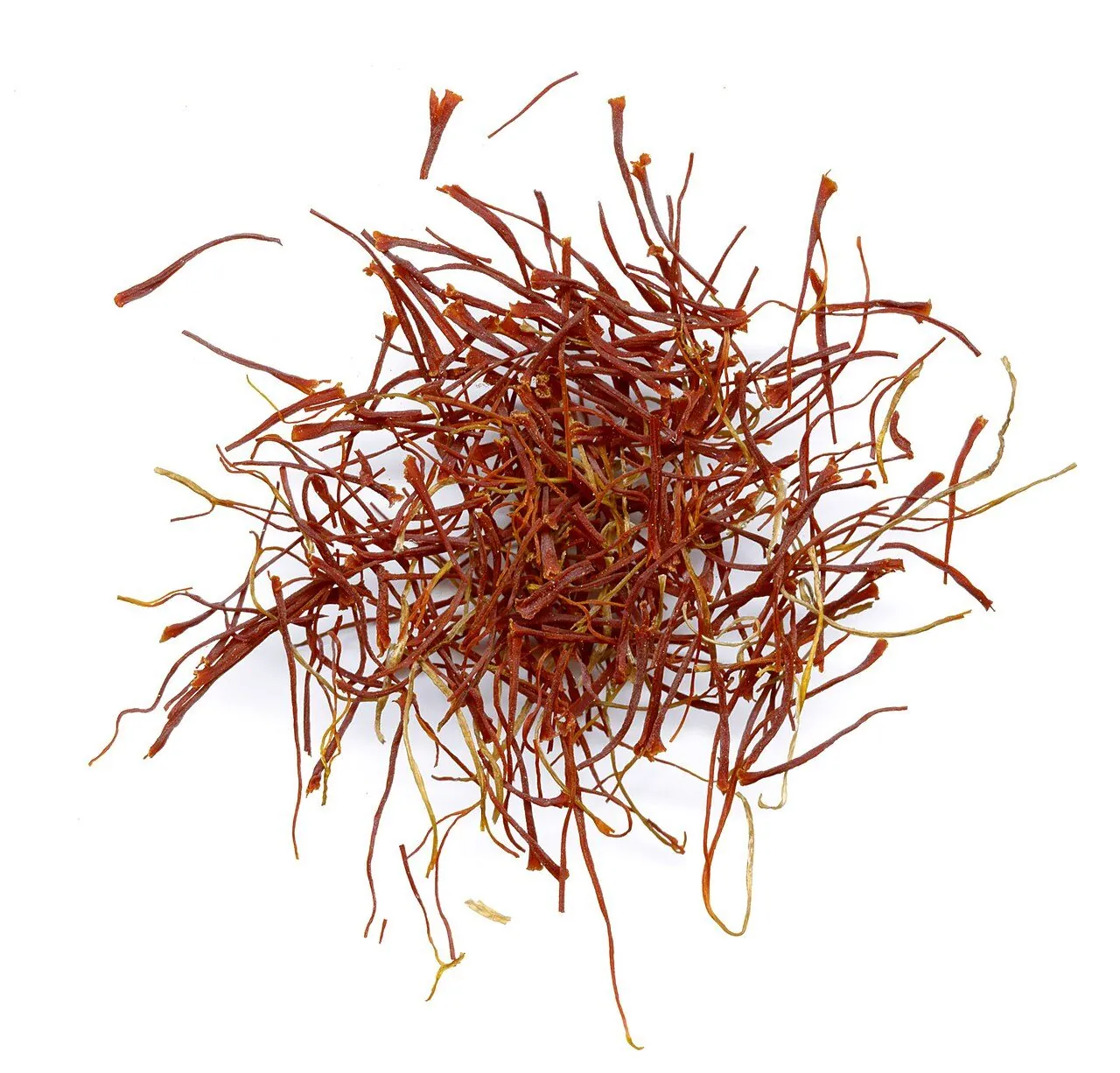
Saffron (zaʿfarān)
Iran produces over 90% of the world's saffron, almost all from the Khorasan plateau. A kilogram requires 150,000 hand-picked crocus flowers.
Dried Lime (limoo amani)
Whole limes sun-dried to a dark hollow shell, dropped into stews for a fragrant sourness found in no other cuisine.
Barberry (zereshk)
The tiny ruby-red, intensely sour berry that crowns wedding pilafs across Iran.
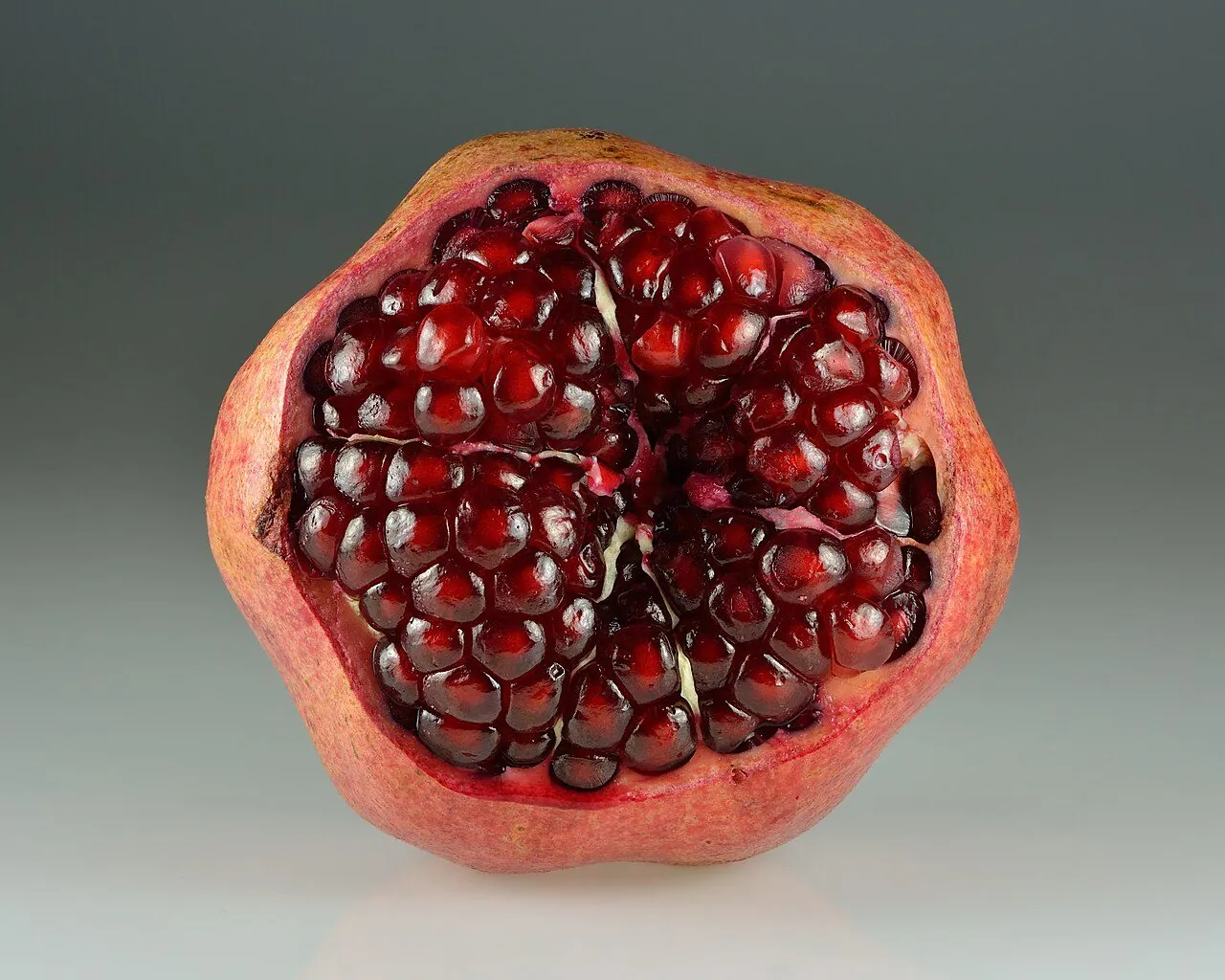
Pomegranate
Native to the Iranian plateau and cultivated here for 5,000 years; central to Yalda night and to fesenjan.
Persian Walnut
The 'Juglans regia' originates from the Hyrcanian forests south of the Caspian.
Rose Water
Distilled in Kashan since the Sasanian era; perfumes desserts from baklava to faloodeh.
Kashk
Reduced whey of yogurt — savoury, intensely tangy, used as a creamy finish on aash and bademjan dishes.
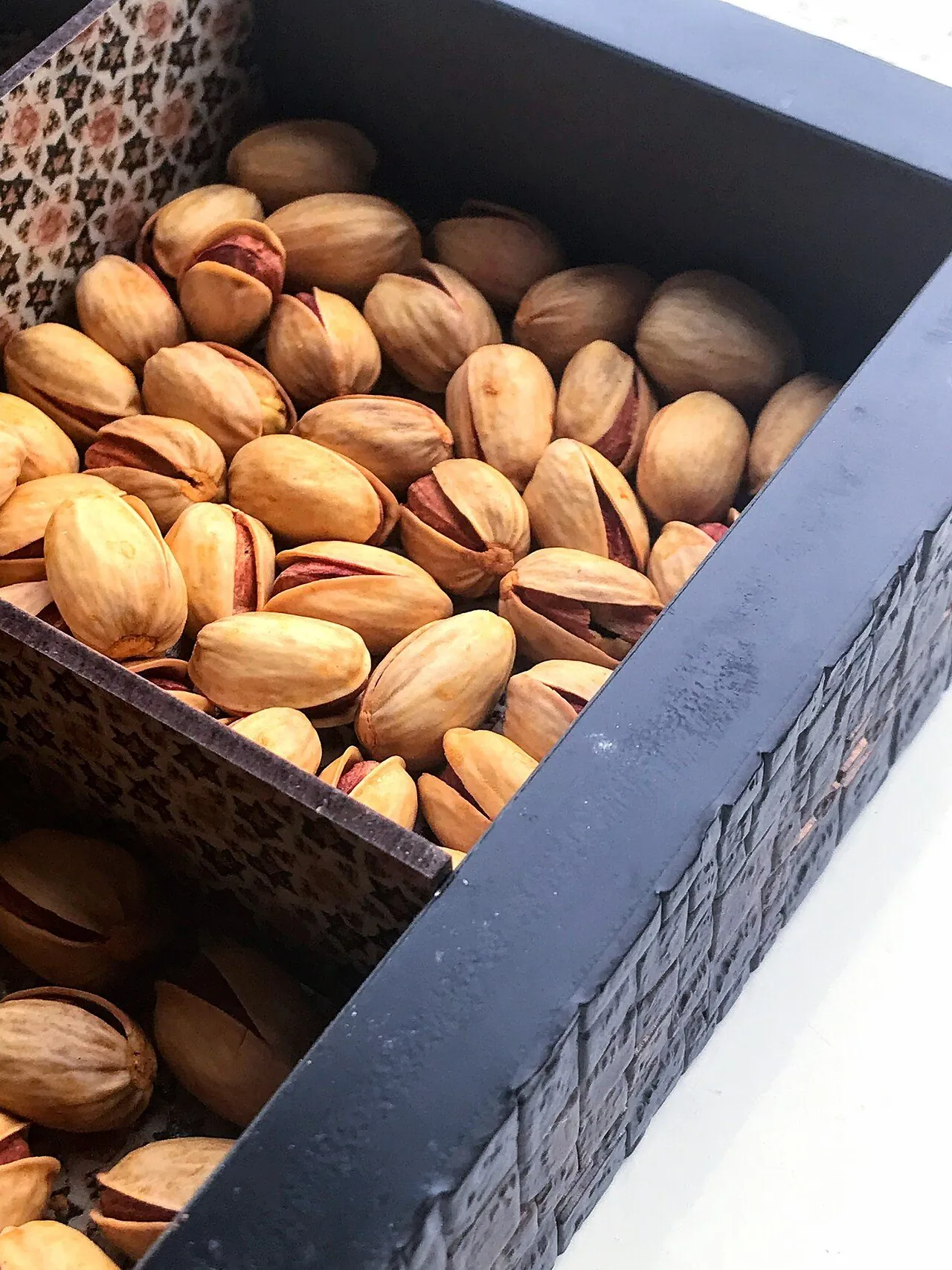
Pistachio
Cultivated in Rafsanjan since the Bronze Age; Iran has been the world's largest producer for most of the modern era.
Sumac (somāgh)
The crushed berry of the Rhus tree — the burgundy spice always sprinkled over kebab.
Vegetarian Iran — a tradition older than you think
Although kebabs and lamb stews dominate the foreign image of Persian food, the everyday Iranian table has always been overwhelmingly plant‑based. Meat in pre‑industrial Iran was expensive and reserved for festivals; daily cooking was built on rice, bread, pulses, fresh and dried herbs, eggs, yogurt and the abundant vegetables of the Iranian plateau. The result is one of the world's richest vegetarian repertoires — much of it accidentally so.
Roots of plant‑centred eating run deep. Zoroastrianism, Iran's pre‑Islamic religion, treats all living creatures as part of Ahura Mazda's good creation; the Vendidad forbids the wanton killing of beneficial animals, and several Zoroastrian feast days — including Sadeh and the four Gahanbar — were traditionally observed with vegetarian meals of bread, herbs, fruit and dairy. The fifth‑century reformer Mazdak went further, preaching outright vegetarianism alongside social equality; his movement, brutally suppressed by Khosrow I, left a lasting trace in the Iranian moral imagination of the simple, plant‑fed life.
Persian literature is full of meatless ideals. Ferdowsi's Shahnameh opens the reign of Jamshid in a golden age before humans had learned to slaughter, when "men ate herbs and milk and honey"; only the demon‑king Zahhak introduces the eating of flesh, and the serpents that grow from his shoulders must be fed human brains — a parable of meat‑eating as the beginning of cruelty. Saadi devotes an entire chapter of the Bustan to praising abstinence from meat, and in his Gulistan tells of a king who renounces hunting after seeing a fawn's grief. Khayyam sings of bread, wine and a beloved beneath a tree — never of flesh — and Hafez repeatedly contrasts the hypocrisy of the carnivorous preacher with the gentle dervish "whose only sustenance is barley bread and the morning breeze."
میازار موری که دانهکش است / که جان دارد و جان شیرین خوش است
"Do not torment the ant that drags a grain along; it has life, and life is sweet."
The Sufi orders carried this sensibility into the medieval kitchen. The khānaqāh communal meal was, and in many places remains, vegetarian: āsh, lentil polo, herb stews and dairy. To this day the great Sufi shrines of Mahan, Bidokht and Konya offer plant‑based nazri (votive food) on the major feast days, distributed free to thousands of visitors.
| Dish | Type | Description |
|---|---|---|
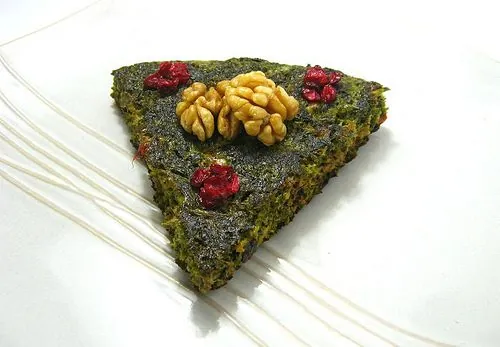
| Kuku sabzi | Herb frittata | Bound parsley, coriander, dill, fenugreek and spring onions — the Nowruz table centrepiece. |
| Mirza ghasemi | Smoked-eggplant dip | Charred aubergine, tomato, garlic and egg — the great Caspian vegetarian dish. |
| Kashk‑e bademjan | Eggplant appetiser | Roasted aubergine with kashk, walnut and fried mint; vegan with vegan kashk. |
| Āsh‑e reshteh | Noodle & bean soup | Chickpeas, lentils, beans, herbs and reshteh noodles — Iran's signature winter soup. |
| Āsh‑e anar | Pomegranate soup | Yazd specialty of pomegranate juice, split peas, herbs and rice. |
| Adas polo | Lentil rice | Saffron rice layered with brown lentils, raisins and dates — meat optional. |
| Loobia polo | Green‑bean rice | Tomato‑seasoned rice with green beans; classic vegetarian when made without meat. |
| Dolmeh | Stuffed leaves & vegetables | Vine leaves, peppers or quinces filled with herbed rice and split peas. |
| Khoresh‑e karafs | Celery stew | Aromatic celery and parsley stew, naturally vegan when meat is omitted. |
| Khoresh‑e qeymeh sibzamini | Yellow split-pea stew | Tomato and split-pea stew topped with shoestring potatoes. |
| Baghali ghatogh | Bean stew | Caspian dish of lima beans simmered with dill, garlic and turmeric. |
| Eshkeneh | Onion-and-egg soup | Caramelised onion broth thickened with fenugreek, walnut and egg. |
| Falafel of Bushehr | Street snack | Gulf-port chickpea fritters predating their Levantine cousin. |
| Sholeh zard | Dessert | Saffron-rose rice pudding — naturally vegan. |
| Halva‑ye zaferāni | Dessert | Saffron, flour and rosewater halva served at memorials and Nowruz. |
Two civilisations in a glass
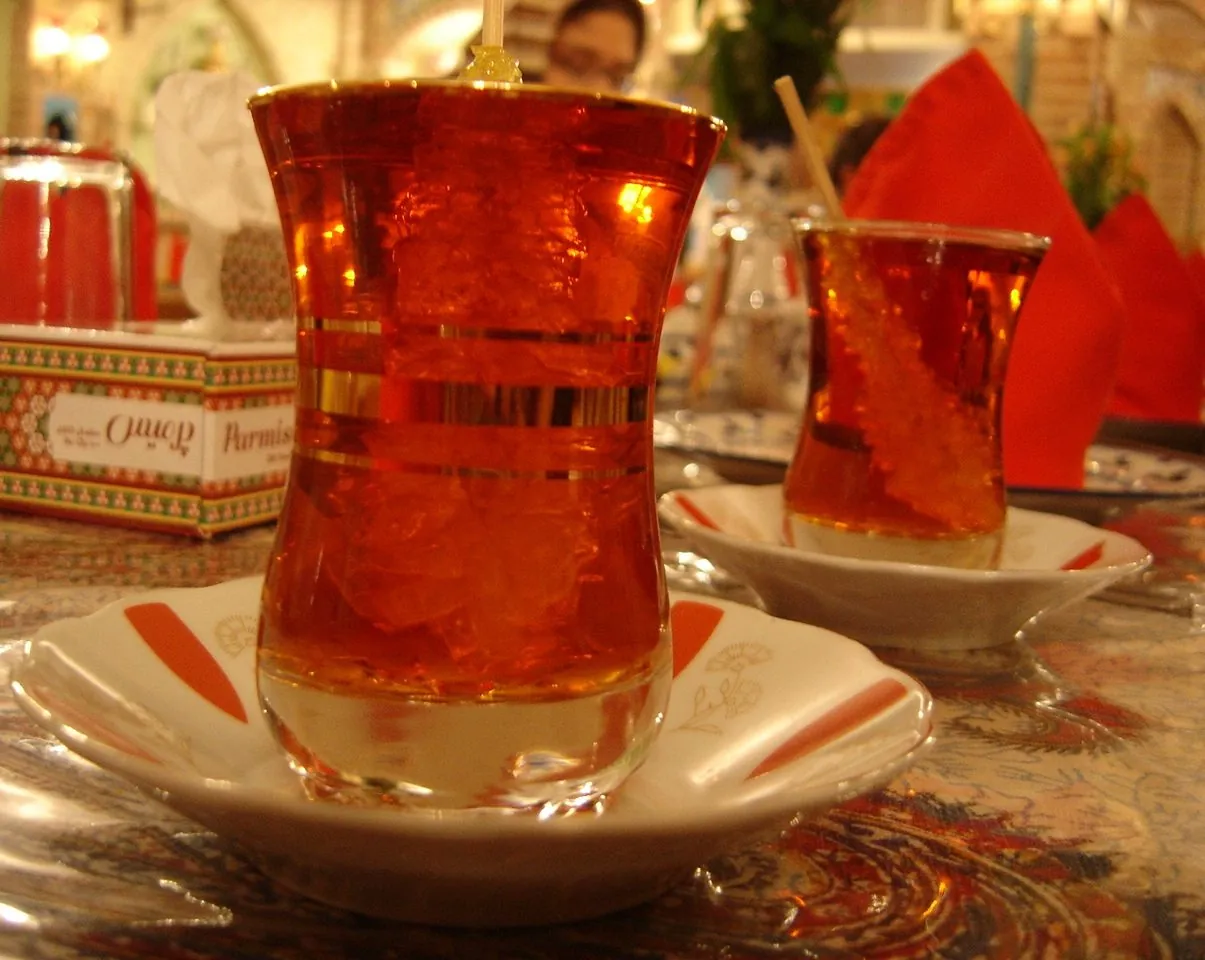
Tea reached Iran from China via the Silk Road and entirely displaced coffee — once Iran's dominant brew — by the late 19th century. The Iranian tea-house (châykhâne) is part of national geography: every bazaar, mountain pass, and bus station has one. Tea is poured from a brass samovar, drunk from a small tulip-waisted glass called an estekan, and sweetened by holding a rock-sugar (nabât) between the teeth.
"In Persia, the offer of tea is the offer of friendship; refusing it is unthinkable."
References
- ↗ UNESCO — Chelow & Persian rice culture
- ↗ Najmieh Batmanglij — Food of Life
- ↗ Encyclopædia Iranica — Food
All imagery is sourced from Wikimedia Commons, public-domain museum collections (British Museum, Louvre, Metropolitan Museum of Art, National Museum of Iran), or UNESCO World Heritage records. No AI-generated images are used. Scholarly text is synthesized from Encyclopædia Iranica, the Cambridge History of Iran, and peer-reviewed publications.
Persian cuisine FAQ
Related reading
Taarof, hospitality, festivals, music, and everyday life.
Nowruz, Yalda, Mehregan, Sadeh, Tirgan — the ceremonial year.
Provinces, top sites, four seasons and eleven climate zones.
Iranian communities around the world — Los Angeles, London, Toronto, Berlin.
Radif, dastgah, tar, setar, santur — the classical Persian tradition.