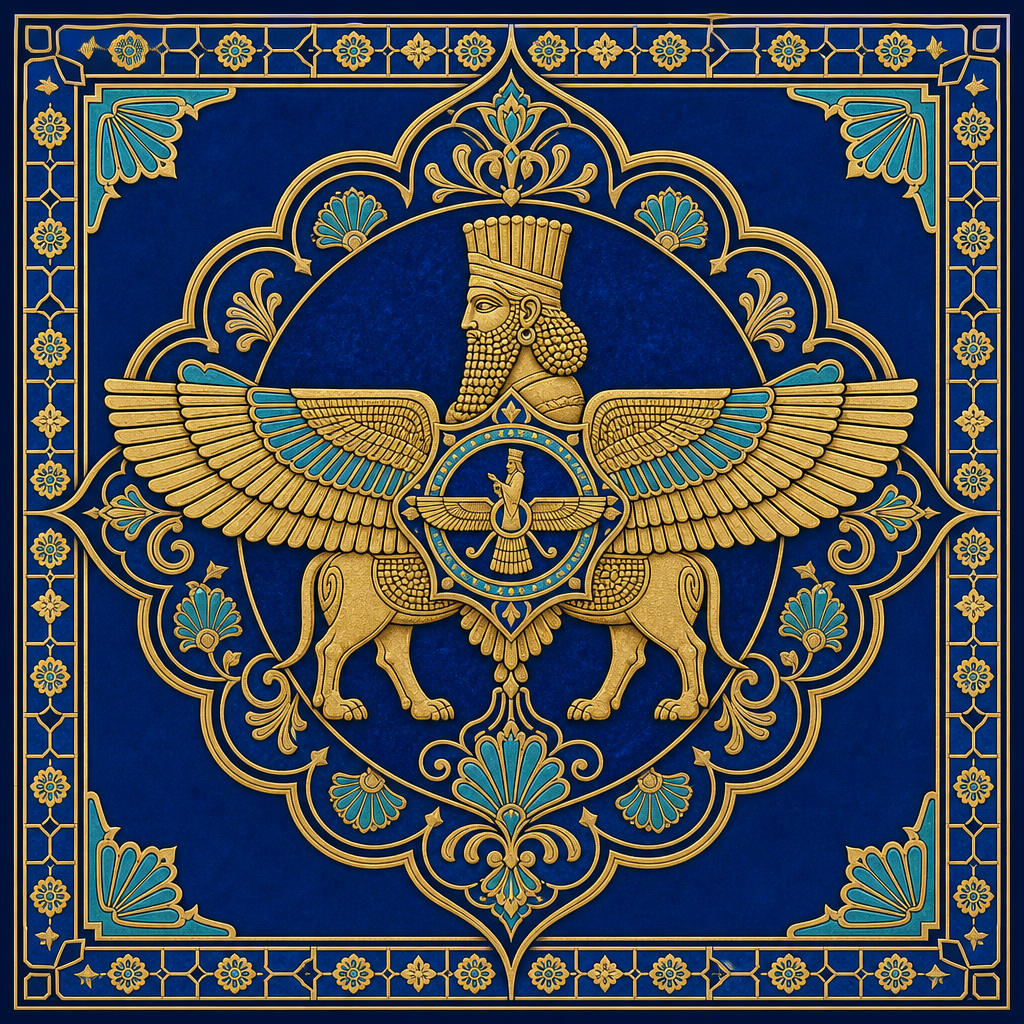
The Greco-Persian Wars: A Clash of Empires
An Examination of the Conflicts that Shaped the Ancient World
This article provides a comprehensive overview of the Greco-Persian Wars, a defining conflict of antiquity. It examines the origins in Ionia, details the major military campaigns from Marathon to Plataea, and analyzes the profound and lasting consequences for both Persian and Greek civilizations.
Key takeaways
- The Ionian Revolt (499-493 BCE) against Persian rule, supported by Athens and Eretria, was the primary catalyst for the Greco-Persian Wars.
- The Athenian naval victory at the Battle of Salamis in 480 BCE, orchestrated by Themistocles, was the decisive turning point of the conflict.
- The wars were chronicled by the Greek historian Herodotus in his work 'The Histories,' which is considered the foundational text of historical writing.
- Following the Greek victories, Athens led the formation of the Delian League, an alliance that evolved into an Athenian maritime empire.
- While the defeat marked the limit of its westward expansion, the Achaemenid Empire remained a dominant power for another 150 years.
- The final major engagements, the twin victories at the Battle of Plataea and the Battle of Mycale in 479 BCE, secured mainland Greece from invasion.

The Greco-Persian Wars were a series of monumental conflicts fought between the Achaemenid Persian Empire and an alliance of Greek city-states from approximately 499 to 449 BCE. These confrontations arose from the westward expansion of the Persian Empire into regions inhabited by Hellenic peoples and culminated in two major invasions of mainland Greece. The wars, famously chronicled by the historian Herodotus, represent a pivotal moment in both European and Near Eastern history, not merely as a military clash but as a collision of political ideologies and cultures. The surprising Greek victory had profound consequences, halting Persian advances into Europe, fueling the cultural flourishing of Athens' 'Golden Age,' and creating a foundational narrative of freedom versus despotism that has resonated throughout Western civilization.
Origins of the Conflict: The Ionian Revolt
The seeds of the Greco-Persian Wars were sown in the mid-6th century BCE with the meteoric rise of the Achaemenid Empire. Under Cyrus the Great, the Persians conquered the Lydian Kingdom in western Anatolia (modern-day Turkey) around 547 BCE. This victory brought the prosperous Greek city-states of the Ionian coast under Persian dominion. For decades, these cities existed as semi-autonomous subjects, ruled by local Greek tyrants approved by the Persian satrap (governor) and obligated to pay tribute and provide military service. While Persian rule was often relatively light-handed, the loss of complete autonomy and the imposition of non-Greek rulers bred resentment among a fiercely independent people.
The flashpoint arrived in 499 BCE with the outbreak of the Ionian Revolt. The uprising was instigated by Aristagoras, the tyrant of Miletus, who, after a failed expedition to capture the island of Naxos, feared Persian retribution and chose to incite a widespread rebellion to save himself. He established a democracy in Miletus and traveled to mainland Greece to seek support. While the cautious Spartans refused, the city-states of Athens and Eretria agreed to help, driven by a sense of Hellenic kinship and, in Athens' case, anxieties about Persian support for their own exiled tyrant, Hippias. In 498 BCE, an Athenian and Eretrian force of 25 ships joined the Ionians to march inland and burn Sardis, the regional Persian capital. This act was a grave insult to the authority and prestige of the Persian King, Darius I. Though the allies were soon defeated and the Athenians withdrew, Darius was said to have sworn vengeance, famously ordering a servant to remind him three times at every meal: 'Master, remember the Athenians.' The revolt was finally crushed by the Persians at the naval Battle of Lade in 494 BCE, but the involvement of mainland Greeks had transformed a regional rebellion into an empire-wide security issue, setting the stage for a direct Persian response.
The First Invasion and the Battle of Marathon
True to his vow, Darius I organized a punitive expedition in 490 BCE with the explicit goals of punishing Athens and Eretria and subjugating the Aegean islands. Commanded by the generals Datis and Artaphernes, a powerful Persian fleet sailed across the Aegean, conquering Naxos and other islands before landing on Euboea and besieging Eretria. The city fell after a short siege and its population was deported to Persia. The Persian force then landed on the Greek mainland at the Bay of Marathon, some 26 miles from Athens, a site chosen for its suitability for cavalry operations.
The Athenians, facing an existential threat, mobilized their entire hoplite army of around 9,000-10,000 men, supplemented by 1,000 soldiers from the small city of Plataea. They dispatched the runner Pheidippides to Sparta to request aid, but the Spartans were celebrating a religious festival and could not march until the next full moon. Realizing they were on their own, the Athenian generals, under the tactical leadership of Miltiades, who had firsthand experience with Persian military methods, decided to confront the invaders. At the Battle of Marathon, Miltiades employed a daring strategy. He deliberately weakened the center of his phalanx and heavily reinforced the wings. When the Persian infantry attacked, their superior numbers broke through the weak Athenian center as planned. However, the strong Athenian flanks then wheeled inward, enveloping and routing the Persian forces. The surprised Persians, driven back to their ships in disarray, suffered heavy casualties. According to Herodotus, 6,400 Persians fell for the loss of only 192 Athenians. The victory at Marathon was a stunning psychological and military triumph, proving that the supposedly invincible Persian army could be defeated by a smaller force of heavily armed, well-drilled citizen-soldiers.
The Greek hoplite, with his heavy bronze shield (aspis), helmet, and greaves, plus a long spear, was far better protected than the typical Persian infantryman, who relied on wicker shields and cloth armor.
After the battle, a messenger (later conflated with Pheidippides) is said to have run to Athens to announce the victory before collapsing, inspiring the modern marathon race.
Marathon was more than a battle; it became a cornerstone of Athenian identity, a symbol of democratic resolve and martial prowess that would be celebrated for centuries.
The Persians underestimated the motivation and tactical discipline of the Athenian hoplite phalanx, a fighting formation they had not previously faced in such a context.
The Second Invasion: Xerxes's Grand Campaign
The defeat at Marathon was a humiliation, but not a crippling blow to the vast Persian Empire. Darius began planning a second, far larger invasion, but a revolt in Egypt and his own death in 486 BCE delayed the plan. His son and successor, Xerxes I, inherited the task. Driven by a desire to avenge his father's defeat and finally absorb Greece into his satrapies, Xerxes spent years amassing a monumental invasion force, drawn from across his multi-ethnic empire. Ancient sources, particularly Herodotus, give fantastical numbers, but modern historians estimate the land army at 150,000-250,000 men and the fleet at 600-800 warships (triremes), an unprecedented logistical undertaking.
In the decade between invasions, Athens underwent its own crucial transformation. The Athenian statesman Themistocles, a brilliant but controversial populist, recognized that Persia's next attempt would be a joint land-sea operation and that Athens' only hope lay in naval power. In 483 BCE, he persuaded the Athenian assembly to use a sudden windfall from the state-owned Laurion silver mines to fund the construction of a fleet of 200 triremes, rather than distribute the wealth among the citizens. This single decision would prove to be the most critical of the entire war. As Xerxes's army marched toward Greece in 480 BCE, a congress of around 30 Greek city-states, led by Sparta and Athens, formed a Hellenic League to coordinate a united defense.
Thermopylae and Salamis: Fire and Water
The Greek strategy was to use the mountainous terrain of their homeland to their advantage. They decided to block the narrow coastal pass of Thermopylae to delay the Persian army, while their fleet engaged the Persian navy at the nearby straits of Artemisium. In August 480 BCE, a small Greek force of around 7,000 men, headlined by King Leonidas and 300 elite Spartan warriors, held the pass for three days against Xerxes's vast army. They inflicted devastating casualties until a local betrayed them by revealing a mountain path that allowed the Persians to outflank the defenders. Leonidas dismissed the bulk of the Greek army and fought to the death with his Spartans and a contingent of Thespians and Thebans, a sacrifice that became an immortal legend of heroic defiance. Simultaneously, the Greek fleet fought the Persians to a tactical stalemate at Artemisium before withdrawing upon news of the defeat at Thermopylae.
With the path to southern Greece open, Athens was evacuated, and the Persian army sacked and burned the abandoned city. The Greek coalition was in crisis, with many Peloponnesian leaders wanting to retreat to defend the Isthmus of Corinth. It was here that Themistocles executed his masterstroke. He tricked Xerxes into believing the Greek fleet was demoralized and preparing to flee from their anchorage in the narrow straits of Salamis. Eager for a decisive victory, Xerxes ordered his fleet to block the straits and attack. In the confined waters, the numerical and supposed maneuverability advantage of the Persian fleet became a liability. The heavier, bronze-rammed Greek triremes, crewed by experienced oarsmen, systematically smashed into the less agile Persian ships, creating chaos and carnage. The battle was a resounding Greek victory, destroying a significant portion of the Persian navy. The victory at Salamis was the war's great turning point. Without full naval superiority, Xerxes could not guarantee supplies for his massive army or protect his sea-lanes. He retreated to Asia with a large part of his army, leaving his general Mardonius with a still-formidable force to complete the conquest the following year.
The Final Act and the Rise of Athens
The final chapter of the great invasion played out in 479 BCE. After failed diplomatic attempts to detach Athens from the Hellenic League, Mardonius reoccupied and again destroyed Athens. This finally spurred the full mobilization of the Spartan army and their Peloponnesian allies. The largest Greek army ever assembled, numbering perhaps 80,000 men under the command of the Spartan regent Pausanias, marched north to confront Mardonius in Boeotia. The two armies met near the town of Plataea. In a long and complex battle, the disciplined Greek hoplites eventually broke the Persian infantry lines and killed Mardonius. With their commander dead, the Persian army dissolved and was routed, ending the threat to mainland Greece for good.
On or around the same day as the victory at Plataea, the remnants of the Greek fleet, commanded by the Spartan king Leotychidas and the Athenian Xanthippus, sailed to the coast of Ionia. At Cape Mycale, they attacked the beached Persian fleet and the army guarding it. The Greeks stormed the Persian stockade, destroyed the ships, and sparked a second Ionian Revolt, this time a successful one. The twin victories of Plataea and Mycale decisively ended the second Persian invasion and shifted the momentum of the war entirely in favor of the Greeks.
Greek cities in Anatolia, led by Miletus, rebel against Persian rule, marking the beginning of the wider conflict.
Comparing the Belligerents
| Feature | Achaemenid Persia | Hellenic League |
|---|---|---|
| Political System | Centralized absolute monarchy with a vast bureaucracy and satrapal system. | Decentralized temporary alliance of independent, often rival, city-states (poleis). |
| Army Composition | A vast, multi-ethnic conscript army with a core of elite professionals like the Immortals. | Citizen-soldier militias, primarily heavy infantry hoplites, fighting for their own cities. |
| Primary Land Tactic | Combined arms approach with massed archery, cavalry, and light/medium infantry. | The phalanx: a dense formation of heavily armored hoplites with long spears. |
| Naval Doctrine | Emphasis on large numbers for transport, amphibious assaults, and maneuver warfare. | Emphasis on heavy, ram-equipped triremes designed for decisive ship-to-ship combat. |
| Command Structure | Unified command under the King or his appointed generals. | Committee-based command with frequently shifting strategies and inter-state rivalries. |
| Resource Base | Resources drawn from a continent-spanning empire with immense manpower and wealth. | Limited resources drawn from small city-state territories and maritime trade. |
Consequences and Historical Legacy
The consequences of the Greek victory were immense and far-reaching. For Persia, the wars marked the definitive halt of its imperial expansion into Europe. While the empire suffered a major blow to its prestige and lost control of the Aegean, it was by no means destroyed. It remained the dominant power in the Near East for another 150 years, continuing to exert influence over the fractious Greeks through diplomacy, bribery, and funding rival factions, most notably during the subsequent Peloponnesian War. The 'King's Peace' of 387 BCE demonstrated that Persia could still dictate terms to the Greeks long after its military defeats.
For Greece, the effects were revolutionary. The victory, particularly for Athens, unleashed an unprecedented wave of self-confidence and cultural energy. Following the wars, Athens assumed leadership of the Delian League, nominally an alliance to prosecute the war against Persia but which quickly became an Athenian maritime empire. Tribute from league members poured into Athens, funding the political ascendency of Pericles and financing the extraordinary artistic and architectural achievements of its 'Golden Age,' including the construction of the Parthenon on the Acropolis. This period also saw the flourishing of democracy, philosophy, tragedy, and comedy, laying the intellectual foundations of Western civilization. However, this Athenian imperialism also bred deep resentment, leading directly to the destructive Peloponnesian War (431-404 BCE) with the rival Spartan alliance, which ultimately shattered the unity and strength of Classical Greece.
Perhaps the most enduring legacy of the Greco-Persian Wars is the narrative itself. The conflict was immortalized by Herodotus of Halicarnassus in 'The Histories.' By seeking to explain the causes and course of the war through inquiry and evidence, he created the discipline of history. His framing of the conflict—as a struggle between the free, democratic West (Greece) and the tyrannical, despotic East (Persia)—became a powerful and persistent trope in Western thought. While modern scholarship offers a more nuanced view, acknowledging the administrative sophistication and multi-ethnic tolerance of the Achaemenid Empire and the internal divisions and imperial ambitions of the Greeks, the powerful story of a small group of free city-states defeating a vast empire remains a foundational myth of Western identity.
References
- Herodotus, 'The Histories'
- Encyclopaedia Iranica – 'Greco-Persian Wars'
- The Metropolitan Museum of Art – 'The Achaemenid Persian Empire (550–330 B.C.)'
- British Museum – 'The 'other' classic art: how the Achaemenid Persians created a global style'
- UNESCO World Heritage Centre – 'Persepolis'
- World History Encyclopedia – 'Greco-Persian Wars'
- Livius.org – 'Persian Wars'
Frequently asked questions
Why did Persia invade Greece?
The primary cause was the Ionian Revolt (499 BCE), where Greek cities in Anatolia rebelled against Persian rule. Athens and Eretria sent aid to the rebels, who sacked the Persian regional capital of Sardis. Darius I of Persia launched the first invasion in 490 BCE to punish these cities and reassert Persian authority, and his son Xerxes I launched the second invasion to complete his father's work and incorporate Greece into the empire.
Who won the Greco-Persian Wars?
The coalition of Greek city-states, led by Athens and Sparta, is considered the victor. They successfully repelled both major Persian invasions (in 490 and 480-479 BCE), thereby preserving their independence. While Persia suffered a strategic defeat and halted its westward expansion, its empire remained intact and powerful for over a century, continuing to influence Greek politics through diplomacy and finance.
What was the Battle of Thermopylae?
The Battle of Thermopylae (480 BCE) was a famous last stand where a small Greek force, led by King Leonidas I of Sparta and his 300 personal guards, held a narrow pass against the massive invading army of Xerxes I. Although the Greeks were eventually defeated after being outflanked, their sacrifice bought crucial time for the allied Greek navy to prepare and has become a timeless symbol of courage against overwhelming odds.
Why was the Battle of Salamis so important?
The Battle of Salamis (480 BCE) was the war's turning point. The Athenian general Themistocles lured the larger Persian fleet into the narrow straits between Salamis island and the mainland. In the confined waters, the more maneuverable Persian ships lost their advantage, and the heavier Greek triremes decimated them. This naval victory crippled Persian sea power, secured Greece's supply lines, and forced Xerxes I to withdraw a large portion of his army, effectively ending the direct threat to the Peloponnese.
What was the Delian League?
The Delian League was a military alliance of Greek city-states, formed in 478 BCE under the leadership of Athens. Its stated purpose was to continue the war against Persia, liberate occupied Greek cities, and ensure collective security. Over time, Athens transformed the league into a vehicle for its own imperialism, demanding tribute from members and using the funds to finance its own civic projects, such as the Parthenon. This led to resentment and ultimately contributed to the Peloponnesian War against Sparta.
How did the Greco-Persian wars end?
Direct, large-scale invasions stopped after the Greek victories at Plataea and Mycale in 479 BCE. The conflict continued at a lower intensity for several decades, with the Athenian-led Delian League fighting Persian forces in the Aegean and Eastern Mediterranean. The wars are traditionally considered to have ended around 449 BCE with the Peace of Callias, though the existence and terms of this formal treaty are debated by historians. Hostilities effectively ceased, with Persia acknowledging Greek autonomy in the Aegean.
Who was Herodotus?
Herodotus (c. 484 – c. 425 BCE) was a Greek writer and geographer from Halicarnassus, a city then part of the Persian Empire. He is known as the 'Father of History' for his work 'The Histories,' a detailed account of the origins and events of the Greco-Persian Wars. Though his work includes digressions and sometimes unsourced anecdotes, his systematic, investigative approach to recording and explaining past events established the genre and discipline of history.