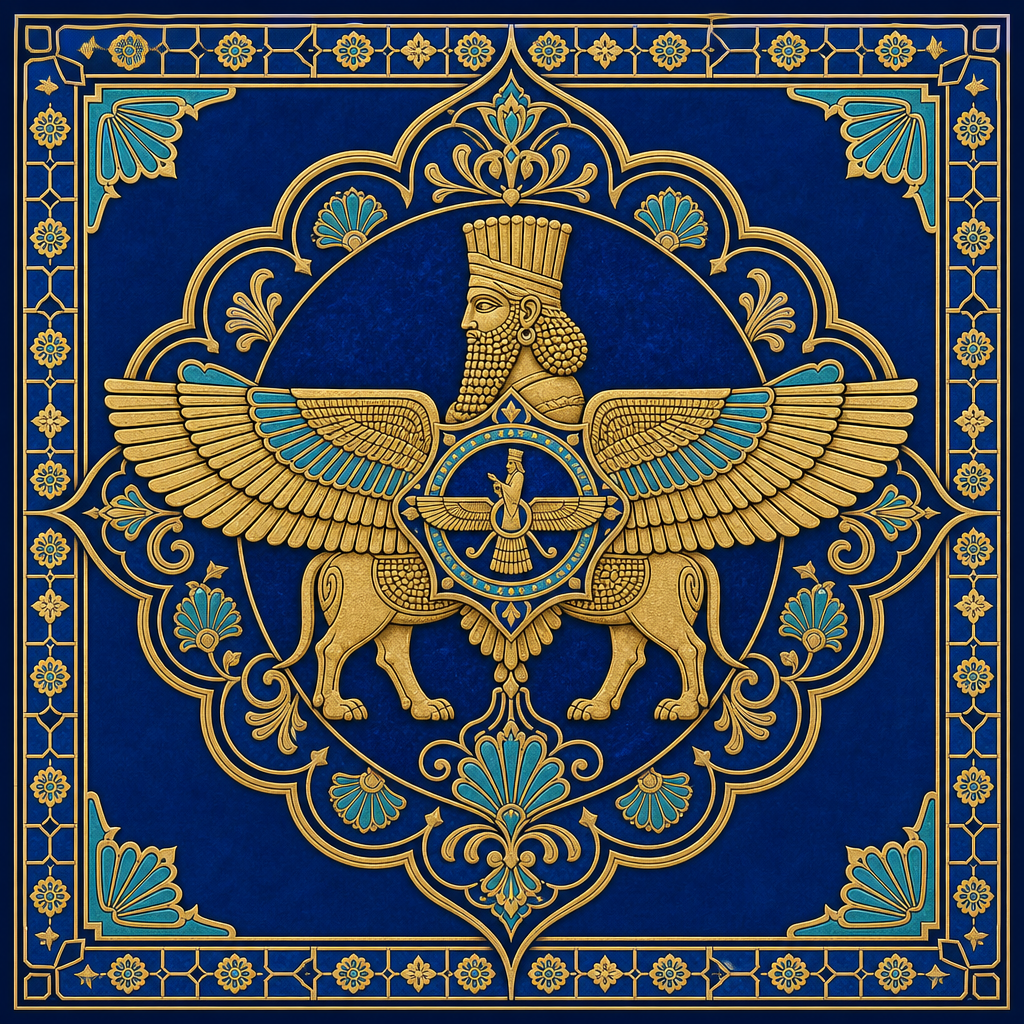
Farsi vs Persian: The History, Dialects, and Global Speakers of the Persian Language
Deconstructing nomenclature, linguistic evolution from Old Persian to New Persian, and the pluricentric modern tongue
This comprehensive study explores the linguistic identity of Persian, unraveling the distinction between the endonym Farsi and the historic exonym Persian. Tracing over two and a half millennia of development across three major historical phases, it details the contemporary pluricentric standards spoken across Iran, Afghanistan, and Tajikistan.
Key takeaways
- 'Persian' is the historic English exonym derived from Old Persian Parsa via Greek Persis, whereas 'Farsi' is the Arabized endonym of the same language.
- Linguists classify the Persian language into three continuous chronological stages: Old Persian (c. 525–300 BCE), Middle Persian or Pahlavi (c. 300 BCE–800 CE), and New Persian (c. 800 CE–present).
- Contemporary Persian is a pluricentric language with three mutual standard varieties: Western Persian (Iran), Dari (Afghanistan), and Tajik (Tajikistan).
- The Academy of Persian Language and Literature (Farhangestan) officially discourages using 'Farsi' instead of 'Persian' in English and international contexts.
- More than 110 million people worldwide speak Persian as either a native or second language, primarily across the Iranian Plateau and Central Asia.

The farsi language—properly designated in the English lexicon as Persian—represents one of the world's most enduring and culturally influential linguistic traditions. Belonging to the Indo-Iranian branch of the Indo-European language family, Persian has functioned for over two millennia as a medium of imperial administration, philosophical inquiry, mystical poetry, and diplomatic correspondence across Western, Central, and South Asia. Yet in contemporary global discourse, few linguistic questions generate as much recurring confusion as the nominal relationship between 'Farsi' and 'Persian'. Readers frequently ask whether Farsi represents a distinct tongue, an isolated dialect, or a modern corruption of an antique classical speech.
To resolve this dichotomy, one must recognize that 'Persian' is an established exonym with deep roots in Greco-Roman historiography, whereas 'Farsi' is an endonym—the internal, native name employed by Persian speakers themselves. Both terms ultimately descend from the geographical region of Parsa (modern Fars province in southwestern Iran), the homeland of the ancient Achaemenid dynasty. Over historical epochs, the voiceless bilabial stop /p/ shifted to the voiceless labiodental fricative /f/ following the Arab conquest, cementing the term Farsi within the Perso-Arabic writing system. Understanding the evolution of the farsi language requires analyzing how this localized dialect transformed into an imperial standard, diversified into modern pluricentric variants, and negotiated its identity on the modern geopolitical stage.
The Etymological Evolution: From Parsa to Parsi and Farsi
The structural genesis of the word 'Persian' stretches back to the first millennium BCE. In Old Persian royal inscriptions, King Darius I (r. 522–486 BCE) proudly identified himself at Naqsh-e Rostam: 'Hakhāmanishiya, Pārsa, Pārsahyā puça' ('An Achaemenid, a Persian, son of a Persian'). The geographic territory of the southwestern Iranian plateau was known in Old Persian as Parsa. When Ionian Greeks engaged with the empire of Cyrus the Great, they rendered the name of the province as Persis (Περσίς), which entered Hellenic discourse and subsequently Latin as Persia. Western European languages inherited this root, yielding 'Persian' in English, 'persan' in French, 'Persisch' in German, and 'persiano' in Italian.
In contrast, the native speakers themselves continued using forms derived directly from the homeland. In Middle Persian (Pahlavi), the language was designated as 'Pārsīg', meaning 'pertaining to Pars'. Following the collapse of the Sasanian Empire under the 7th-century Arab-Islamic conquests, the phonological landscape of administrative orthography shifted dramatically. Classical Arabic lacks the voiceless bilabial plosive consonant /p/ (as well as /tʃ/, /ʒ/, and /ɡ/). When early Islamic geographers and scribes cataloged the peoples and languages of the Iranian plateau, they transcribed 'Parsi' as 'Farsi' (فارسی). Over subsequent centuries of linguistic contact, native speakers throughout Iran increasingly adopted this Arabized phonological form as their everyday self-designation.
The Three Epochs of the Persian Language
Linguists and philologists categorize the historical continuum of the Persian language into three well-defined developmental stages: Old Persian, Middle Persian, and New Persian. This rare three-phase lineage mirrors the chronological progression of the English language (Old, Middle, and Modern English) and offers scholars an unbroken evolutionary record spanning nearly 2,600 years.
Old Persian (c. 525–300 BCE) represents the earliest attested southwest Iranian tongue, known almost exclusively from monumental cuneiform inscriptions commissioned by Achaemenid monarchs such as Cyrus, Darius, and Xerxes. Old Persian retained the complex synthetic grammar typical of ancient Indo-European tongues, including eight grammatical cases, three genders (masculine, feminine, neuter), three numbers (singular, dual, plural), and an intricate system of verbal conjugations. It stood alongside sister tongues like Avestan, the sacred liturgical language of Zoroastrianism, and Eastern Iranian varieties.
Middle Persian, commonly designated as Pahlavi or Pārsīg (c. 300 BCE–800 CE), evolved during the Arsacid Parthian period and matured as the official imperial and administrative language of the Sasanian Empire (224–651 CE). This stage witnessed profound typological changes: the intricate nominal inflection system collapsed, grammatical gender disappeared entirely, case endings eroded in favor of prepositions and postpositions, and the synthetic verbal morphology was replaced by analytic structures utilizing auxiliary verbs. Middle Persian was primarily recorded using an abjad derived from the Aramaic script, characterized by complex ideograms (heterograms or huzvaresh) wherein Aramaic scribal formulas were written but pronounced as their native Persian equivalents.
| Linguistic Feature | Old Persian (c. 525–300 BCE) | Middle Persian (c. 300 BCE–800 CE) | New Persian (c. 800 CE–Present) |
|---|---|---|---|
| Writing System | Old Persian Cuneiform | Pahlavi Script (Aramaic derived) | Perso-Arabic Alphabet / Cyrillic (Tajik) |
| Grammatical Gender | Three (Masculine, Feminine, Neuter) | None (Completely lost) | None |
| Noun Cases | Eight cases (Nom, Acc, Gen, Dat, etc.) | Two synthetic cases reduced to zero | Zero inflectional cases; relies on prepositions and enclitic -ra |
| Primary Geographic Core | Parsa (Southwestern Iran) | Ctesiphon and Western Iranian Plateau | Khurasan and Transoxiana (Northeastern Iran & Central Asia) |
| Verbal Morphosyntax | Synthetic inflections, dual forms | Analytic constructions, ergative past alignment | Analytic, split-ergativity abandoned, accusative marker -ra |
New Persian (Farsi-ye Darbari or New Persian proper, beginning c. 800 CE) arose in northeastern Greater Iran—Khurasan, Bactria, and Sogdia—following the decentralization of the Abbasid Caliphate. Paradoxically, the rebirth of Persian as a sophisticated literary vehicle occurred not in its ancient southwestern cradle, but in eastern frontier capitals such as Bukhara, Samarkand, Balkh, and Nishapur under the patronage of the Persianate Samanid, Tahirid, and Ghaznavid courts. Known initially as 'Parsi-ye Dari' (the Persian of the Royal Court), it assimilated an enriched lexicon of Arabic philosophical, theological, and scientific vocabulary while adopting a modified Perso-Arabic alphabet with four additional letters (پ /p/, چ /tʃ/, ژ /ʒ/, and گ /ɡ/).
“I have brought this nation alive by writing in the Persian tongue for thirty years, ensuring that their names and history will never perish.”
Contemporary Dialectology: Farsi, Dari, and Tajik
In modern linguistics, Persian is classified as a classic pluricentric language—a tongue with several interacting standardized varieties governed by distinct national norms. The three constitutional standards recognized today are Western Persian (popularly called Farsi in Iran), Eastern Persian (officially designated as Dari in Afghanistan), and Northern Persian (designated as Tajik in Tajikistan and parts of Uzbekistan).
The dialect of modern Iran, centered prestige-wise around the educated sociolect of Tehran, has undergone significant phonological shifts over the past two centuries. Most notably, Tehran Persian has merged the historic long close front vowel /eː/ (majhul) with long /iː/, and the long close back vowel /oː/ with /uː/. Furthermore, Western Persian has merged the voiced uvular stop /ɢ/ and the voiced velar fricative /ɣ/ into a single voiced uvular plosive or fricative sound, represented by the letters ق and غ. In colloquial Tehran speech, the sequence /ɑːn/ and /ɑːm/ frequently shifts phonologically to /uːn/ and /uːm/ (for instance, 'nān' [bread] becomes 'noon', and 'Tehrān' becomes 'Tehroon').

Dari, constitutionally enshrined alongside Pashto as one of the two official state languages of Afghanistan, functions as the primary interethnic lingua franca throughout the country. Afghan Dari is phonologically more conservative than Iranian Persian; it faithfully preserves the archaic distinction between /eː/ and /iː/ (as in 'sher' [lion] versus 'shir' [milk]), as well as /oː/ and /uː/ (as in 'zor' [strength] versus 'dur' [distant]). Dari also maintains distinct pronunciations for the consonants ق and غ. Despite decades of conflict, Dari remains a vibrant standard with a rich poetic tradition cultivated in historical centers like Herat, Kabul, and Mazar-i-Sharif.
Tajik represents the northern branch of the Persian continuum, spoken primarily in Tajikistan and historic urban centers of Uzbekistan, such as Bukhara and Samarkand. Subject to rigorous linguistic planning during the Soviet era, Tajik was formally split from the wider Persianate sphere in the 1920s and 1930s. The traditional Perso-Arabic alphabet was replaced first with a Latin orthography in 1928, and subsequently with a modified Cyrillic alphabet containing 35 letters in 1939–1940. Lexically, Tajik incorporates Russian technical, administrative, and technological loanwords, alongside lexical survivals from ancestral Eastern Iranian Sogdian speech. Despite these external orthographic and lexical differences, standard literary Tajik remains readily comprehensible to literate speakers of Iranian Farsi and Afghan Dari once the Cyrillic script is transcribed.
Sociolinguistics and the Politics of the Farsi Language
The debate over whether to use 'Farsi' or 'Persian' in English-speaking societies is not merely semantic; it carries profound cultural, pedagogical, and political ramifications. Following the Iranian Revolution of 1979, the endonym 'Farsi' appeared with greater frequency in international media, news broadcasts, and Western academic registries. Some international observers adopted the term mistakenly believing it represented an enlightened acknowledgment of the local autonym, akin to utilizing 'Roma' or 'Inuit'.
However, prominent Iranian linguists, humanists, and literary critics have vigorously contested this practice. They argue that substituting 'Farsi' for 'Persian' in English severs modern Iranian society from its vast classical heritage. When an English speaker reads 'Persian literature', the immediate cognitive associations include Omar Khayyam, Hafez of Shiraz, Saadi, and Rumi, as well as the renowned carpets, miniatures, and architectural triumphs of antiquity. Conversely, using 'Farsi language' in isolation creates an artificial psychological barrier, misleading Westerners into perceiving a novel, unfamiliar Middle Eastern language disconnected from the classical humanities.
Persian shares basic grammatical structures and cognates with English; words like 'mādar' (mother), 'barādar' (brother), 'nām' (name), and 'setāreh' (star) illustrate their common Indo-European ancestry.
Unlike French, German, or Arabic, modern Persian exhibits complete gender neutrality; there are no gendered nouns, and the third-person singular pronoun 'u' (او) designates 'he', 'she', and 'it' interchangeably.
From the 12th to the early 19th centuries, Persian served as the elite literary and administrative court language of the Mughal Empire in India, the Ottoman chanceries in Anatolia, and the khanates of Central Asia.
Persian has an extraordinarily productive morphology that generates nuanced abstract and technical vocabulary by compounding nominal roots, verbal stems, and affixes with precision.
Grammar, Typology, and Shared Characteristics
From a typological perspective, Modern Persian exhibits predominantly Subject-Object-Verb (SOV) word order, placing the finite verb at the end of the clause. In informal spoken discourse, however, this order can be flexibly reordered via topicalization. Modifiers, including possessives, adjectives, and descriptive clauses, follow the governing noun through the syntactic connector known as the Ezafe (اضافه), pronounced as an enclitic /-e/ or /-je/ (e.g., 'Ketāb-e bozorg' [the big book], 'Dast-e dust' [the hand of the friend]).
A distinctive feature of modern Persian syntax is the postpositional differential object marker 'rā' (را; pronounced /ro/ or /o/ in spoken Tehran vernacular). This enclitic particle attaches strictly to definite direct objects, distinguishing them clearly from indefinite objects and subjects. For example, 'Ketāb khāndam' translates to 'I read a book' (indefinite, unmarked), whereas 'Ketāb-rā khāndam' denotes 'I read the specific book' (definite, marked by -rā). This marker plays a crucial structural role across all contemporary registers of the farsi language.
Darius the Great commissions the monumental trilingual cuneiform inscription at Mount Bisotun, providing the foundational textual corpus for Old Persian philology.
In summary, while the terms 'Farsi' and 'Persian' refer inextricably to the same linguistic lineage, scholarly accuracy and historical continuity argue decisively for retaining 'Persian' as the primary designation in English. 'Farsi' serves effectively when describing the contemporary Western Iranian national standard in contrast to Dari or Tajik. Nonetheless, recognizing Persian as an interconnected, pluricentric, and culturally magnificent civilization allows modern readers to appreciate the immense contribution of the farsi language to world literature, philosophy, and human thought.
References
- Encyclopaedia Iranica – Persian Language
- Encyclopaedia Iranica – Dari
- Encyclopaedia Iranica – Fars Province
- British Museum – Collection Online: Cyrus Cylinder
- The Metropolitan Museum of Art – The Art of the Samanids
- UNESCO World Heritage Centre – Bisotun
- Academy of Persian Language and Literature (Farhangestan)
Frequently asked questions
What is the farsi language and how does it differ from Persian?
The farsi language is the autonym (native name) for Western Persian spoken primarily in Iran. In the English language, 'Persian' is the standard, historically continuous name for the entire language and its literary tradition. Calling the language 'Farsi' in English is comparable to calling German 'Deutsch' or Spanish 'Castellano'. While Farsi specifically designates the Iranian standard dialect, Persian denotes the broader language encompassing Dari in Afghanistan and Tajik in Tajikistan.
Are Farsi, Dari, and Tajik mutually intelligible?
Yes, educated speakers of Iranian Persian (Farsi), Afghan Dari, and Tajik enjoy a high degree of mutual intelligibility in formal registers. Modern Dari preserves older phonological distinctions lost in Tehran, while Tajik was written in the Cyrillic alphabet during Soviet rule and absorbed Russian loanwords. Despite minor differences in phonology, vocabulary, and orthography, the core syntax, grammar, and classical literary baseline remain fundamentally identical.
Why did Parsi become Farsi?
The shift from 'Parsi' to 'Farsi' occurred following the Arab-Muslim conquest of the Sasanian Empire in the 7th century CE. Because the Classical Arabic alphabet and phonological inventory lack the voiceless bilabial plosive /p/, early Islamic administrators, scholars, and native scribes substituted the voiceless labiodental fricative /f/, transforming 'Parsi' into 'Farsi'.
Is the Persian language related to Arabic?
Genetically, no. Persian belongs to the Indo-Iranian branch of the Indo-European language family, making it related to English, German, Russian, and Sanskrit. Arabic belongs to the Semitic branch of the Afroasiatic language family. However, following centuries of shared cultural, religious, and literary exchange within the Islamic world, Persian adopted the Perso-Arabic script and integrated an extensive inventory of Arabic loanwords.
Where did the New Persian language originate?
New Persian did not emerge originally in Persis (Fars) in southwestern Iran. Instead, it coalesced in northeastern Greater Iran—specifically Khurasan and Transoxiana (modern-day northeastern Iran, Afghanistan, Uzbekistan, and Tajikistan)—during the 9th and 10th centuries under Persianate dynasties like the Samanids, using the Dari administrative vernacular of the Sasanian court.