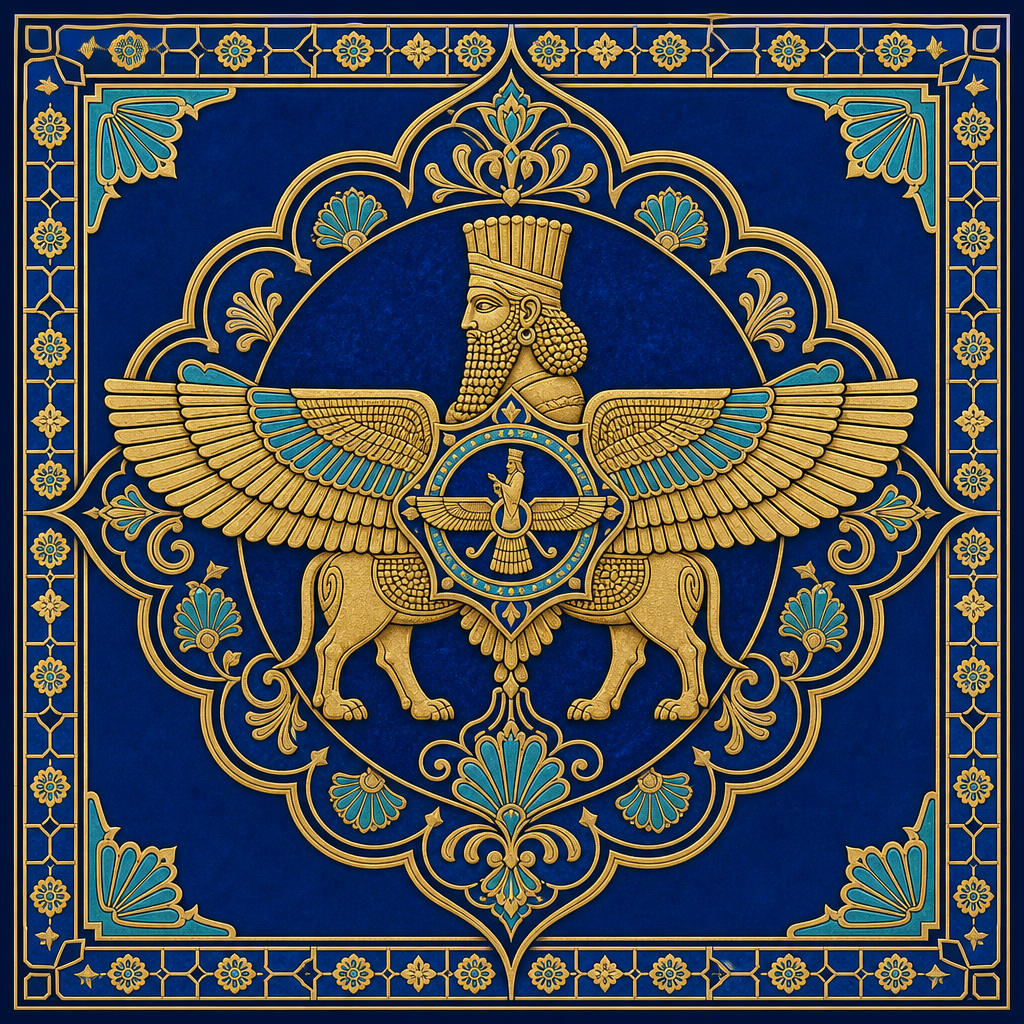
The Qajar Dynasty: Iran's Turbulent Transition to Modernity
A Century of Foreign Encroachment, Internal Reform, and Cultural Renaissance (1789–1925)
Explore the Qajar dynasty's rule over Iran, a period marked by significant territorial losses to Russia and Britain, groundbreaking constitutional reforms, and a unique artistic flourishing. This pivotal era laid the groundwork for the political and social landscape of modern Iran.
Key takeaways
- The Qajar dynasty lost vast territories in the Caucasus to Russia through the treaties of Golestan (1813) and Turkmenchay (1828).
- Naser al-Din Shah, the longest-reigning monarch of the dynasty, ruled for nearly 48 years and introduced Western technologies to Iran.
- The Tobacco Protest of 1891 was a successful popular uprising against a foreign economic concession, presaging the Constitutional Revolution.
- Iran's first constitution and parliament (Majles) were established in 1906 during the reign of Mozaffar ad-Din Shah.
- The dynasty was overthrown by Reza Khan, who staged a coup in 1921 and was later crowned Shah, founding the Pahlavi dynasty in 1925.
- The Qajars established Tehran as the capital of Iran in 1796, a status it retains to this day.

The Qajar dynasty was the ruling house of Iran, then widely known as Persia, from 1789 to 1925. Founded by Agha Mohammad Khan of the Turkoman Qajar tribe, the dynasty's 136-year reign represents a critical and tumultuous chapter in Iranian history, bridging the pre-modern and modern eras. This period was characterized by the profound challenges of European imperialism, which resulted in significant territorial losses and economic subjugation. Simultaneously, it was an era of internal transformation, marked by defensive modernization efforts, the birth of a vibrant constitutional movement, and the development of a unique and recognizable artistic and cultural identity. The legacy of the Qajars is complex, defined by both the decay of traditional authority and the foundational struggles that would shape the nation-state of Iran in the 20th century.
The Rise of the Qajars and Consolidation of Power
The origins of the Qajar tribe trace back to the Turkoman groups that were instrumental in the rise of the Safavid dynasty in the 16th century. Following the collapse of the Safavid state and the subsequent fragmentation of Iran, various factions vied for control. The Qajars, who had been settled around Astarabad (modern Gorgan) by the Caspian Sea, emerged as a major power broker in the late 18th century under the leadership of the ruthless and ambitious Agha Mohammad Khan. After the death of Karim Khan Zand in 1779, Agha Mohammad Khan escaped captivity in Shiraz and began a brutal, systematic campaign to unify the country under his rule. His conquest was marked by extreme violence, most infamously the 1794 sack of Kerman, where he ordered the blinding of thousands of male inhabitants. By 1796, he had eliminated all rivals, including the Zands, and was crowned Shah of Persia, establishing Tehran, then a small town, as his capital.
Agha Mohammad Khan’s reign was short, ending with his assassination in 1797. His nephew and successor, Fath-Ali Shah (r. 1797–1834), inherited a reunified but vulnerable state. Fath-Ali Shah’s long reign was a study in contrasts. On one hand, his court was a center of extravagant pomp and ceremony, producing a remarkable cultural flourishing in portraiture and architecture that defined the Qajar aesthetic. He maintained a famously large harem and fathered over a hundred children, creating a vast royal clan that would dominate Iranian politics for a century. On the other hand, it was under his watch that Iran was decisively drawn into the vortex of European imperial rivalry, setting the stage for devastating military defeats and territorial concessions that would haunt the dynasty until its end.
The Great Game and Territorial Losses
The 19th century saw Persia caught in the middle of "The Great Game," the strategic rivalry between the expanding Russian Empire to the north and the British Empire, which sought to protect its colonial interests in India. For both powers, Persia was a critical buffer state and a potential sphere of influence. The Qajar shahs, lacking a modern army and a centralized bureaucracy, were ill-equipped to resist the military, diplomatic, and economic pressure exerted by these two global powers. This imbalance led to a series of disastrous conflicts and treaties that permanently redrew Iran's borders.
The most damaging conflicts were the two Russo-Persian Wars. The first (1804–1813) ended with the Treaty of Golestan, which forced Persia to cede its claims to what is now eastern Georgia, Dagestan, and parts of modern-day Azerbaijan. Despite attempts by Crown Prince Abbas Mirza to modernize the Persian army with European assistance, the technological and organizational gap was too wide. A second, even more catastrophic war (1826–1828) resulted in the Treaty of Turkmenchay. This treaty not only confirmed the loss of the remaining Caucasian territories, including all of modern-day Armenia and the rest of the Azerbaijan Republic, but also imposed a heavy war indemnity and humiliating capitulations. These capitulatory rights granted Russian subjects extraterritoriality, meaning they were exempt from the jurisdiction of Iranian courts, a clear infringement on Persian sovereignty that would later be extended to other European powers.
| Treaty / Agreement | Year | Counterpart Power | Key Concessions |
|---|---|---|---|
| Treaty of Golestan | 1813 | Russian Empire | Ceded Georgia, Dagestan, northern Azerbaijan; lost exclusive naval rights in the Caspian Sea. |
| Treaty of Turkmenchay | 1828 | Russian Empire | Ceded Armenia and remaining parts of Azerbaijan; paid large indemnity; granted capitulations to Russia. |
| Treaty of Paris | 1857 | British Empire | Forced Persia to relinquish all claims to Herat and recognize the independence of Afghanistan. |
| Akhal Treaty | 1881 | Russian Empire | Ceded Merv and Transcaspian territories (modern Turkmenistan), defining the northeastern border. |
| D'Arcy Concession | 1901 | William Knox D'Arcy (British) | Granted exclusive rights to prospect for oil in most of Iran for 60 years. |
| Anglo-Russian Convention | 1907 | British & Russian Empires | Divided Iran into Russian (north) and British (southeast) spheres of influence, with a neutral zone in the center. |
Meanwhile, British pressure was applied from the east and south. Britain was primarily concerned with creating a stable buffer between Russia and British India. This meant ensuring the territory of modern Afghanistan remained outside of Persian control. After Persia captured the city of Herat, a historically and culturally important Persianate center, Britain declared war. The short Anglo-Persian War (1856–1857) ended with a swift British victory and the Treaty of Paris, compelling Persia to withdraw from Herat and formally recognize Afghanistan's independence. Throughout the century, further commissions and agreements, often heavily influenced by Britain and Russia, defined Iran's eastern borders, leading to the loss of claims over parts of Baluchistan and Sistan.
Reform, Modernization, and Economic Concessions
The humiliating military defeats spurred a nascent movement for reform within the Qajar state. Crown Prince Abbas Mirza was an early proponent of creating a `Nezam-e Jadid` (New Order) army modeled on European lines. Later, during the reign of Naser al-Din Shah (r. 1848–1896), the reformist impulse found its most effective champion in the chief minister, Mirza Taghi Khan, known as Amir Kabir. In his short tenure (1848–1851), Amir Kabir sought to centralize the state, reform the tax system, cut court expenditures, and combat corruption. His most enduring legacy was the establishment of the Dar al-Funun (Polytechnic School) in 1851, Iran's first modern institution of higher learning, which aimed to train a new elite in Western science, medicine, and military techniques. However, Amir Kabir's reforms threatened the interests of the entrenched aristocracy and a paranoid Naser al-Din Shah, who dismissed and executed him, dealing a severe blow to the cause of reform.
Naser al-Din Shah, the longest-reigning monarch of the dynasty, was a complex figure whose rule defined the second half of the 19th century. He was the first Iranian monarch to travel to Europe, making three separate tours. These trips exposed him to Western technology and institutions, and he subsequently oversaw the introduction of the telegraph, a modern postal service, and the country's first newspaper. However, he remained a deeply autocratic ruler, and his attempts at modernization were often superficial and unsystematic. His lavish spending and the need for new sources of revenue led him and his successors to a disastrous policy: selling economic concessions to foreign entrepreneurs and governments. This practice mortgaged the country's future for short-term cash.
The most notorious of these were the Reuter Concession of 1872, which granted a British subject sweeping control over most of Iran's resources and industries (later cancelled under Russian and popular pressure), and the 1890 Tobacco Concession. The latter granted a British company a complete monopoly over the production, sale, and export of all tobacco in Iran. The concession sparked widespread outrage. In a landmark move, a leading cleric issued a fatwa declaring the use of tobacco forbidden as long as the monopoly was in effect. The resulting boycott, known as the Tobacco Protest, was so effective that it brought the country's tobacco trade to a standstill, forcing a humiliated Naser al-Din Shah to cancel the concession in 1892. The event was a watershed moment, revealing the power of mass protest and the influential alliance between the clergy and the merchant class (bazaaris).
Qajar Art, Culture, and Society
Despite the political and military decline, the Qajar period witnessed a distinct and prolific cultural renaissance. Qajar painting broke away from the established traditions of Persian miniature painting, embracing large-scale, life-sized oil portraits of shahs, princes, and court beauties. This new style, exemplified by artists like Mihr 'Ali and later the great Kamal-ol-Molk, blended elements of traditional Persian idealization—such as large, almond-shaped eyes, linked eyebrows, and static poses—with European techniques of shading, perspective, and realism. The result was a unique, highly decorative, and often grandiose visual language that documented the splendor of the court.
_sitting_on_a_horse_with_his_entourage_of_officers%2C_bodyguards%2C_footmen_and_executioners_around_him._Gouache_painting_by_an_Persian_artist.jpg?width=1000)
Qajar architecture is best represented by the Golestan Palace in Tehran. The palace complex showcases the era's eclectic style, combining traditional Persian forms like the `talar` (columned porch) and courtyard layouts with European elements such as large windows, cast-iron pillars, and rococo-style stucco. One of the most characteristic features of Qajar decorative arts was the extensive use of mirror-work (`ayeneh-kari`), where countless small pieces of mirror were arranged into complex geometric patterns, creating dazzling, light-filled interiors. This aesthetic extended to tilework, which moved beyond purely geometric and calligraphic designs to include vibrant depictions of people, scenes from European life, and portraits of soldiers and officials.
Perhaps one of the most significant cultural developments of the era was the introduction and enthusiastic adoption of photography. Naser al-Din Shah was a passionate photographer himself, establishing a photo studio in the Golestan Palace and learning the technical processes. The vast archive of photographs from his reign provides an unprecedented and invaluable visual record of 19th-century Iran, documenting not just the shah and his court but also landscapes, architecture, and the lives of ordinary people. This visual documentation offers a candid counterpoint to the idealized world of Qajar painting.
Naser al-Din Shah was an avid photographer who personally took and developed many photographs, creating a vast archive that is a primary source for understanding 19th-century Iran.
Agha Mohammad Khan Qajar was the first ruler to establish Tehran as the permanent capital of Iran in 1796, transforming it from a minor town into the nation's political center.
The Lion and Sun (Shir-o Khorshid) became the preeminent national symbol of Iran, featured prominently on its flag, currency, and military insignia throughout the Qajar era.
Founded in 1851, Dar al-Funun was Iran's first modern institution of higher learning, introducing a European-style curriculum and training a new generation of reform-minded elites.
The Constitutional Revolution and the Fall of the Dynasty
By the turn of the 20th century, discontent with Qajar rule had reached a boiling point. Decades of military defeats, territorial losses, economic concessions to foreigners, and the monarchy's inability to enact meaningful reform created a fertile ground for revolutionary ideas. A growing class of Western-educated intellectuals, along with powerful merchants and reform-minded clerics, began to agitate for a `mashruteh` (constitution) that would limit the shah's absolute power and an `adālat-khāneh` (house of justice).
Agha Mohammad Khan Qajar defeats the Zands and establishes the Qajar dynasty, making Tehran his capital.
The Constitutional Revolution officially began in late 1905. A series of protests, strikes, and bast (sanctuary-seeking) in mosques and the British legation paralyzed the capital. Faced with overwhelming pressure, the frail and ailing Mozaffar ad-Din Shah (r. 1896–1907) relented. In August 1906, he signed a royal decree authorizing the creation of a national consultative assembly, the Majles. A few months later, just before his death, he signed the country's first constitution. This was a monumental achievement, transforming Iran, in principle, from an absolute monarchy to a constitutional one.
The victory, however, was short-lived. Mozaffar's successor, Mohammad Ali Shah, was a reactionary who, with the backing of Russia and the support of the Russian-officered Persian Cossack Brigade, staged a counter-revolution. In June 1908, he bombarded the Majles building, executing several leading constitutionalists and plunging the country into civil war. But the constitutionalist cause was not defeated. Resistance fighters from Tabriz, Isfahan, and Gilan mobilized and, in 1909, marched on Tehran, deposing Mohammad Ali Shah and placing his young son, Ahmad Shah, on the throne. The constitution was restored, but the state was severely weakened.
The final years of the dynasty were chaotic. The central government had little authority outside Tehran. The Anglo-Russian Convention of 1907 had already carved the country into spheres of influence, further undermining its sovereignty. During World War I, Iran, despite declaring neutrality, became a battlefield for Ottoman, Russian, and British forces. The widespread famine and political instability created a power vacuum. It was in this context that Reza Khan, a charismatic and ambitious colonel in the Persian Cossack Brigade, rose to prominence. In February 1921, he marched his troops into Tehran and staged a successful coup d'état, installing himself as Minister of War and commander-in-chief. Over the next four years, he systematically consolidated power, suppressed regional rebellions, and built up a strong, modern national army. In October 1925, the Majles, filled with his supporters, formally deposed the absent Ahmad Shah Qajar and, shortly after, voted to grant the crown to Reza Khan, who founded the Pahlavi dynasty. The turbulent Qajar era had come to an end.
References
- Encyclopaedia Iranica – Qājār Dynasty
- Encyclopaedia Iranica – Constitutional Revolution
- Amanat, Abbas. Pivot of the Universe: Nasir Al-Din Shah Qajar and the Iranian Monarchy.
- The Metropolitan Museum of Art – Art of the Qajar Period
- UNESCO World Heritage Centre – Golestan Palace
- The British Museum – The Qajar dynasty (1794-1925)
- Axworthy, Michael. A History of Iran: Empire of the Mind.
- Abrahamian, Ervand. A History of Modern Iran.
Frequently asked questions
Why was the Qajar dynasty important?
The Qajar dynasty is important because it marks Iran's transition into the modern era. During this period, Iran confronted intense European imperialism, lost significant territory, but also developed its first constitution and parliament. This era's political and social struggles fundamentally shaped the trajectory of 20th-century Iran.
How did the Qajar dynasty lose so much territory?
The Qajars lost territory primarily through military defeats by the expanding Russian Empire to the north and diplomatic pressure from the British Empire to the east. The Russo-Persian Wars resulted in the Treaties of Golestan (1813) and Turkmenchay (1828), which ceded the Caucasus. The Anglo-Persian War led to the Treaty of Paris (1857), forcing Persia to renounce claims on Herat.
What was the Iranian Constitutional Revolution?
The Iranian Constitutional Revolution (1905-1911) was a movement led by a coalition of intellectuals, merchants, and clergy against the absolutism of the Qajar monarchy and foreign influence. It successfully forced the Shah to grant a constitution and establish a national parliament (Majles), marking a major step towards modern governance in Iran.
Who was the most famous Qajar king?
Naser al-Din Shah, who reigned from 1848 to 1896, is the most famous Qajar monarch. His nearly 50-year rule was a complex mix of autocratic control and modernization. He was the first Persian monarch to visit Europe and introduced technologies like the telegraph and photography, while also facing major internal revolts.
What is Qajar art known for?
Qajar art is known for its unique blend of traditional Persian miniature techniques and European naturalism. It is particularly famous for its life-sized portraits of rulers and courtiers, characterized by idealized features, rich colors, and decorative detail. The period also saw a flourishing of tilework, lacquerware, and the early adoption of photography as an art form.
How did the Qajar dynasty end?
The Qajar dynasty ended after a period of extreme weakness following World War I. In 1921, Reza Khan, an officer in the Persian Cossack Brigade, staged a coup d'état. He consolidated power over the next four years, and in 1925, the Iranian parliament (Majles) formally deposed the last Qajar ruler, Ahmad Shah, and voted to make Reza Khan the new Shah, founding the Pahlavi dynasty.
What was the Dar al-Funun?
The Dar al-Funun, founded in 1851 in Tehran, was Iran's first modern institution of higher learning. Established by the reformist vizier Amir Kabir, it was modeled on European universities and taught subjects like medicine, military science, engineering, and geology. It played a crucial role in training a new generation of Iranian bureaucrats, intellectuals, and reformers.