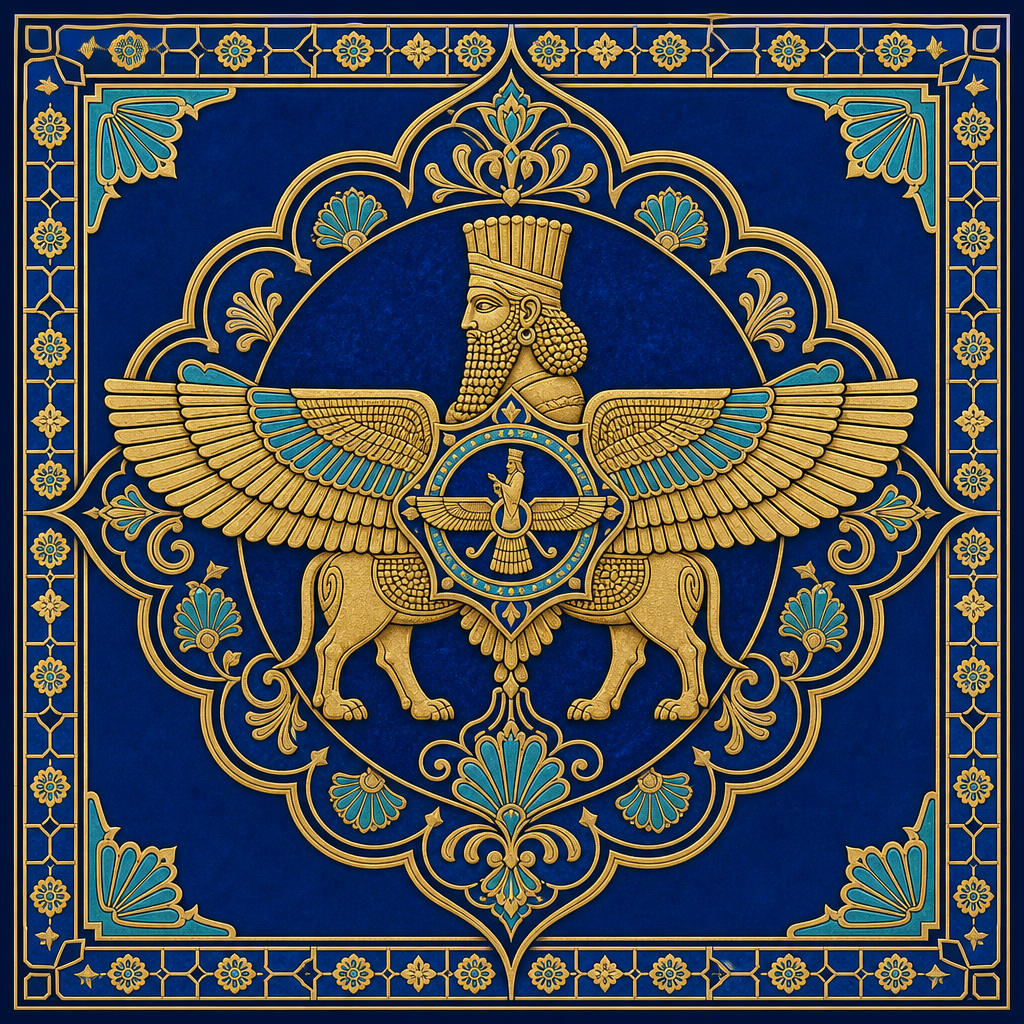
The Sun of Khorasan: How the Samanid Dynasty Forged the New Persian Renaissance
An exploration of the Persianate dynasty that revived a language and laid the cultural foundations for modern Iran and Central Asia.
The Samanid dynasty (819–999 CE) was a pivotal Persianate power in Central Asia that emerged from the fragmenting Abbasid Caliphate. By championing a cultural and linguistic revival, they established New Persian as a language of literature and statecraft, sponsoring legendary figures like Rudaki and laying the groundwork for Ferdowsi's Shahnameh.
Key takeaways
- The Samanid dynasty, ruling from 819 to 999, was the first native Persian dynasty to re-establish sovereignty in Greater Iran after the Arab conquest.
- Under rulers like Ismail Samani (r. 892–907), the Samanids established Bukhara as a major political and intellectual capital of the Islamic world.
- The Samanids consciously promoted the New Persian language, leading to the works of poets like Rudaki and the beginning of Ferdowsi's epic *Shahnameh*.
- The Ismail Samani Mausoleum in Bukhara is a masterpiece of early Islamic architecture and a symbol of the dynasty's sophisticated artistic achievements.
- The dynasty's decline was precipitated by the rise of their Turkic slave-soldiers, leading to their succession by the Ghaznavids and Qarakhanids.
- The Samanid legacy was the creation of a distinct Persian-Islamic cultural synthesis that profoundly shaped the identity of Iran, Afghanistan, Tajikistan, and Uzbekistan.

The Samanid dynasty was a Sunni Muslim empire of Persian origin that governed large parts of Central Asia and Greater Khorasan from 819 to 999 CE. Emerging as autonomous governors under the suzerainty of the Abbasid Caliphate, they established the first native Persian dynasty to rule in the Iranian world since the Arab conquest two centuries prior. More than a political power, the Samanids were the architects of a profound cultural flourishing known as the New Persian Renaissance. From their magnificent capital at Bukhara, they consciously sponsored a revival of the Persian language, arts, and sciences, creating a sophisticated Persian-Islamic cultural synthesis that would define the region for centuries and lay the literary foundations of modern Persian (Farsi).
Origins and Consolidation of Power
The dynasty's origins trace back to Saman Khuda, a Zoroastrian landowner (*dehqan*) from the region of Balkh in modern-day Afghanistan. In the early 8th century, he sought the protection of the Abbasid governor of Khorasan, Asad ibn Abdallah al-Qasri, and converted to Islam. In recognition of their service to the Caliphate, Saman Khuda's four grandsons—Nuh, Ahmad, Yahya, and Ilyas—were granted governorships over the key cities of Samarkand, Ferghana, Shash, and Herat, respectively, by the Abbasid Caliph al-Ma'mun around 819 CE. This established the family's foothold in Transoxiana, the fertile lands beyond the Oxus River (Amu Darya).
For several decades, the Samanids ruled as loyal vassals of the Abbasids, dutifully collecting taxes and securing the northeastern frontier against Turkic nomads. It was under Nasr I, a grandson of Ahmad, that the family's authority was consolidated over all of Transoxiana. However, the pivotal figure in the dynasty's rise to true independence was Nasr's brother, Ismail Samani (r. 892–907). In 875, the Caliph had invested Nasr with authority over the entire region, but internal rivalries simmered. Ismail, governing Bukhara, eventually challenged and defeated his brother, but in a show of public deference to the Caliphate's order, he did not formally assume power until Nasr's death. This political acumen characterized his reign.
Ismail's defining military achievement came in 900 CE when he confronted the Saffarid dynasty, a rival Persian power that had conquered much of modern Iran and Afghanistan. At the Battle of Balkh, Ismail's smaller but highly disciplined army decisively defeated the Saffarid ruler Amr ibn al-Layth. This victory not only secured Khorasan for the Samanids but also earned them the formal investiture from the Abbasid Caliph in Baghdad as the legitimate rulers of the eastern Iranian lands. While still nominally recognizing the Caliph's spiritual authority, Ismail had forged a de facto independent and powerful state. He established Bukhara as his capital, transforming it from a provincial town into one of the Islamic world's most brilliant centers of learning and culture.
The Samanid State: Administration, Economy, and Society
The Samanid state was a model of sophisticated governance, blending Abbasid administrative structures with long-standing Persian bureaucratic traditions. The court in Bukhara was organized with a complex chancellery (*divan*) system, overseen by a vizier, often recruited from learned Persian families. This bureaucracy was largely staffed by the *dehqans*, the class of hereditary landed gentry to which the Samanids themselves belonged. This class, which had preserved pre-Islamic Iranian traditions and administrative knowledge, became the backbone of the Samanid state and the chief patrons of the cultural renaissance.
Economically, the Samanid empire thrived due to its strategic position astride the great trade arteries of the Silk Road. Their cities—Bukhara, Samarkand, Nishapur, and Merv—were bustling cosmopolitan centers. Samanid silver dirhams, known for their high quality and purity, became a preferred international currency, found by archaeologists as far away as Scandinavia, testament to a vast trade network linking the Central Asian heartland with Viking traders, the Russian steppes, China, and the rest of the Islamic world. Agriculture was the foundation of this wealth, supported by extensive irrigation systems that made Transoxiana a breadbasket. Furthermore, Samarkand became famous for its production of high-quality paper, a technology acquired from China that the Islamic world would later transmit to Europe.
| City | Region | Economic/Cultural Role | Notable Feature |
|---|---|---|---|
| Bukhara | Transoxiana | Political capital, major religious and intellectual center. | Ismail Samani Mausoleum, thriving markets, vast libraries. |
| Samarkand | Transoxiana | Major Silk Road hub, center of commerce and crafts. | Famous for high-quality paper production and scientific inquiry. |
| Nishapur | Khorasan | Leading center for pottery, theology, and Sufism. | Source of the celebrated Samanid epigraphic slipware pottery. |
| Balkh | Khorasan | Ancient city, trade hub, and birthplace of many scholars. | Ancestral homeland of the Samanid family and the Barmakids. |
| Merv | Khorasan | Agricultural center on the Murghab River, major stop on the Silk Road. | Known for its libraries, observatories, and complex irrigation canals. |
| Herat | Khorasan | Strategic military and commercial outpost. | Important provincial capital connecting Persia with Central Asia. |
Samanid society was multi-ethnic and multi-confessional, although Sunni Islam was the state religion. While the ruling and administrative elite were Persian, the population included Sogdians, Bactrians, and a growing number of Turkic peoples, many of whom were integrated into the army as military slaves (*ghilman* or mamluks). This reliance on a Turkic military class would, in time, prove to be the dynasty's undoing, but for most of the 10th century, it provided the security necessary for commerce and culture to flourish.
The New Persian Renaissance
The most enduring legacy of the Samanids is their deliberate cultivation of New Persian literature. Following the Arab conquest in the 7th century, Arabic had become the dominant language of religion, science, and administration throughout the Islamic world. While Pahlavi (Middle Persian) continued in some Zoroastrian circles, the Persian language had been largely eclipsed in public life. The Samanids reversed this trend. In a conscious act of cultural patronage, they encouraged poets and scholars to write in Persian, but using the Arabic script, which was better suited for the new administrative and religious realities. This hybrid language, enriched by Arabic vocabulary but fundamentally Iranian in its grammar and spirit, was New Persian.
The court at Bukhara became a magnet for talent. The first great poet to write in this new medium was Rudaki (d. 941), a blind minstrel from a village near Samarkand. Honored at the court of Nasr II, Rudaki is hailed as the "father of Persian poetry." He composed in a variety of forms—qasidas, ghazals, and ruba'is—and demonstrated that Persian was a subtle and powerful vehicle for lyrical expression, capable of rivaling Arabic in its elegance and scope. Although only a fraction of his vast output survives, his influence was immense, setting the standard for all subsequent Persian poets.
It was also under the Samanids that the project to preserve Iran's national epic, the *Shahnameh* (Book of Kings), began. The Samanid rulers, keen to connect their reign with the glory of the pre-Islamic Persian shahs, commissioned the poet Daqiqi to begin versifying the ancient legends and histories of Iran. After Daqiqi's early death, the monumental task was taken up by Abolqasem Ferdowsi, who spent over thirty years on the epic, completing it after the Samanids had fallen. Without the initial impetus and cultural environment fostered by the Samanid court, this cornerstone of Persian identity might never have been created.
The four grandsons of Saman Khuda are appointed as governors in Transoxiana by the Abbasid Caliph al-Ma'mun.
Flourishing of Science and Art
The intellectual vibrancy of the Samanid realm extended far beyond literature. The cities of Bukhara and Samarkand became world-class centers for science and philosophy, attracting some of the greatest minds of the age. It was in this environment that the brilliant polymath Abu Ali Ibn Sina (known in the West as Avicenna) was born near Bukhara in 980 CE. He began his prodigious career serving in the libraries and courts of the late Samanid rulers, writing foundational works on medicine and philosophy that would influence scholarship in both the Islamic world and Europe for centuries. Other luminaries like the great scientist and scholar Al-Biruni also emerged from this fertile intellectual ground on the eastern edge of the Samanid sphere of influence.
In art and architecture, the dynasty left an indelible mark. The most iconic surviving monument is the Mausoleum of Ismail Samani in Bukhara. Completed around 905 CE, this compact, cube-shaped structure is a masterpiece of baked brick construction. Its intricate brickwork creates complex, shifting patterns of light and shadow, demonstrating a sophisticated geometric sensibility that would become a hallmark of Islamic architecture in the region. It is one of the earliest monumental tombs in the Islamic world and a powerful symbol of the dynasty's Central Asian roots and Islamic faith.
Samanid pottery, particularly the slip-painted ware produced in Nishapur and Samarkand, is another high point of their artistic production. These elegant ceramics are famous for their stark, minimalist beauty, typically featuring a white or cream-colored slip decorated with bold Kufic calligraphy in black or brown. The inscriptions were often proverbs or blessings, such as "Knowledge: its taste is bitter at first, but sweeter than honey at the end." This fusion of aesthetics and ethics exemplifies the cultivated atmosphere of the Samanid era.
Decline, Fall, and Lasting Legacy
The golden age of the Samanids was relatively brief. By the mid-10th century, the state began to face serious internal and external pressures. The central government's power was increasingly challenged by the powerful *dehqan* aristocrats in the provinces and, more critically, by the dynasty's own Turkic slave-guard. These Turkic generals, known as *ghilman* or mamluks, were the state's military elite, but their ambition grew along with their power. Ambitious generals like Alptigin, a former Samanid slave-guard, carved out his own domain in Ghazna (modern Afghanistan), laying the foundation for what would become the powerful Ghaznavid Empire under his successor, Sabuktigin.
Weakened by internal court intrigues and the breakaway of their Ghaznavid vassals in the south, the Samanids became vulnerable to another rising Turkic power, the Qarakhanids, who were advancing from the north and east. In 992, the Qarakhanids briefly captured Bukhara before being repelled. However, the end was near. In 999 CE, the Qarakhanids swept back in, seizing Bukhara and deposing the last Samanid amir. The Samanid territories were partitioned: the Qarakhanids took Transoxiana, while the Ghaznavids solidified their control over Khorasan.
Samanid silver dirhams were so highly regarded for their purity that they were used as the primary currency for trade along the Volga trade routes and have been found in numerous Viking hoards across Scandinavia and Russia.
The great Islamic philosopher Al-Farabi, known as the 'Second Teacher' (after Aristotle), flourished in the period immediately preceding the Samanid peak, and his works heavily influenced the intellectual climate of the Samanid courts where figures like Ibn Sina would later study.
According to historical accounts, the Samanid amir Nasr II was once prepared to move his court but was convinced to stay in Bukhara after Rudaki composed a masterful poem in Persian extolling the city's virtues, a testament to the language's power and prestige.
The Samanid dynasty is officially recognized as a foundational part of the national heritage of Tajikistan. The Tajik currency is the Somoni, and the highest mountain in the country was renamed Ismoil Somoni Peak.
Though their political rule was extinguished, the Samanid legacy was profound and enduring. They had successfully created a new model of statehood: a Persianate court culture and administrative system governed by a Turkic military power. This model was adopted and perpetuated by their successors, the Ghaznavids, Seljuks, and later dynasties, ensuring the continuity of Persian culture across Central Asia and the Iranian plateau. Most importantly, by championing the New Persian language at a critical moment, they rescued it from oblivion and set it on a course to become one of the world's great literary languages. The poems of Rumi, Hafez, and Sa'di, and the very identity of modern Iran, Afghanistan, and Tajikistan, are all part of the enduring inheritance of the Samanid renaissance.
References
- Bosworth, C. E. (1986). "The Ṭāhirids and Ṣaffārids", "The Samanids". The Cambridge History of Iran, Volume 4.
- Frye, R. N. (1975). The Golden Age of Persia: The Arabs in the East.
- Starr, S. F. (2013). Lost Enlightenment: Central Asia's Golden Age from the Arab Conquest to Tamerlane.
- Canfield, R. L. (1991). Turko-Persia in Historical Perspective.
- Pancaroğlu, O. (2007). "Serving Wisdom: The Contents of Samanid Epigraphic Pottery". In Studies in Islamic and Later Indian Art from the Arthur M. Sackler Museum.
- UNESCO World Heritage Centre. "Historic Centre of Bukhara".
- Yarshater, E., et al. (eds.). Encyclopaedia Iranica. Columbia University.
- Heilbrunn Timeline of Art History. "The Samanid Dynasty (819–1005)". The Metropolitan Museum of Art.
- Foltz, Richard. (2019). A History of the Tajiks: Iranians of the East.
- The British Museum. Bowl with Kufic inscription, 10th century, Samarkand.
- The David Collection. "The Samanids and the Buyids (c. 900-1050)".
Frequently asked questions
Who were the Samanids?
The Samanids were a Sunni Muslim dynasty of Persian origin that ruled Greater Khorasan and Transoxiana from 819 to 999. Descending from Saman Khuda, a Zoroastrian noble who converted to Islam, they established a powerful and culturally vibrant state with its capital in Bukhara, becoming pivotal in the revival of Persian culture and language.
Why was the Samanid dynasty important?
The Samanid dynasty is crucial for sparking the "New Persian Renaissance." By patronizing poets and scholars who wrote in Persian using the Arabic script, they legitimized New Persian as a language of high culture and statecraft. This act ensured the language's survival and flourishing, fundamentally shaping the identity of Iran, Afghanistan, and Tajikistan.
Who was the most famous Samanid ruler?
Ismail Samani (r. 892–907) is considered the true founder of the independent and powerful Samanid state. He defeated rival powers, unified Transoxiana and Khorasan, and established Bukhara as his celebrated capital. Renowned for his justice and piety, he is revered as a national hero in Tajikistan and a key historical figure in Uzbekistan.
What language did the Samanids promote?
The Samanids championed the use of New Persian, the ancestor of modern Farsi, Dari, and Tajik. In a conscious cultural policy, they sponsored poets like Rudaki to use Persian, written in the Arabic script, for literature. This broke the dominance of Arabic in high culture and laid the foundation for epics like Ferdowsi's Shahnameh, securing Persian's future.
How did the Samanid dynasty fall?
The Samanid dynasty declined due to internal power struggles and the rise of their own Turkic military slaves (*ghilman*). These Turkic generals, like the founders of the Ghaznavid dynasty, broke away to form their own states. The final blow came in 999 CE when another Turkic group, the Qarakhanids, conquered the capital Bukhara, ending Samanid rule.
Where was the Samanid empire located?
The Samanid empire was centered in Transoxiana (modern Uzbekistan and Tajikistan) and Greater Khorasan (northeastern Iran and Afghanistan). Its capital was Bukhara, with other major cities like Samarkand and Nishapur serving as vital hubs on the Silk Road. This strategic territory connected the Islamic world with Central Asia, China, and Europe.
What was the Samanid economy based on?
The Samanid economy thrived on agriculture in the fertile river valleys of Transoxiana and its control over key Silk Road trade routes. Their high-purity silver dirhams became an international currency. The empire was also a center for crafts, famously producing high-quality paper in Samarkand and exquisite ceramics in Nishapur, which were exported widely.
What is the Ismail Samani Mausoleum?
Located in Bukhara, the Ismail Samani Mausoleum is the 10th-century tomb of the dynasty's founder and a masterpiece of Islamic architecture. Built entirely of baked brick, its cube-like form is decorated with intricate, geometric patterns. It is a powerful symbol of the Samanids' cultural sophistication and their Central Asian heritage, influencing regional architecture for centuries.