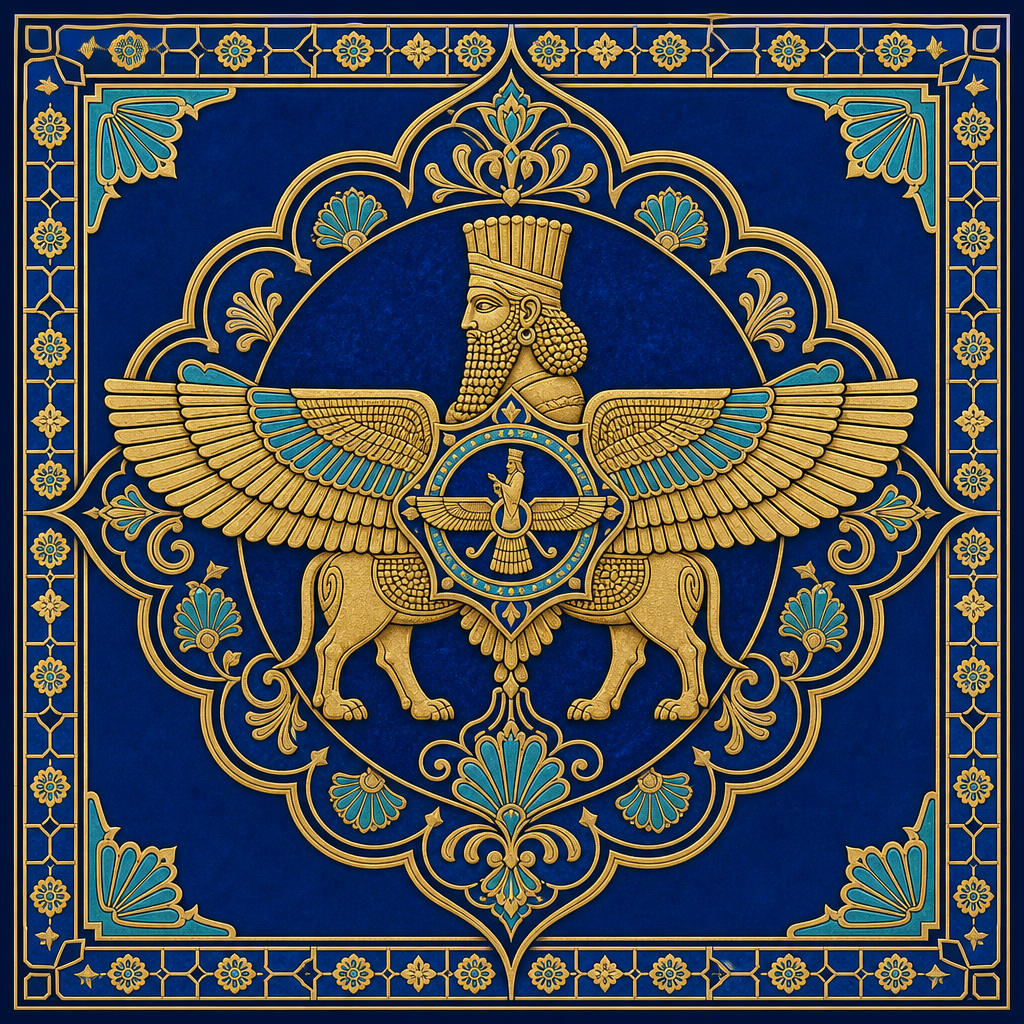
The Poet Who Saved a Language: Ferdowsi and the Epic of the Shahnameh
How 60,000 Couplets Forged a National Identity and Secured the Future of the Persian Language
The Shahnameh, or 'Book of Kings,' is the monumental epic poem by Abu'l-Qasem Ferdowsi. Comprising 60,000 rhyming couplets, it is the world's longest epic penned by a single author. More than a literary masterpiece, the Shahnameh played a decisive role in preserving and standardizing the modern Persian language and has served as a cornerstone of Iranian cultural identity for a millennium.

In the grand tapestry of world literature, few works hold the same foundational cultural and linguistic status as the Shahnameh (Šāhnāme), the 'Book of Kings'. Penned over a thousand years ago by the poet Abu'l-Qasem Ferdowsi of Tus, this colossal epic of some 60,000 distichs, or rhyming couplets, is the national epic of Iran and the wider Persian-speaking world. It is, by a significant margin, the longest epic poem ever written by a single author. Yet, its magnitude is measured not just in its length, but in its profound and enduring impact. The Shahnameh is not merely a collection of myths and historical chronicles; it is the very vessel in which the modern Persian language was protected, refined, and passed down through generations. In an era when Arabic was the dominant language of power, religion, and science, Ferdowsi undertook a thirty-year mission to weave the soul of ancient Iran into a linguistic masterpiece, ensuring that the tales of its mythical creators, heroic champions, and storied kings would never be silenced.
A Language at a Crossroads: The World Before Ferdowsi
To understand the monumental achievement of the Shahnameh, one must first appreciate the precarious state of the Persian language and identity in the centuries preceding its creation. The Arab conquest of the Sasanian Empire in the mid-7th century CE was a watershed moment that irrevocably altered the political, religious, and cultural landscape of the Iranian plateau. The Sasanian dynasty, the last pre-Islamic Iranian empire, collapsed, and with it, the state-sponsored infrastructure of Zoroastrianism and Middle Persian (Pahlavi), its official language. In the ensuing centuries, a gradual but pervasive process of Islamization and Arabization took hold. Arabic, the language of the Qur'an and the new administration, became the lingua franca for government, theology, philosophy, and the sciences. Middle Persian, with its cumbersome Pahlavi script, was increasingly relegated to the private sphere and the liturgical use of the dwindling Zoroastrian communities.
However, the Persian spirit and language did not vanish. In the remote eastern provinces of the Caliphate, particularly in Khorasan and Transoxiana (modern-day northeast Iran, Afghanistan, and Central Asia), a cultural renaissance began to stir. By the 9th and 10th centuries, local dynasties of Iranian origin, most notably the Samanids of Bukhara, began to assert their autonomy. While politically loyal to the Abbasid Caliph in Baghdad, these rulers actively cultivated a distinct Perso-Islamic culture in their courts. They became patrons of a linguistic revival, sponsoring poets and scholars to write in a new, vibrant form of the language: New Persian. This new idiom, written in the Perso-Arabic script, retained the core grammatical structure and a vast portion of the vocabulary of its Iranian predecessors but was enriched and made more flexible by the selective integration of Arabic loanwords. It was in this fertile ground of cultural self-assertion that the dream of a grand national epic in the Persian language was born. Before Ferdowsi, other poets had tried; Mas'udi Marvazi is said to have written an early versified Shahnameh, and Ferdowsi’s direct predecessor, Daqiqi, was commissioned by the Samanids to begin the task but was murdered after composing only about a thousand verses concerning the rise of the prophet Zoroaster.
Frequently asked questions
What is the Shahnameh?
The Shahnameh, or 'Book of Kings,' is a monumental epic poem by the Persian poet Ferdowsi. It is considered a literary masterpiece and a foundational text for Iranian cultural identity.
Who wrote the Shahnameh?
The Shahnameh was penned by a single author, the Persian poet Abu'l-Qasem Ferdowsi. He dedicated decades of his life to completing this massive work.
How long is the Shahnameh?
The Shahnameh consists of 60,000 rhyming couplets. It is recognized as the world's longest epic poem written by a single author.
Why is the Shahnameh important for the Persian language?
The Shahnameh played a decisive role in preserving and standardizing the modern Persian language. Its composition helped ensure the language's survival and continuity.
What is the cultural significance of the Shahnameh?
For a millennium, the Shahnameh has served as a cornerstone of Iranian cultural identity. It connects generations of Iranians to their ancient history, mythology, and linguistic heritage.
What does the title 'Shahnameh' mean?
The title 'Shahnameh' literally translates from Persian to 'Book of Kings.' This reflects the epic's narrative, which chronicles the mythical and historical rulers of ancient Iran.