Nowruz: A 3,000-Year Journey of Renewal and Spring
From Ancient Zoroastrian Rites to a Global Heritage
Nowruz, the Persian New Year, marks the astronomical spring equinox and has been celebrated for over 3,000 years. Rooted in Zoroastrian mythology and the region's agrarian past, it symbolizes rebirth, renewal, and the victory of light over darkness. Today, it is a vibrant secular holiday for over 300 million people worldwide, recognized by UNESCO as an Intangible Cultural Heritage of Humanity.
Key takeaways
- Nowruz marks the astronomical spring equinox and has been celebrated for over 3,000 years, originating in ancient Zoroastrianism.
- The Haft-sin table is a central tradition, featuring seven symbolic items starting with 'S' in Persian that represent hopes for the new year.
- Preparations include house cleaning (Khaneh-Tekani) and a fire-jumping festival (Chaharshanbeh Suri) for purification before the new year.
- The holiday concludes on the 13th day with Sizdah Bedar, when people picnic outdoors to discard misfortune and welcome the new.
- Recognized by UNESCO, Nowruz is a secular holiday for over 300 million people in Iran, Central Asia, the Caucasus, and the diaspora.
- Key Nowruz foods, like Sabzi Polo ba Mahi (herbed rice with fish), symbolize life and renewal and are central to the celebration.

Nowruz, literally 'New Day' in Persian (نو روز), is a festival marking the first day of spring and the renewal of nature. Its origins are deeply rooted in the traditions of Iranian peoples and Zoroastrianism, stretching back at least 3,000 years. Celebrated precisely at the moment of the vernal equinox, it is a testament to a civilization's enduring connection to the cycles of the natural world. While its spiritual home lies on the Iranian plateau, Nowruz is celebrated by more than 300 million people worldwide, across Central Asia, the Balkans, the Caucasus, and by diaspora communities globally. It embodies a universal theme of rebirth and the triumph of light over darkness, of spring over winter. This ancient rite of passage has evolved over millennia, absorbing new meanings while retaining its core symbolism of hope, purification, and reconciliation. Its profound cultural significance was formally acknowledged in 2010 when the United Nations recognized March 21st as the International Day of Nowruz, declaring it a celebration that promotes peace, solidarity, and cultural diversity.
Origins and Historical Evolution
Ancient Roots in Zoroastrianism and Mythology
The conceptual foundations of Nowruz lie in Zoroastrianism, one of the world's oldest continuously practiced religions, which originated in ancient Iran. Zoroastrian cosmology is defined by a dualistic struggle between the forces of good, light, and life, represented by Ahura Mazda, and the forces of evil, darkness, and stagnation, represented by Angra Mainyu (or Ahriman). The changing seasons were seen as a physical manifestation of this cosmic battle. Winter was the time of Ahriman's temporary triumph, when the world was cold, dark, and seemingly lifeless. The spring equinox, therefore, was a moment of profound religious importance, symbolizing the victory of Ahura Mazda, the return of light and warmth, and the rejuvenation of the world. Nowruz is the ultimate celebration of this renewal.
These ancient beliefs are interwoven with Persian mythology, most famously recorded in the epic poem, the *Shahnameh* ('The Book of Kings'), written by Ferdowsi around 1000 CE. The *Shahnameh* attributes the founding of Nowruz to the mythological King Jamshid. According to the legend, Jamshid constructed a jewel-encrusted throne and had demons carry him into the heavens. The world's peoples gathered in awe, showering him with gems and proclaiming this day of his ascent as the 'New Day'. In another telling, Jamshid is credited with defeating the demons of winter and bringing prosperity back to the land, an act so significant that it was commemorated annually. While Jamshid is a figure of myth, the association links Nowruz to the very concept of benevolent kingship and civilizational order in the Persian psyche.
The Great Empires: Achaemenid and Sasanian Eras
The first great historical empire to celebrate Nowruz was the Achaemenid Empire (c. 550–330 BCE). Although direct textual evidence is sparse, the magnificent reliefs at the ceremonial capital of Persepolis provide powerful circumstantial evidence. The Apadana staircase depicts delegations from every corner of the vast empire—from Lydians and Scythians to Ethiopians and Indians—dressed in their native attire and bearing tribute. Many scholars contend that these reliefs immortalize the grand celebrations of Nowruz, when subject nations would reaffirm their loyalty to the King of Kings and participate in a festival that symbolized the unity and prosperity of the empire. For the Achaemenids, Nowruz was not just a religious holiday but a crucial political instrument for administering their multicultural state.
The celebration of Nowruz reached its zenith of imperial grandeur during the Sasanian Empire (224–651 CE). For the Sasanians, who had consciously revived Zoroastrianism as the state religion, Nowruz was the most important festival of the year. Historical sources from this period describe elaborate, multi-day court rituals. The king would hold a public audience, prisoners might be granted amnesty, and special coins were minted to commemorate the occasion. Commoners engaged in their own festivities, lighting fires, sprinkling water, and exchanging gifts. The Sasanian period codified many of the Nowruz traditions, establishing a template of royal and popular celebration that would influence its practice for centuries to come.
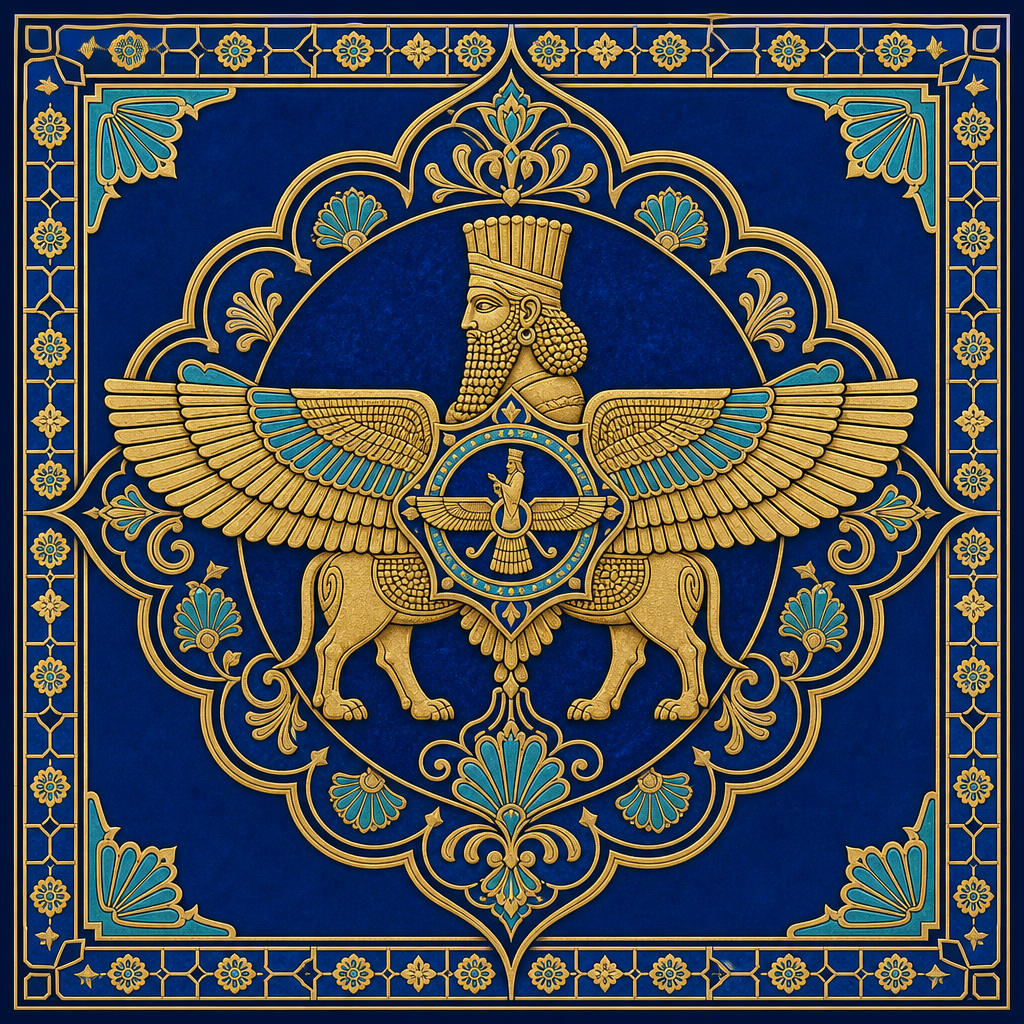
The early development of Zoroastrianism, whose cosmology of light vs. dark provides the foundational philosophy for Nowruz as the victory of spring over winter.
Survival and Adaptation
Following the Arab conquest of Persia in the 7th century CE and the gradual Islamization of the region, many ancient Zoroastrian practices waned. However, Nowruz proved remarkably resilient. While initially suppressed by some Umayyad caliphs as a pagan practice, it was too deeply ingrained in the cultural fabric to be eradicated. It was quickly adopted and even championed by subsequent Persianate dynasties, such as the Samanids and Buyids, who saw the revival of pre-Islamic traditions as a way to assert a distinct cultural identity. Over time, Nowruz shed most of its overt Zoroastrian theology, transforming into a largely secular cultural celebration, cherished by Iranians of all religious backgrounds. This cultural continuity was further ensured by the great Persian poets and scientists. The 11th-century astronomer-poet Omar Khayyam was instrumental in reforming the calendar to ensure Nowruz's astronomical accuracy, while poets like Ferdowsi and Hafez wove the festival and its themes of renewal into the very heart of Persian literature.
The Rituals and Symbolism of Nowruz
The celebration of Nowruz is not a single-day event but a rich tapestry of rituals that begin weeks before the equinox and extend for nearly two weeks after. These customs are laden with symbolism, focusing on purification, renewal, and a harmonious relationship with the natural world.
Preparations: Khaneh-Tekani and Chaharshanbeh Suri
Preparations for Nowruz commence weeks in advance with *Khaneh-Tekani* (literally 'shaking the house'), a vigorous spring cleaning. This is more than just tidying; families wash carpets, paint walls, and repair or discard old items. This physical purification symbolizes a spiritual cleansing, ridding the home and its inhabitants of the past year's misfortunes to welcome a fresh, auspicious beginning. It is also customary to purchase new clothes to wear for the new year, signifying personal renewal.
On the eve of the last Wednesday before Nowruz, a vibrant festival of fire known as *Chaharshanbeh Suri* ('Red Wednesday') takes place. People gather in streets and public spaces to light bonfires and leap over the flames. As they jump, they chant a traditional verse: *'Zardi-ye man az to, sorkhi-ye to az man,'* which translates to 'My yellow sickness is yours, your fiery red is mine.' This ritual symbolically hands over one's pallor, sickness, and problems to the fire and in return takes its red-hot energy, warmth, and health. It is a powerful act of catharsis and purification before the new year arrives.
The Haft-sin Table and Tahvil
The most prominent symbol of Nowruz is the *Haft-sin* ('Seven S') table, a special arrangement that serves as the focal point for the celebrations. It is a tableau of seven items whose names begin with the letter 'S' (س) in Persian. While the specific items can vary slightly by region and family tradition, the standard seven are each rich in symbolism:
| Persian Name | Item | Symbolism |
|---|---|---|
| Sabzeh | Wheat, barley, or lentil sprouts | Rebirth, renewal, and the abundance of nature |
| Samanu | Sweet wheat germ pudding | Affluence, power, and bravery |
| Senjed | Dried oleaster fruit | Love and affection |
| Serkeh | Vinegar | Patience, age, and wisdom |
| Sib | Apple | Health and beauty |
| Sir | Garlic | Medicine and protection from illness |
| Somagh | Sumac | The color of sunrise and the triumph of light over dark |
In addition to these seven items, other objects are traditionally placed on the table. A mirror symbolizes self-reflection and the sky, candles represent enlightenment and happiness, painted eggs signify fertility and creation, and a goldfish in a bowl represents life and the Pisces zodiac sign, which the sun is leaving. A book of wisdom, typically the *Shahnameh*, the Divan of Hafez, or the Quran, is also placed on the table as a source of guidance for the year ahead.
The First Thirteen Days
Once the *Tahvil* occurs, celebrations begin. Family members exchange greetings of *'Nowruz Mobarak'* or *'Eid-e Shoma Mobarak'* ('Happy New Year'), hug, and kiss. Younger members receive gifts, traditionally crisp new banknotes called *'eidi'*, from their elders. The first few days of Nowruz are dedicated to visiting family and friends, a practice known as *'did-o-bazdid'*. Protocol dictates that younger individuals visit their elders first, who then return the visit later. Guests are hosted with pastries, teas, and a special mixture of nuts and dried fruits called *'ajil'*. This intense period of socializing reinforces kinship and community bonds.
The Nowruz holiday period culminates on the thirteenth day of the new year with a festival called *Sizdah Bedar* ('Thirteenth Day Out'). In Persian tradition, the number thirteen is considered unlucky, and it is believed that by staying indoors on this day, one might attract misfortune. To ward off this bad luck, virtually the entire population heads outdoors for a massive, nationwide picnic. Parks, fields, and riverbanks are filled with families and friends enjoying the spring weather, playing games, and sharing food. As a final symbolic act, the *sabzeh* (the sprouts from the Haft-sin table), which has been collecting all the household's sickness and bad luck, is thrown into running water. Young women often tie knots in the blades of grass before tossing it, making a wish to find a partner in the coming year. This act symbolizes releasing the old and embracing the new, returning life to nature and completing the cycle of renewal.
Culinary Traditions of Nowruz
Food plays a central symbolic role in Nowruz celebrations, extending beyond the Haft-sin table. The traditional meal served on the eve or first day of the new year is *Sabzi Polo ba Mahi* (herbed rice with fish). The green herbs (such as parsley, cilantro, and dill) represent rebirth and the renewal of nature, while the fish symbolizes life and vitality. Another popular dish is *Kuku Sabzi*, a dense herb frittata, which similarly celebrates the return of spring's greenery. Noodles also feature prominently in dishes like *Ash-e Reshteh* (a thick noodle soup) and *Reshteh Polo* (rice with noodles), where the noodles (*reshteh*) are said to symbolize the path of life and one's fortunes in the year to come. Throughout the holiday, homes are filled with an abundance of sweets (*shirini*), nuts (*ajil*), and pastries to welcome and host guests.
Nowruz in the Modern World
Today, Nowruz is a vibrant, living tradition that has transcended its ancient origins to become a powerful symbol of cultural identity, diplomatic goodwill, and the universal human desire for renewal. It is a shared heritage that connects diverse communities across a vast geographical expanse.
| Country / Region | Local Name | Distinctive Traditions | Official Holiday Duration |
|---|---|---|---|
| Iran | Nowruz | Haft-sin table, Chaharshanbeh Suri, Sizdah Bedar picnics. | Approx. 13-14 days |
| Afghanistan | Nawroz | Jashn-e Dehqan (Farmer's Day), setting up a Haft Mewa table (seven fruits), Buzkashi games. | 1-2 days |
| Tajikistan | Navruz | Large public festivals with music and dance, 'Fire-worshipping' ceremonies, symbolic plowing. | 4 days |
| Azerbaijan | Novruz Bayramı | Features characters Kosa (beardless man) & Keçəl (bald man), jumping over bonfires, children banging pots for treats. | 5 days |
| Kurdistan Region | Newroz | Strong political symbolism of resistance and freedom, mass gatherings with bonfires in mountains, traditional dancing. | 1 day |
| Uzbekistan | Navro'z | Public festivals, preparation of Sumalak (Samanu) in huge pots as a community, traditional games. | 1 day |
| Kazakhstan | Nauryz | Focus on reconciliation and charity, preparation of Nauryz-kozhe (a soup with 7 ingredients), horse races. | 3 days |
For the vast diaspora of Iranians and other celebrating peoples living in North America, Europe, and Australia, Nowruz serves as a vital link to their ancestral heritage. Major cities like Los Angeles, Toronto, London, and Paris host large public festivals, parades, and cultural events, allowing communities to celebrate together and share their traditions with their non-Persian neighbors. These events are crucial for passing on cultural knowledge to younger, second and third-generation individuals, ensuring the festival's continued vitality far from its lands of origin.
The word 'Nowruz' is a compound of two words from Old Persian: 'nava' (new) and 'rəzaŋh' (day/daylight), reflecting its millennia-old history on the Iranian plateau.
The Jalali calendar, which sets the date of Nowruz, is an astronomical solar calendar. It is considered more accurate than the Gregorian calendar, as it drifts only one day every 3.8 million years, whereas the Gregorian calendar drifts one day every 3,236 years.
Nowruz was first inscribed on UNESCO's list of Intangible Cultural Heritage of Humanity in 2009. In 2016, the nomination was extended to include Afghanistan, Azerbaijan, India, Iraq, Kazakhstan, Kyrgyzstan, Pakistan, Tajikistan, Turkey, Turkmenistan, and Uzbekistan, alongside Iran.
The goldfish, a common item on the Haft-sin for about a century, has become controversial. Animal rights and environmental activists in Iran and the diaspora now advocate against using live fish, pointing to high mortality rates and the ecological damage of releasing them into non-native waters.
Economic and Social Dimensions
Beyond its cultural and spiritual significance, Nowruz has a profound economic and social impact. The weeks leading up to the holiday trigger a major economic boom, comparable to the Christmas shopping season in the West. This period, known as *'kharid-e shab-e eid'* (New Year's Eve shopping), sees a massive surge in consumer spending. Families flock to bazaars and shopping centers to buy new clothes, home furnishings, flowers (especially hyacinths and tulips), and the vast quantities of nuts, sweets, and pastries required for hosting guests. The travel and tourism industry also experiences its peak season, as millions of people travel domestically to visit family or take advantage of the long public holiday, creating a significant stimulus for the transportation and hospitality sectors.
Socially, Nowruz functions as a powerful mechanism for reinforcing societal cohesion. The emphasis on visiting family, especially paying respect to elders, strengthens intergenerational bonds. It is also a traditional time for reconciliation. Individuals are encouraged to forgive past grievances, resolve disputes, and start the new year with a clean slate. This annual renewal of personal and communal relationships helps to mend the social fabric, fostering a sense of unity and collective well-being. By blending ancient customs with modern life, Nowruz continues to be a dynamic and deeply meaningful celebration of hope and new beginnings.
References
- Encyclopaedia Iranica – Nowruz II. In the Islamic Period
- UNESCO - International Day of Nowruz
- UNESCO - Nowruz, Novruz, Navruz, Nauryz...
- The British Museum - The Cyrus Cylinder and the rise of Persia
- The Metropolitan Museum of Art - The Sasanian Empire
- Curtis, Vesta Sarkhosh. "Ancient Iranian Festivals." In The Oxford Handbook of Ancient Iran, edited by Daniel T. Potts, 999-1014. Oxford University Press, 2013.
- Encyclopaedia Iranica - Jalāli Calendar
- British Library - Shahnameh: The Epic of the Persian Kings
Frequently asked questions
What is Nowruz?
Nowruz is the Persian New Year, an ancient festival celebrating the first day of spring. Rooted in Zoroastrianism and celebrated for over 3,000 years, it marks the exact moment of the astronomical spring equinox. It is a time of rebirth, renewal, and family gatherings for over 300 million people worldwide.
Is Nowruz a religious holiday?
While Nowruz has its origins in the ancient religion of Zoroastrianism, it is now celebrated as a largely secular cultural holiday by people of many faiths and backgrounds. Its universal themes of renewal, the victory of light over darkness, and the rejuvenation of nature transcend religious boundaries for most modern observers.
What is the Haft-sin table?
The Haft-sin ('Seven S's') is the traditional centerpiece of Nowruz. It's a table arrangement featuring seven symbolic items that start with the letter 'S' in Persian, such as Sabzeh (sprouts) for rebirth and Sib (apple) for health. Each item represents a hope or wish for the new year.
What happens during Chaharshanbeh Suri?
Chaharshanbeh Suri, or 'Red Wednesday,' is a festival of fire held on the last Tuesday evening before Nowruz. People light bonfires and leap over the flames, chanting 'My yellow sickness is yours, your fiery red is mine.' This ritual symbolically purifies individuals, trading sickness and misfortune for the fire's warmth and energy.
What is the main food of Nowruz?
The traditional meal for the first day of Nowruz is Sabzi Polo ba Mahi, which is herbed rice served with fish. The green herbs in the rice (sabzi) symbolize rebirth and the renewal of nature, while the fish (mahi) represents life. Other popular dishes include Kuku Sabzi, an herb frittata.
Why is the date of Nowruz different each year?
Nowruz is not tied to a fixed calendar date like January 1st. Instead, it begins at the precise astronomical moment of the vernal (spring) equinox, when the sun crosses the celestial equator. This moment, called the 'Tahvil,' can occur on March 19, 20, or 21, connecting the celebration directly to the natural cycle of the Earth.
What is Sizdah Bedar?
Sizdah Bedar ('Thirteenth Day Out') marks the end of the Nowruz festivities on the 13th day of the new year. To ward off the bad luck associated with the number thirteen, people spend the day picnicking outdoors with family and friends. They also throw the Sabzeh (sprouts) from their Haft-sin into running water, releasing the past year's negativity.