The Eternal Flame: A History of Zoroastrianism
Exploring the Doctrines, Rituals, and Enduring Legacy of One of the World's First Ethical Monotheisms
Originating in ancient Iran, Zoroastrianism is a pivotal world religion founded by the prophet Zarathustra. This article examines its revolutionary theology, the central role of ethical choice, its history as an imperial faith, and its survival into the modern era as a vibrant but small global community.
Key takeaways
- Zoroastrianism was founded by the prophet Zarathustra (Zoroaster) in ancient Iran, with scholarly estimates dating him as early as 1700 BCE.
- Its central tenet is the worship of Ahura Mazda, a single, uncreated God, representing a revolutionary shift from regional polytheism.
- The religion introduced core concepts like a final judgment, resurrection, heaven and hell, and a savior figure, which influenced Judaism, Christianity, and Islam.
- The core ethical creed is "Good Thoughts, Good Words, Good Deeds" (Humata, Hukhta, Hvarshta), emphasizing human free will and responsibility.
- It served as the state religion of major Persian Empires, including the Achaemenid and Sasanian, for over a millennium, shaping their laws and culture.
- Modern followers, known as Parsis (in India) and Zoroastrians, constitute a global community of under 200,000 people.

Zoroastrianism is one of the world's oldest continuously practiced religions and is widely considered a foundational ethical monotheism. Founded by the prophet Zarathustra (known in Greek as Zoroaster) in ancient Iran, its core doctrine proclaims devotion to a single, uncreated, and transcendent God, Ahura Mazda, or the 'Wise Lord'. The religion is defined by a cosmic and ethical dualism, pitting the forces of truth and order, known as *Asha*, against the forces of falsehood and destruction, *Druj*, personified by the hostile spirit Angra Mainyu. For over a thousand years, it was the dominant religion of successive Persian empires, profoundly shaping the culture, governance, and identity of the Iranian plateau and influencing neighboring theological systems.
The Prophet Zarathustra and the Gathas
The historical origins of Zoroastrianism are intrinsically linked to its founder, Zarathustra. However, placing him in a precise historical context remains one of the great challenges of religious studies. Scholarly opinions on his lifespan vary widely, with some traditions placing him around the 6th century BCE, a contemporary of Cyrus the Great, while linguistic evidence from his own words suggests a much earlier period, possibly between 1700 and 1000 BCE. This earlier dating would make him an innovator of the Bronze Age, predating many of the major tenets of Western and Middle Eastern religions.
The primary source for understanding Zarathustra's original teachings are the Gathas, a collection of seventeen intricate and poetically complex hymns that are part of the larger Zoroastrian holy book, the Avesta. Composed in Old Avestan, a sister language to Vedic Sanskrit, the Gathas are believed by followers to be the prophet's own words. In these hymns, Zarathustra presents himself as a priest and spiritual reformer pushing back against the ritualistic, and at times violent, polytheism of the ancient Indo-Iranian religion. He decries the worship of the *daevas* (deities he re-brands as demons) and elevates Ahura Mazda as the sole, eternal creator, worthy of worship.
Core Doctrines: A Universe of Ethical Choice
Ahura Mazda and the Amesha Spentas
At the apex of Zoroastrian theology is Ahura Mazda. He is wholly good, omniscient, and the uncreated creator of all that is pure and orderly. He is not a distant, anthropomorphic deity, but a transcendent spiritual reality. Assisting Ahura Mazda in his creation and in guiding humanity are the *Amesha Spentas* ('Bounteous Immortals'). These six divine entities are variously interpreted as archangels or, more abstractly, as divine attributes or emanations of Ahura Mazda himself. They are Vohu Manah (Good Mind/Thought), Asha Vahishta (Truth/Best Order), Khshathra Vairya (Desirable Dominion), Spenta Armaiti (Holy Devotion), Haurvatat (Perfection/Wholeness), and Ameretat (Immortality). Every devout Zoroastrian strives to embody these qualities in their daily life.
Ethical Dualism and Free Will
While monotheistic in its conception of God, Zoroastrian cosmology is fundamentally dualistic in its ethics. Creation is presented as a battlefield between two primordial forces: *Spenta Mainyu*, the Bounteous Spirit of Ahura Mazda that promotes life and goodness, and *Angra Mainyu* ('Destructive Spirit', later known as Ahriman), who is the source of all evil, decay, and death. Angra Mainyu is not a rival god to Ahura Mazda, but his antithetical opposite; he is uncreated but ignorant and destructive by nature. Crucially, humanity is placed at the center of this conflict. Each individual is endowed with free will and must actively choose to align themselves with either *Asha* (Truth) or *Druj* (The Lie). This choice is not a single act but the sum of one's entire existence, encapsulated by the faith's central maxim: *Humata, Hukhta, Hvarshta* — Good Thoughts, Good Words, Good Deeds.
Eschatology: The Final Judgment
Zoroastrianism was one of the first faiths to develop a detailed eschatology, or doctrine of final things, which would have a significant impact on later religions. After death, the soul is believed to linger for three days and nights before facing judgment at the *Chinvat* Bridge ('Bridge of the Separator'). The soul's deeds are weighed; if the good outweigh the bad, the bridge appears wide, and the soul is guided to the House of Song (Heaven). If evil deeds predominate, the bridge becomes razor-thin, and the soul tumbles into the House of Lies (Hell). This state is not eternal, however. Zoroastrianism posits a final renovation of the world (*frashokereti*), where evil is ultimately vanquished, the dead are resurrected, and the entire universe is purified and brought to perfection in union with Ahura Mazda.
An Imperial Faith: From Achaemenids to Sasanians
While its exact role in the Achaemenid Empire (c. 550–330 BCE) is debated by scholars, Zoroastrian principles clearly guided the imperial vision of rulers like Cyrus the Great and Darius I. Concepts of *Asha* (truth and order) underpinned their ideology of just rule, as reflected in inscriptions like the Behistun Inscription and the famed Cyrus Cylinder, which promotes justice and the restoration of peoples and cults. The Achaemenids worshipped Ahura Mazda as the greatest of all gods and saw themselves as his agents on Earth, tasked with maintaining order against the forces of the lie (*drauga*).
Zoroastrianism's zenith as a state religion came under the Sasanian Empire (224–651 CE). During this period, the faith was institutionalized with a powerful, hierarchical priesthood led by the *mobadan-mobad* (priest of priests). The Avestan texts were compiled and written down, theological doctrine was standardized, and a network of fire temples was established. The Sasanian kings proclaimed themselves restorers of the true faith, and Zoroastrianism became inextricably linked with Iranian national identity. This era saw the height of Zoroastrian religious art, architecture, and scholasticism, but also periods of rigid orthodoxy and the persecution of other faiths.
Linguistic analysis of the Gathas places the prophet's life in the late Bronze Age, long before the rise of the first Persian Empire.
| Zoroastrian Concept | Description | Potential Parallel in Abrahamic Faiths |
|---|---|---|
| Ahura Mazda | The one, uncreated, all-good Creator God. | Monotheistic God (Yahweh, God, Allah). |
| Angra Mainyu/Ahriman | A primordial destructive spirit, the source of evil and chaos. | Satan/Iblis as the adversary figure. |
| Amesha Spentas / Yazatas | Divine emanations or archangels serving God. | Hierarchy of angels and archangels (e.g., Michael, Gabriel). |
| Chinvat Bridge | The bridge of judgment all souls must cross after death. | The concept of a final, individual judgment after death. |
| Frashokereti | The final renovation of the universe, including the resurrection of the dead. | Eschatological events like Judgment Day and the resurrection of the body. |
| Saoshyant | A future savior figure, born of a virgin, who helps bring about the Frashokereti. | Messianic figures in Judaism, Christianity, and Islam. |
Ritual, Purity, and the Elements
Zoroastrian worship is centered on principles of purity and respect for the divine creations. The most prominent symbol of this is fire (*Atar*). Fire is not worshipped but is seen as the living embodiment of purity, light, and the presence of Ahura Mazda himself. Zoroastrians pray in its presence, and sacred flames are kept burning continuously in fire temples (*Atash Behram* or 'Fire of Victory'). These temples are places of ritual purity and quiet devotion.
This deep reverence for purity extends to the creations of water, earth, and air, leading to unique funerary practices designed to avoid their defilement. Since burying or cremating a corpse would pollute the sacred earth or fire, the traditional rite was excarnation. The deceased's body was placed on a Dakhma, a raised circular structure also known as a 'Tower of Silence,' to be consumed by scavenging birds. Once the bones were bleached by the sun and elements, they were deposited in an ossuary pit. This practice is now rare, having been banned in Iran and rendered impractical in India by the decline of vulture populations, leading most communities to adopt burial in concrete-lined graves.
The fire in the Atash Behram of Yazd, Iran, is claimed to have been kept burning continuously since 470 CE, transferred between various temples before finding its current home in 1934.
This is the initiation ceremony where a child, typically between the ages of 7 and 15, is formally inducted into the religion. They are given a sacred shirt (Sedreh) and girdle (Kushti) which they are to wear for the rest of their lives.
The Old Avestan language of the Gathas is one of the oldest attested Indo-Iranian languages, sharing a common ancestor with Vedic Sanskrit, the language of the Hindu Rigveda.
With an estimated global population of under 200,000, Zoroastrianism is a critically endangered religion. Debates over intermarriage and assimilation are central concerns for the community's survival.
Zoroastrianism in the Modern World
Today, the global Zoroastrian community exists in two main blocs, alongside a growing diaspora. The Zoroastrians of Iran have faced centuries of pressure and persecution, yet have managed to preserve their faith in and around the cities of Yazd and Kerman. Following the Arab conquest in the 7th century, a significant group migrated to India to preserve their religion. These are the Parsis (meaning 'Persians'), who settled primarily in Gujarat and later Mumbai. They flourished under British rule and became known for their contributions to business, science, and the arts, far out of proportion to their small numbers.
In the 21st century, Zoroastrian communities face significant demographic challenges. Low birth rates and a high rate of emigration from Iran and India have led to a shrinking and aging population. One of the most contentious issues is that of conversion and intermarriage. Traditionalist and orthodox factions, particularly among the Parsis, maintain that one can only be a Zoroastrian by birth, while reformist movements, especially in the North American diaspora, advocate for accepting converts and the children of mixed-faith marriages. Despite these challenges, there is a renewed global interest in Zoroastrianism's rich history and its profound, ethical message of active good in the world.
References
- Encyclopaedia Iranica – “ZOROASTRIANISM I. THE ANCIENT FAITH”
- British Museum – The Cyrus Cylinder
- UNESCO World Heritage Convention – Persepolis
- The Metropolitan Museum of Art, Heilbrunn Timeline of Art History – “Zoroastrianism”
- SOAS University of London – “Zoroastrianism”
- Stausberg, Michael, and Yuhan Sohrab-Dinshaw Vevaina. The Wiley Blackwell Companion to Zoroastrianism. Wiley Blackwell, 2015.
- World History Encyclopedia – “Zoroastrianism”
- Harvard University – The Pluralism Project: Zoroastrianism
- P. O. Skjærvø, Harvard University – “Introduction to Zoroastrianism”
- British Library – Arani Yasna (Zoroastrian manuscript)
Frequently asked questions
Who was Zarathustra?
Zarathustra, known in Greek as Zoroaster, was an ancient Iranian prophet and spiritual reformer who founded Zoroastrianism. He is traditionally held to be the author of the Gathas, a series of seventeen hymns that form the oldest and most sacred part of the religion's holy book, the Avesta. His historical dating is uncertain, ranging from 1700 to 600 BCE.
Is Zoroastrianism monotheistic or dualistic?
It is best described as an ethical dualism within a monotheistic framework. There is one supreme, uncreated God, Ahura Mazda. However, a powerful destructive spirit, Angra Mainyu, opposes creation and goodness. Humans possess free will and must choose which force to align with, making it a religion of ethical choice rather than absolute dualism.
What are the core ethics of Zoroastrianism?
The ethical foundation of Zoroastrianism is 'Humata, Hukhta, Hvarshta,' which translates to 'Good Thoughts, Good Words, Good Deeds.' This creed emphasizes free will and individual responsibility. Each person must actively choose to support truth and order (Asha) against falsehood and chaos (Druj). This active participation aims to contribute to the cosmic victory of good and the world's ultimate purification.
Why is fire so important in Zoroastrianism?
Fire (Atar) is revered as a sacred symbol of Ahura Mazda's divine presence, truth, and purity; it is not an object of worship. Zoroastrians pray in the presence of fire as the focal point for rituals, as it signifies God's eternal light. The common label 'fire-worshippers' is a misconception, much like calling Christians 'cross-worshippers.' The reverence is for what fire represents—the divine—not for the element itself.
How did Zoroastrianism influence other religions?
Many scholars argue that Zoroastrianism's concepts of eschatology and angelology had a significant influence on post-exilic Judaism and, consequently, on Christianity and Islam. Key ideas include a single god, a devil or adversary figure, a final judgment, bodily resurrection, heaven and hell, and a messianic savior figure (the Saoshyant).
Who are the Parsis?
The Parsis are the followers of Zoroastrianism who reside in the Indian subcontinent. Their ancestors migrated from Persia (modern-day Iran) to the Gujarat region of India between the 8th and 10th centuries CE. They fled to escape religious persecution and preserve their faith following the Arab conquest of Persia.
What is the main symbol of Zoroastrianism?
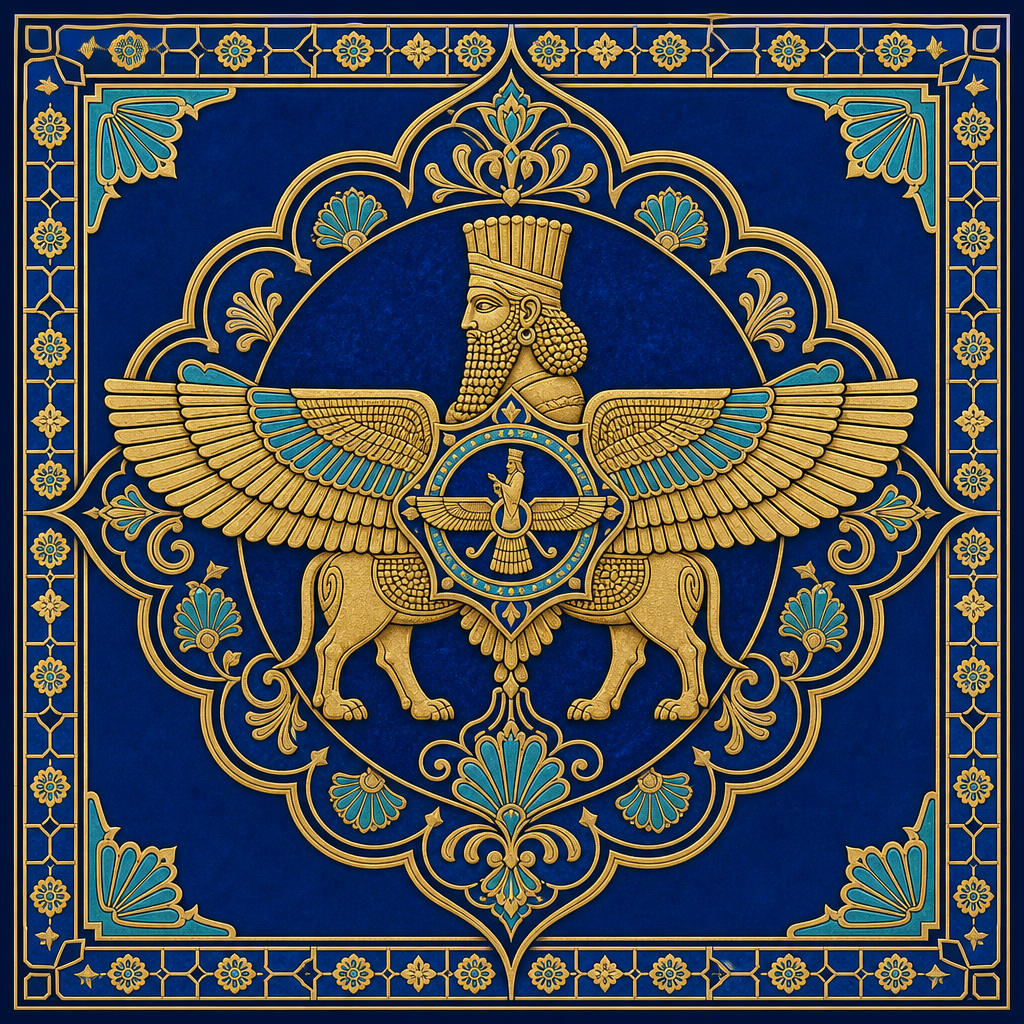
The most widely known symbol is the Faravahar, a winged disc featuring a human figure from the waist up. It is interpreted in various ways but generally represents the Fravashi (guardian spirit), divine guidance, and the human soul's journey through life, embodying the core principles of the faith.
How many Zoroastrians are there today?
Due to centuries of persecution, migration, and low birth rates, the global Zoroastrian population is quite small, estimated to be between 100,000 and 200,000 people. The largest communities are in India (the Parsis), Iran, and diaspora populations in North America and the United Kingdom.