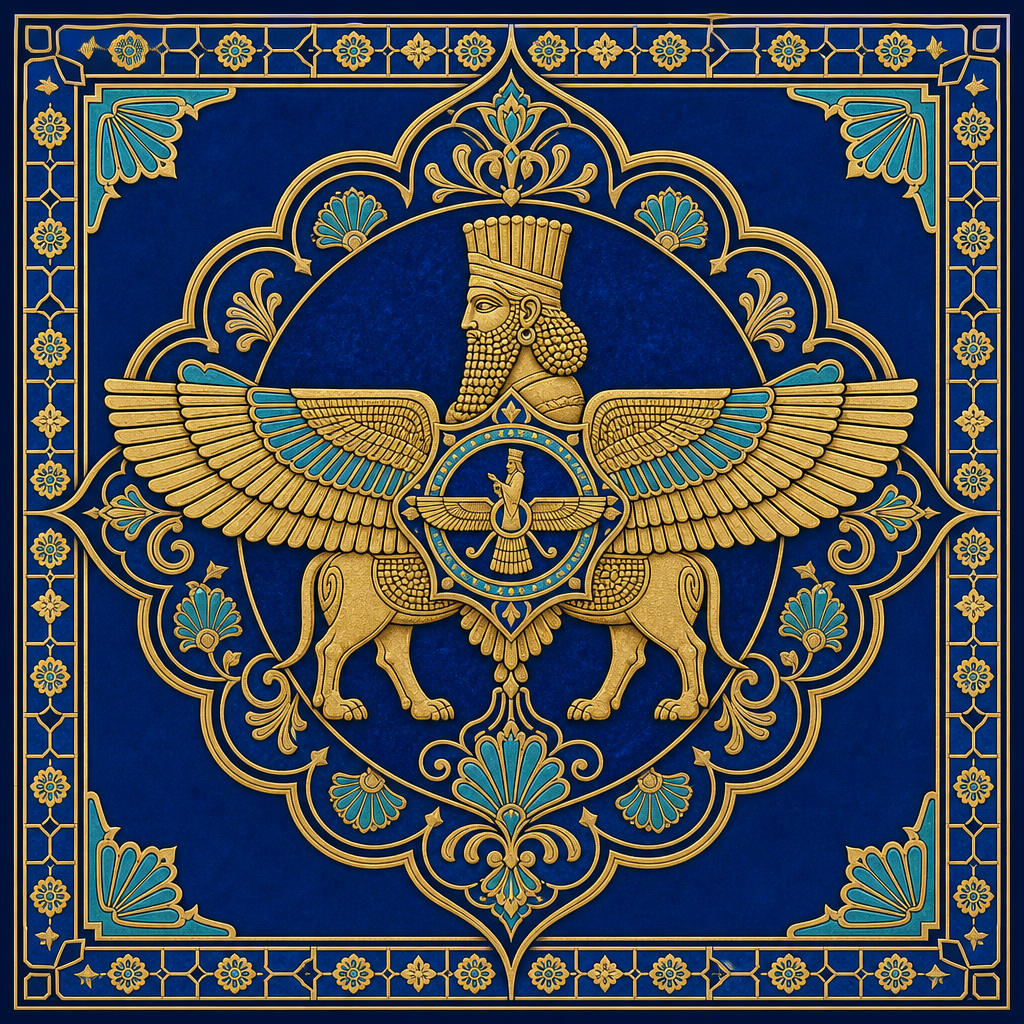

Zoroastrianism
The prophet Zarathustra preached on the Iranian plateau more than 3,000 years ago. His vision of one creator god, cosmic moral choice and a final judgement reshaped every Abrahamic faith that followed.
One god, one cosmic choice
Zarathustra (Greek: Zoroaster) lived somewhere on the Iranian plateau in the late second millennium BCE. Against a pantheon of warring deities he proclaimed Ahura Mazda — the "Wise Lord" — as the sole uncreated creator of all that is good. The world, Zarathustra taught, is the stage of a cosmic struggle between Asha (truth, order) and Druj (the lie); every human being is born free and bound to choose between them.
"Hear with your ears the highest truths; consider them with illumined mind. Let each one choose his creed with the freedom of choice each must have on great occasions."
From this premise unfold the world's first articulated doctrines of heaven and hell, of personal moral responsibility, of bodily resurrection, of a saviour (Saoshyant) born of a virgin at the end of time, and of a final renewal (frashokereti) in which evil is annihilated and the cosmos is made perfect.
Good thoughts, good words, good deeds
Humata
Good thoughts — purity of mind
Hukhta
Good words — truthful speech
Hvarshta
Good deeds — ethical action
Asha
Truth, cosmic order and righteousness
Vohu Manah
The Good Mind — illumination
Khshathra
Just sovereignty / divine power
From state religion to small minority
| Period | Status | Notes |
|---|---|---|
| c. 1500–1000 BCE | Prophetic age | Zarathustra composes the Gathas |
| 550–330 BCE | Achaemenid empire | State religion of Cyrus and Darius; tolerant of other faiths |
| 224–651 CE | Sasanian empire | Codified canon, the Avesta written down, fire temples across the empire |
| 7th–10th c. | Arab conquest | Gradual conversion; many flee to Gujarat (the Parsis) |
| Today | 100k–200k worldwide | Yazd and Kerman in Iran; Mumbai in India; growing diasporas |
What the world borrowed from Zarathustra
When Cyrus the Great freed the Jewish exiles from Babylon in 539 BCE, Jewish thought absorbed a Zoroastrian vocabulary that had no Hebrew precedent: an adversary called Satan, ranks of angels, the end-of-days saviour, the resurrection of the body, the final judgement and the new creation. These ideas travelled forward into Christianity and Islam.
The Magi who, in the Gospel of Matthew, follow a star to Bethlehem are Zoroastrian priests. The word "paradise" is Old Persian — pairi-daēza, the walled royal park. Even Nietzsche placed his prophet's voice in the mouth of Also sprach Zarathustra.


The Avestan canon, book by book
The Avesta that survives is a fragment — perhaps a quarter — of the corpus the Sasanian priesthood held in the 6th century. What remains falls into five clearly distinguished bodies of text, each with its own language layer, ritual use and date of composition.
| Text | Language layer | Content | Approx. date |
|---|---|---|---|
| Gathas | Old Avestan | 17 hymns attributed to Zarathustra himself | c. 1500–1000 BCE |
| Yasna Haptanghaiti | Old Avestan | Seven-chapter prose liturgy of the sacrifice | c. 1200 BCE |
| Yashts | Young Avestan | 21 hymns to individual yazatas (Mithra, Anahita, Tishtrya) | c. 900–500 BCE |
| Vendidad | Young Avestan | Purity law, medicine, the myth of Yima | c. 500 BCE – 200 CE |
| Khordeh Avesta | Young Avestan / Pazand | The lay prayer book still used daily | Sasanian, compiled 9th c. CE |
Alongside these sit the Pahlavi books — the Bundahishn, Denkard and Zadspram — written in Middle Persian in the 9th and 10th centuries CE, after the Arab conquest, by priests trying to fix in writing what had been an oral tradition for two millennia.
The six Gahambars and the festival year
Zoroastrian time is structured by seven obligatory feasts: six seasonal Gahambars marking the stages of creation, and Nowruz, which stands for the seventh and final creation, humanity.
| Festival | Season | Creation celebrated |
|---|---|---|
| Maidyozarem | Mid-spring | Sky |
| Maidyoshahem | Midsummer | Water |
| Paitishahem | Harvest | Earth |
| Ayathrem | Return of the herds | Plants |
| Maidyarem | Midwinter | Cattle |
| Hamaspathmaedaya | Eve of Nowruz | Humanity and the fravashis |
| Nowruz (Rapithwin) | Spring equinox | Fire and the renewal of the world |
Sadeh, fifty days before Nowruz, and Mehregan, the autumn feast of Mithra, are not Gahambars but remain the most widely observed Zoroastrian festivals in Iran outside Nowruz itself.
Where Zoroastrians live now
Fewer than 130,000 Zoroastrians are thought to remain worldwide, making it one of the smallest of the world's ancient religions — and one facing a documented demographic decline, with the Parsi population of India halving between 1941 and 2011.
| Country | Estimate | Notes |
|---|---|---|
| India (Parsis and Iranis) | ~57,000 | 2011 census; concentrated in Mumbai and Gujarat |
| Iran | ~25,000 | Yazd, Kerman and Tehran; a reserved seat in parliament |
| North America | ~20,000 | Toronto, Los Angeles, New York, Houston |
| United Kingdom | ~5,000 | Largely Parsi, from the 19th-century mercantile migration |
| Australia, Gulf states, elsewhere | ~10,000 | Recent professional migration |
Zoroastrian survivals
From the Yazd fire temples that have burned for centuries to the Faravahar on the cliffs of Persepolis.

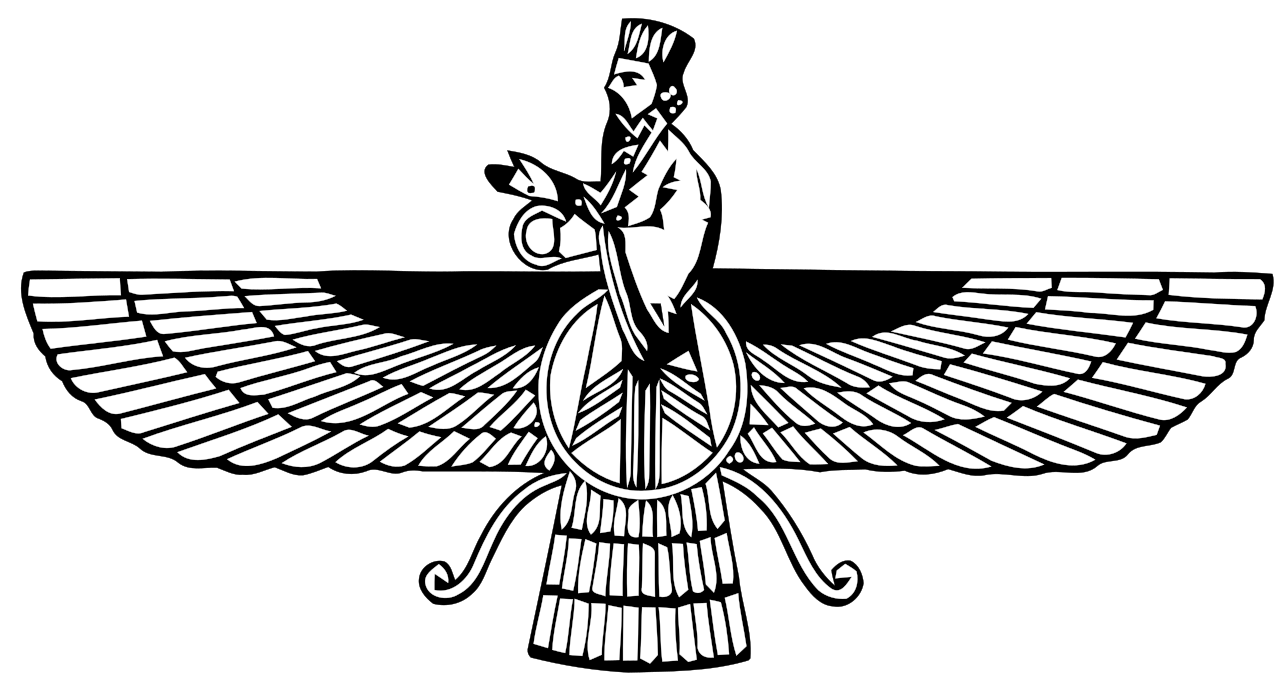


Photographs and museum plates reproduced from Wikimedia Commons and public-domain collections.
Tolerance, Law and the Freed Exile: How Persia Ruled Differently
Persian kings were Mazda-worshippers who never required anyone else to be. The empire's official documents invoke Ahura Mazda; its provincial subsidies paid for Marduk in Babylon, Yahweh in Jerusalem, Neith in Sais, Apollo at Magnesia and the Egyptian priest-scribes at the House of Life. Toleration here was not neglect — it was budgeted, staffed and enforced from the centre.
The evidence is not Persian propaganda alone. The Hebrew Bible, written by the beneficiaries and not by the court, calls Cyrus 'the Lord's anointed' — the only foreign king so named. The Babylonian priesthood, whose own city had just been taken, welcomed him in its temple chronicle. Greek writers who fought Persia, from Xenophon to Aeschylus, still portrayed its kings as bound by justice. Independent, sometimes hostile, sources converge.
| Practice | Assyria / Babylonia | Athens & Rome | Achaemenid Persia |
|---|---|---|---|
| Conquered populations | Mass deportation as standard policy; whole communities resettled to break identity | Cities razed and populations sold — Melos 416 BCE, Carthage 146 BCE, Jerusalem 70 CE | Repatriation of earlier deportees; peoples returned to ancestral lands (Cyrus Cylinder, lines 30–34) |
| Local religion | Cult statues carried off to Assur or Babylon as trophies | Roman triumph paraded captured gods; Jewish Temple treasure taken to Rome | Statues returned to their own shrines; temple rebuilding funded from the treasury (Ezra 6:8–10) |
| Language & law | Akkadian imposed as administrative language | Latin and Greek as the language of courts and citizenship | Trilingual inscriptions; Aramaic chancery; Egyptian, Babylonian and Judean law codified locally |
| Labour | War captives as forced labour on state building projects | Chattel slavery central: c. 20,000 in the Laurion mines; up to a third of Italy enslaved | Paid kurtaš workforce on rations; no large slave-worked estates recorded in the Persepolis archive |
| Women's standing | Property rights limited and largely dynastic | Athenian women legally minors under a male guardian for life | Women hold estates, run workshops, receive maternity rations, seal their own administrative orders |
| Rulers' self-presentation | Reliefs of flayings, impalements and heaped heads | Triumphs displaying chained captives | Bisotun and Persepolis show subject nations carrying the throne, in their own dress, unbound |
Two details are worth pausing on, because they are documentary rather than literary. The first is the Persepolis Fortification Archive, discovered in 1933 and comprising tens of thousands of Elamite and Aramaic tablets recording rations paid out between 509 and 493 BCE. It is an accounting record — nobody wrote it to be admired — and it shows women drawing wine and grain in their own names, mothers receiving a bonus ration after childbirth, and skilled female supervisors paid more than unskilled men. The second is the Elephantine papyri from a Judean garrison in Upper Egypt, whose soldiers wrote to the Persian satrap for permission to rebuild their temple and got it.
539 BCE
Babylon taken without a sack; the Cyrus Cylinder records the return of gods and peoples to their own cities.
538 BCE
Judean exiles permitted to return to Jerusalem; the Second Temple is completed in 516 BCE with Persian funding.
c. 518 BCE
Darius I commissions the codification of Egyptian law, in Egyptian and Aramaic, by Egyptian priests.
30,000+ tablets
The Persepolis Fortification Archive: a paid, rationed workforce — women included — not a slave register.
None of this makes the Achaemenid Empire a modern democracy. It was a monarchy that taxed hard, punished rebellion severely — Bisotun says so plainly — and knew household servitude and war captivity. Honest history does not need the myth. What it does show is that a large multi-ethnic state could be run, deliberately and for two centuries, on the principle that subject peoples keep their gods, their courts, their language and their homes. That principle was a choice, and other empires of the same centuries chose otherwise.
- Cyrus Cylinder (British Museum, BM 90920): the returned cult statues and the rebuilt sanctuaries of Ashur, Susa, Akkad and the cities of the Zagros.
- Ezra 6:8–10: Darius orders the cost of the Jerusalem Temple paid from the royal revenue of Beyond-the-River, with animals supplied for sacrifice.
- Isaiah 45:1: Cyrus called 'anointed' — the sole non-Jewish figure given that title in the Hebrew Bible.
- The Udjahorresnet inscription: Cambyses and Darius restore the temple of Neith at Sais and re-endow its priesthood after wartime damage.
- Elephantine papyri (5th century BCE): a Judean garrison in Egypt petitions the satrap Bagavahya and receives authorisation to rebuild its temple.
- Irdabama and Artystone: royal women with their own estates, seals, workshops and letter-carriers in the Persepolis tablets.
- Bisotun and the Apadana reliefs: twenty-three subject nations depicted upright, armed, in their own national dress — not chained, not kneeling.
Read alongside the Cyrus Cylinder, the Persepolis archive and the Judean and Egyptian documents, the conclusion is narrow but firm: not all empires were the same, and the difference was visible to the people who lived under them.
Frequently asked questions
Related reading
Zoroastrianism, Mithraism, Manichaeism, Sufism, Bahá'í — historical heritage.
From Elam and the Medes to the modern era — a continuous 5,000-year story.
Achaemenid, Parthian, Sassanid, Safavid, Qajar — six successive Iranian empires.
Spring equinox, Haft-Sin, Chaharshanbe Suri and Sizdah Bedar — Iran's 3,000-year-old UNESCO new year.
Iran's winter-solstice festival — pomegranate, watermelon and Hafez on the longest night of the year. UNESCO 2022.
How Persia shaped the modern world — quotes from Hegel, Nietzsche, Goethe.
References
- ↗ Encyclopædia Iranica — Zoroastrianism
- ↗ Mary Boyce — Zoroastrians: Their Religious Beliefs and Practices
- ↗ UNESCO — Yazd Zoroastrian sites in the Historic City
All imagery is sourced from Wikimedia Commons, public-domain museum collections (British Museum, Louvre, Metropolitan Museum of Art, National Museum of Iran), or UNESCO World Heritage records. No AI-generated images are used. Scholarly text is synthesized from Encyclopædia Iranica, the Cambridge History of Iran, and peer-reviewed publications.