The Rebel Angel: Forough Farrokhzad and the Voice of Modern Persian Poetry
An In-Depth Look at the Life, Work, and Enduring Legacy of Iran's Most Influential Modernist Poet
This article explores the revolutionary life and work of Forough Farrokhzad, the celebrated Iranian poet and filmmaker. It traces her artistic evolution from controversial confessional verse to profound existential masterpieces, examining her impact on Persian literature and her status as a feminist icon.
Key takeaways
- Forough Farrokhzad's poetry evolved from personal confessions in *The Captive* (1955) to universal, existential themes in *Another Birth* (1964).
- She was a key figure in the *She'r-e Now* (New Poetry) movement, breaking from classical Persian forms and incorporating colloquial language.
- Her influential documentary, *The House is Black* (1962), set in a leper colony, is a landmark of Iranian cinema and the film-poem genre.
- Farrokhzad's work was highly controversial, challenging patriarchal norms by giving a public voice to female desire, frustration, and intellect.
- Despite her untimely death at 32, she is one of the most influential and widely translated Persian poets of the 20th century.
- Her final collection, *Let Us Believe in the Beginning of the Cold Season*, was published posthumously and is considered a masterpiece of modern literature.
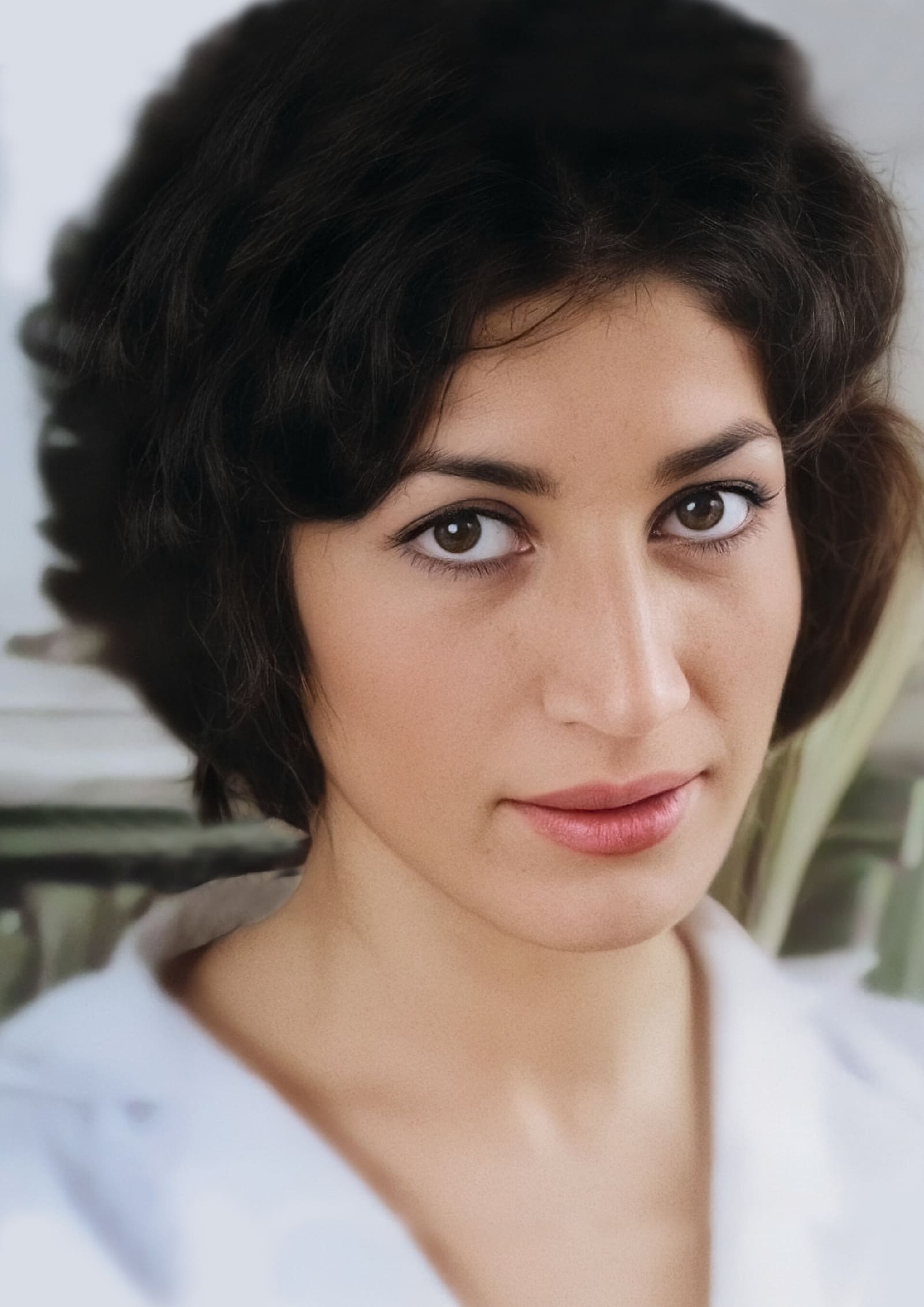
Forough Farrokhzad was a pioneering Iranian poet and filmmaker whose brief but brilliant career fundamentally reshaped modern Persian literature. Her work, characterized by its formal innovation, intimate voice, and fearless confrontation of social and existential themes, broke centuries-old conventions and established her as the most significant female writer in modern Iranian history. More than just a poet, Farrokhzad became a cultural icon, a symbol of rebellion and artistic integrity whose influence transcends both genre and generation. Her verse gave public expression to the private world of the modern Iranian woman, articulating a subjectivity that had long been silenced in the public sphere. Her life and work represent a watershed moment, marking the arrival of a distinctly female, modernist consciousness in Persian poetry.
From 'The Captive' to 'Rebellion': A Poet's Awakening
Born in Tehran in 1934 to a career military officer and a traditional homemaker, Forough-Zaman Farrokhzad grew up in a household of seven children, defined by her father's strict, patriarchal authority. Her rebellious spirit emerged early, chafing against the restrictive social norms imposed on women. In 1950, at just sixteen, she entered an impulsive marriage with Parviz Shapour, a prominent satirist fifteen years her senior. A year later, she gave birth to her only son, Kamyar. The marriage, however, was fraught with conflict between her burgeoning artistic ambitions and the expectations of domestic life. This tension became the raw material for her first collection of poetry, *Asir* (*The Captive*), published in 1955. The book was a literary scandal. In poems written with startling candor, Farrokhzad articulated female desire, marital frustration, and a yearning for self-expression. As scholar Farzaneh Milani notes, she 'violated a long-established decorum' by speaking of love and sensuality from a woman's perspective, using the 'I' to claim her own emotional and physical experiences.
Her divorce from Shapour in 1954 resulted in her losing custody of her son, a profound and recurring wound that would echo throughout her work. The pain of this separation, combined with the societal condemnation she faced as a divorcée and a 'scandalous' poet, fueled her next two collections, *Divar* (*The Wall*, 1956) and *Esian* (*Rebellion*, 1958). These volumes chart a course from the personal sorrow of *The Captive* to a more cosmic and defiant stance. In *Rebellion*, she confronts God and the patriarchal order directly, embracing the label of 'sinner' as a badge of honor and an assertion of her own moral agency. While still working largely within established poetic forms, her voice grew stronger, more declamatory, and more determined to dismantle the walls—both literal and metaphorical—that confined her.
The Modernist Masterpiece: 'Another Birth'
A nine-month trip to Europe in 1958 marked a critical turning point in Farrokhzad's life and art. Exposed to European poetry, film, and art, her perspective broadened dramatically. She returned to Iran with a renewed artistic vision, which found its ultimate expression in her fourth and most celebrated collection, *Tavallodi Digar* (*Another Birth*), published in 1964. This collection represents a quantum leap from her earlier work in both form and content. The intensely personal, often reactive, voice of the first three books matured into a profound, universal, and philosophical consciousness. She abandoned the confessional 'I' for a more expansive poetic persona capable of contemplating love, death, time, and the act of creation itself.
A New Poetic Language
In *Another Birth*, Farrokhzad fully masters the techniques of *She'r-e Now* (New Poetry), the modernist movement initiated by Nima Yushij. She breaks free from the constraints of classical meter and rhyme, crafting a fluid, organic free verse that mirrors the rhythms of natural speech. Her language becomes a potent mix of literary grace and colloquial grit. She places mundane, everyday objects—a geranium, a window, a streetlight—at the center of her poems, charging them with immense symbolic weight. In the title poem, 'Another Birth,' she writes, 'My whole being is a dark verse / that will carry you, repeating you, / to the dawn of eternal growing and blossoming.' Here, the self is no longer a captive but a creative force, a vessel of poetic becoming. This collection cemented her reputation as a major modernist poet, not just in Iran but on the world stage.
| Collection Title (English/Persian) | Year | Key Themes | Dominant Style & Form |
|---|---|---|---|
| *The Captive* (Asir) | 1955 | Confinement, marital frustration, female desire, sorrow | Lyrical, confessional; primarily uses modified classical forms like the ghazal |
| *The Wall* (Divar) | 1956 | Loneliness, societal pressure, forbidden love, sin | Continued confessionalism; further experimentation with form and rhythm |
| *Rebellion* (Esian) | 1958 | Defiance against God and patriarchy, embracing sin, existential anger | Prophetic, declamatory, rhetorical; challenging religious and social norms |
| *Another Birth* (Tavallodi Digar) | 1964 | Creation, universal love, decay, time, self-realization, nature | Mature modernist free verse; complex symbolism, objective and universal voice |
| *Let Us Believe in the Beginning of the Cold Season* (Iman Biavarim be Aghaz-e Fasl-e Sard) | 1974 | Premonition of death, isolation, decay of relationships, existential coldness | Stark, symbolic, highly polished; a fusion of personal and universal despair |
The Filmmaker's Gaze: 'The House is Black'
Parallel to her poetic evolution, Farrokhzad embarked on a career in film. In 1958, she began working at Golestan Film Studio, run by the influential writer and director Ebrahim Golestan, who would become her mentor and partner. After working on several film projects as an editor and assistant, she was given the opportunity to direct her own film. The result was the 22-minute documentary *Khaneh Siah Ast* (*The House is Black*, 1962), a work that stands as a landmark of Iranian cinema and the 'film-poem' genre.

Filmed at the Behkadeh Raji leper colony near Tabriz, the film is a devastatingly compassionate portrait of a community ostracized by society. Farrokhzad rejected a purely observational or sentimental approach. Instead, she juxtaposed unsparing, vérité images of the residents' daily lives—eating, learning, praying—with a lyrical voiceover. This narration, read by Farrokhzad herself, weaves together scientific explanations of leprosy with verses from the Old Testament, the Quran, and her own poetry. The film's closing line, which inspired her final collection's title, is a haunting plea for empathy: 'For this black misery... I have cried. I have cried.' By titling her film 'The House is Black,' she suggests that the ugliness and suffering on screen is a metaphor for a wider human condition of spiritual and social sickness. The film won the Grand Prize at the 1963 Oberhausen Film Festival and announced Farrokhzad as a major cinematic talent.
The film pioneered a hybrid 'film-poem' style, blending stark documentary realism with a highly subjective and lyrical poetic narration, a technique that would influence the Iranian New Wave.
It won the prestigious Grand Prize for Documentary at the 1963 Oberhausen International Short Film Festival in West Germany, bringing international attention to both Farrokhzad and Iranian cinema.
During the filming, Farrokhzad grew attached to and later informally adopted a boy from the colony, Hossein Mansouri, integrating her art and life.
While its subject is a specific community, the film's themes of suffering, faith, and the search for beauty amidst ugliness are universal, making it a timeless work of art.
An Untimely Death and Enduring Legacy
On February 13, 1967, while at the zenith of her creative powers, Forough Farrokhzad died in a car accident in Tehran. She was only 32 years old. Her death sent shockwaves through Iran's literary community and cemented her status as a legendary, almost mythical figure. The poems she had been working on were collected and published posthumously in 1974 under the title *Iman Biavarim be Aghaz-e Fasl-e Sard* (*Let Us Believe in the Beginning of the Cold Season*). This final, slender volume is considered by many critics to be her crowning achievement—a work of chilling beauty and profound existential despair, suffused with premonitions of her own death. In its title poem, she writes, 'And this is I / a woman alone / at the threshold of a cold season.'
Decades after her death, Farrokhzad's influence remains immense and continues to grow. She is a foundational figure for subsequent generations of Iranian writers, particularly women, who see her as the foremother who broke down the door for them. Her work has been translated into numerous languages, earning her a global readership. She is not merely studied as a poet but revered as a cultural hero who lived and died for her art, refusing to compromise her vision. Her legacy lies in her five books of poetry and one film, but also in the powerful idea she embodied: that a woman's voice—in all its complexity, anger, desire, and intelligence—deserves to be heard.
Forough-Zaman Farrokhzad is born in Tehran on January 5.
Post-Revolutionary Censorship and Cultural Sanctification
Following the 1979 Islamic Revolution, Farrokhzad's poetry faced official suppression due to its sensual candor and assertion of female autonomy. For more than a decade, public distribution of her early collections was halted or heavily expurgated. Rather than muting her influence, censorship catalyzed an underground resurgence. Pirated editions, clandestine photocopies, and bootleg cassette tapes of Farrokhzad reading her verse circulated among university students and literary circles, transforming her into an enduring emblem of intellectual resistance and individual freedom.
By the late 1990s, cultural thaws enabled commercial reissues that quickly became bestsellers in Iran, while international literary translation brought her work to wider global audiences through acclaimed editions by scholars and poets such as Sholeh Wolpé and Farzaneh Milani. Her resting place in Tehran's Zahir-od-Dowleh cemetery has become an enduring site of literary pilgrimage, reflecting how her poetic modernism and courageous self-determination continue to inspire successive generations across the Iranian diaspora and the wider literary world.
References
- Farrokhzad, Forugh-Zaman - Encyclopaedia Iranica
- Hillmann, Michael C. 'A Lonely Woman: Forough Farrokhzad and Her Poetry.' Mage Publishers, 1987.
- Farrokhzad, Forough. 'Sin: Selected Poems.' Translated by Sholeh Wolpé, University of Arkansas Press, 2007.
- Milani, Farzaneh. 'Forough Farrokhzad.' World Literature Today, vol. 61, no. 4, 1987, pp. 568–72.
- 'The House Is Black.' The Criterion Collection.
- Jahed, Parviz. 'The House Is Black: a masterpiece by Forough Farrokhzad.' British Film Institute (BFI), 2020.
Frequently asked questions
Why is Forough Farrokhzad so important?
Forough Farrokhzad is crucial for her dual revolution. In literature, she modernized Persian poetry by infusing it with a bold, personal, and feminine voice. Socially, she courageously articulated the inner world of the modern Iranian woman, challenging taboos around female desire, intellect, and autonomy, making her an enduring feminist icon.
What are Forough Farrokhzad's most famous poems?
Her most celebrated poems include 'Another Birth,' 'The Wind Will Take Us,' 'I Pity the Garden,' and the title poem from her posthumous collection, 'Let Us Believe in the Beginning of the Cold Season.' These works are renowned for their profound existential themes, innovative free verse, and powerful, evocative imagery.
What was the controversy surrounding Forough Farrokhzad?
The controversy stemmed from her early poetry, which openly discussed female desire, sensuality, and discontent with traditional marriage and societal roles. In the conservative climate of 1950s Iran, such frankness from a female voice was unprecedented and deemed scandalous, drawing condemnation from traditionalists while being championed by modernists.
What is 'The House is Black' about?
Her 1962 film, *The House is Black* (Khaneh Siah Ast), is a short documentary about the Behkadeh Raji leper colony in northwestern Iran. It is a deeply compassionate work that blends cinéma vérité footage with poetic narration from the Quran, the Old Testament, and her own poetry to create a profound meditation on suffering, faith, and humanity.
How did Forough Farrokhzad die?
Forough Farrokhzad died tragically in a car accident on February 13, 1967, at the age of 32. She swerved to avoid an oncoming school bus, was thrown from her Jeep, and sustained a fatal head injury. Her premature death cut short a brilliant career at its creative peak.
What was her relationship with Nima Yushij?
Forough Farrokhzad never met Nima Yushij, the 'father of modern Persian poetry,' but she is his most significant spiritual and artistic successor. While Nima pioneered the break from classical poetic forms, Farrokhzad took his innovations and imbued them with a potent, colloquial, and deeply personal lyricism that was entirely her own.
Who was Ebrahim Golestan?
Ebrahim Golestan was a prominent Iranian intellectual, writer, and filmmaker who became Farrokhzad's artistic mentor and romantic partner. She worked at his Golestan Film Studio, where she honed her filmmaking skills and directed *The House is Black*. Their intense intellectual relationship was a major catalyst for her mature artistic work.