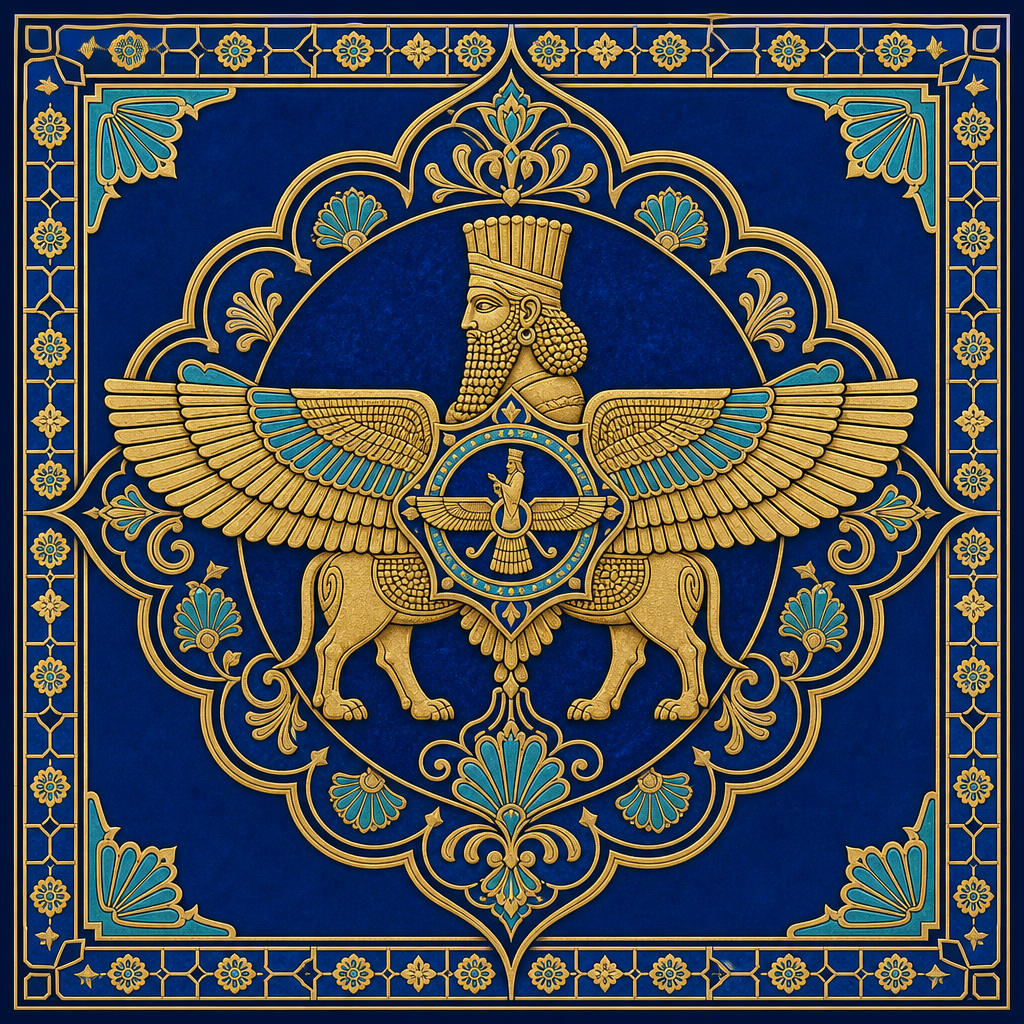

Persian Empire Timeline
Persia was never one empire but a sequence of them. This is the dated chronology — Median, Achaemenid, Seleucid, Parthian, Sassanid, and the Islamic-era Iranian states through to the Qajars — with every ruler in order, the battles that changed the map, and the extent of each realm.
What is the timeline of the Persian Empire?
Persian imperial history runs in a chain: Median (c. 678–550 BCE) → Achaemenid (550–330 BCE) → Seleucid (312–247 BCE) → Parthian (247 BCE–224 CE) → Sassanid (224–651 CE) → Islamic-era Iranian dynasties → Safavid (1501–1736) → Afsharid and Zand (1736–1789) → Qajar (1789–1925) → Pahlavi (1925–1979). The classical "Persian Empire" of Greek historians is the Achaemenid state founded by Cyrus the Great.
The nine Persian dynasties in order
| Dynasty | Dates | Capital(s) | Founder | Ended by |
|---|---|---|---|---|
| Median | c. 678–550 BCE | Ecbatana (Hamadan) | Deioces / Cyaxares | Conquest by Cyrus the Great |
| Achaemenid | 550–330 BCE | Pasargadae, Persepolis, Susa, Babylon | Cyrus the Great | Alexander of Macedon |
| Seleucid (Hellenistic) | 312–247 BCE in Iran | Seleucia, Antioch | Seleucus I Nicator | Parthian revolt of Arsaces |
| Parthian (Arsacid) | 247 BCE–224 CE | Nisa, Ctesiphon | Arsaces I | Ardashir I of Persis |
| Sassanid | 224–651 CE | Ctesiphon | Ardashir I | Arab conquest / Rashidun Caliphate |
| Iranian Islamic dynasties | 821–1501 CE | Bukhara, Shiraz, Tabriz, Herat | Tahirid, Samanid, Buyid, Timurid lines | Safavid unification |
| Safavid | 1501–1736 | Tabriz, Qazvin, Isfahan | Shah Ismail I | Afghan invasion of 1722 |
| Afsharid & Zand | 1736–1789 | Mashhad, Shiraz | Nader Shah / Karim Khan Zand | Qajar conquest |
| Qajar | 1789–1925 | Tehran | Agha Mohammad Khan | Pahlavi coup and 1925 Majlis vote |
Kings of the Persian Empire in order (550–330 BCE)
| King | Reign | Defining act |
|---|---|---|
| Cyrus the Great | 559–530 BCE | Defeats Media, Lydia and Babylon; issues the Cyrus Cylinder; frees the Jewish exiles |
| Cambyses II | 530–522 BCE | Conquers Egypt at Pelusium (525 BCE); dies on the return march |
| Darius I | 522–486 BCE | Bisotun inscription, satrapy reform, the Royal Road, Persepolis begun; loses Marathon (490) |
| Xerxes I | 486–465 BCE | Invades Greece — Thermopylae and Salamis (480); completes the Gate of All Nations |
| Artaxerxes I | 465–424 BCE | Peace of Callias with Athens; Ezra and Nehemiah sent to Jerusalem |
| Darius II | 423–404 BCE | Backs Sparta in the Peloponnesian War; Egypt begins to slip |
| Artaxerxes II | 404–358 BCE | Defeats his brother Cyrus the Younger at Cunaxa (401); King's Peace of 387 |
| Artaxerxes III | 358–338 BCE | Reconquers Egypt (343 BCE); restores central authority by force |
| Arses (Artaxerxes IV) | 338–336 BCE | Puppet of the vizier Bagoas; poisoned |
| Darius III | 336–330 BCE | Loses Granicus, Issus and Gaugamela; killed by the satrap Bessus |
The battles and treaties that moved the map
| Year | Event | Consequence |
|---|---|---|
| 550 BCE | Cyrus defeats Astyages at Pasargadae | Median kingdom absorbed; the Achaemenid Empire founded |
| 547 BCE | Fall of Lydia and Sardis | Persia reaches the Aegean and inherits coinage |
| 539 BCE | Fall of Babylon | Mesopotamia and the Levant added; Cyrus Cylinder issued |
| 525 BCE | Battle of Pelusium | Egypt becomes the 27th dynasty under Persian rule |
| 490 BCE | Marathon | First Persian invasion of Greece checked |
| 480 BCE | Thermopylae and Salamis | Second invasion halted; Greek naval supremacy established |
| 331 BCE | Gaugamela | Achaemenid field army destroyed |
| 330 BCE | Burning of Persepolis | End of the Achaemenid Empire |
| 53 BCE | Carrhae | Parthians annihilate Crassus; Rome's eastward expansion stopped |
| 260 CE | Edessa | Shapur I captures the Roman emperor Valerian |
| 636–642 CE | Qadisiyyah and Nahavand | Sassanid collapse; Arab conquest of Iran |
| 1501 CE | Ismail I crowned at Tabriz | Safavid state re-founds a unified Iran and adopts Shi'ism |
| 1925 CE | Majlis deposes the Qajars | End of the last Iranian dynasty of imperial descent |
How big was the Persian Empire?
| Empire | Peak year | Area | Population | Reach |
|---|---|---|---|---|
| Achaemenid | c. 500 BCE | ~5.5 million km² | ~44 million | Indus to the Aegean, Caucasus to Nubia |
| Parthian | c. 1 CE | ~2.8 million km² | ~7 million | Euphrates to the Hindu Kush |
| Sassanid | c. 620 CE | ~3.5 million km² | ~20 million | Egypt and Anatolia briefly, to Central Asia |
| Safavid | c. 1600 CE | ~2.9 million km² | ~8 million | Caucasus and Mesopotamia to Khorasan |
The Achaemenid figure of roughly 44 million subjects is the reason historians call it the first world empire: no later state has ruled so large a share of living humanity. The administrative machinery that made it possible — twenty satrapies, a standardised silver coinage, the 2,500-kilometre Royal Road and a relay post that crossed it in a week — is the empire's more durable legacy than its borders.
Tolerance, Law and the Freed Exile: How Persia Ruled Differently
It is often said that all empires behaved alike — that conquest everywhere meant massacre, enslavement, forced religion and erased languages. The Achaemenid record contradicts that generalisation in writing. Between 550 and 330 BCE the Persian kings governed perhaps forty peoples across three continents, and the documents they left behind — the Cyrus Cylinder, the trilingual rock inscriptions, the Egyptian and Judean archives, thirty thousand administrative tablets from Persepolis — describe repatriation instead of deportation, subsidised local temples instead of imposed cults, and a paid workforce instead of a chattel-slave economy.
The evidence is not Persian propaganda alone. The Hebrew Bible, written by the beneficiaries and not by the court, calls Cyrus 'the Lord's anointed' — the only foreign king so named. The Babylonian priesthood, whose own city had just been taken, welcomed him in its temple chronicle. Greek writers who fought Persia, from Xenophon to Aeschylus, still portrayed its kings as bound by justice. Independent, sometimes hostile, sources converge.
| Practice | Assyria / Babylonia | Athens & Rome | Achaemenid Persia |
|---|---|---|---|
| Conquered populations | Mass deportation as standard policy; whole communities resettled to break identity | Cities razed and populations sold — Melos 416 BCE, Carthage 146 BCE, Jerusalem 70 CE | Repatriation of earlier deportees; peoples returned to ancestral lands (Cyrus Cylinder, lines 30–34) |
| Local religion | Cult statues carried off to Assur or Babylon as trophies | Roman triumph paraded captured gods; Jewish Temple treasure taken to Rome | Statues returned to their own shrines; temple rebuilding funded from the treasury (Ezra 6:8–10) |
| Language & law | Akkadian imposed as administrative language | Latin and Greek as the language of courts and citizenship | Trilingual inscriptions; Aramaic chancery; Egyptian, Babylonian and Judean law codified locally |
| Labour | War captives as forced labour on state building projects | Chattel slavery central: c. 20,000 in the Laurion mines; up to a third of Italy enslaved | Paid kurtaš workforce on rations; no large slave-worked estates recorded in the Persepolis archive |
| Women's standing | Property rights limited and largely dynastic | Athenian women legally minors under a male guardian for life | Women hold estates, run workshops, receive maternity rations, seal their own administrative orders |
| Rulers' self-presentation | Reliefs of flayings, impalements and heaped heads | Triumphs displaying chained captives | Bisotun and Persepolis show subject nations carrying the throne, in their own dress, unbound |
Two details are worth pausing on, because they are documentary rather than literary. The first is the Persepolis Fortification Archive, discovered in 1933 and comprising tens of thousands of Elamite and Aramaic tablets recording rations paid out between 509 and 493 BCE. It is an accounting record — nobody wrote it to be admired — and it shows women drawing wine and grain in their own names, mothers receiving a bonus ration after childbirth, and skilled female supervisors paid more than unskilled men. The second is the Elephantine papyri from a Judean garrison in Upper Egypt, whose soldiers wrote to the Persian satrap for permission to rebuild their temple and got it.
539 BCE
Babylon taken without a sack; the Cyrus Cylinder records the return of gods and peoples to their own cities.
538 BCE
Judean exiles permitted to return to Jerusalem; the Second Temple is completed in 516 BCE with Persian funding.
c. 518 BCE
Darius I commissions the codification of Egyptian law, in Egyptian and Aramaic, by Egyptian priests.
30,000+ tablets
The Persepolis Fortification Archive: a paid, rationed workforce — women included — not a slave register.
None of this makes the Achaemenid Empire a modern democracy. It was a monarchy that taxed hard, punished rebellion severely — Bisotun says so plainly — and knew household servitude and war captivity. Honest history does not need the myth. What it does show is that a large multi-ethnic state could be run, deliberately and for two centuries, on the principle that subject peoples keep their gods, their courts, their language and their homes. That principle was a choice, and other empires of the same centuries chose otherwise.
- Cyrus Cylinder (British Museum, BM 90920): the returned cult statues and the rebuilt sanctuaries of Ashur, Susa, Akkad and the cities of the Zagros.
- Ezra 6:8–10: Darius orders the cost of the Jerusalem Temple paid from the royal revenue of Beyond-the-River, with animals supplied for sacrifice.
- Isaiah 45:1: Cyrus called 'anointed' — the sole non-Jewish figure given that title in the Hebrew Bible.
- The Udjahorresnet inscription: Cambyses and Darius restore the temple of Neith at Sais and re-endow its priesthood after wartime damage.
- Elephantine papyri (5th century BCE): a Judean garrison in Egypt petitions the satrap Bagavahya and receives authorisation to rebuild its temple.
- Irdabama and Artystone: royal women with their own estates, seals, workshops and letter-carriers in the Persepolis tablets.
- Bisotun and the Apadana reliefs: twenty-three subject nations depicted upright, armed, in their own national dress — not chained, not kneeling.
Read alongside the Cyrus Cylinder, the Persepolis archive and the Judean and Egyptian documents, the conclusion is narrow but firm: not all empires were the same, and the difference was visible to the people who lived under them.
Persian Empire timeline — frequently asked questions
Related reading
Achaemenid, Parthian, Sassanid, Safavid, Qajar — six successive Iranian empires.
Vertical interactive timeline of Iran's major dynasties and events.
From Elam and the Medes to the modern era — a continuous 5,000-year story.
Founder of the Achaemenid Empire — conquest of Media, Lydia and Babylon, the Cyrus Cylinder, and the tomb at Pasargadae.
The 539 BCE clay barrel from Babylon — often called the world's first charter of human rights.
First Achaemenid capital and burial place of Cyrus the Great — the world's earliest chahar-bagh garden. UNESCO 2004.