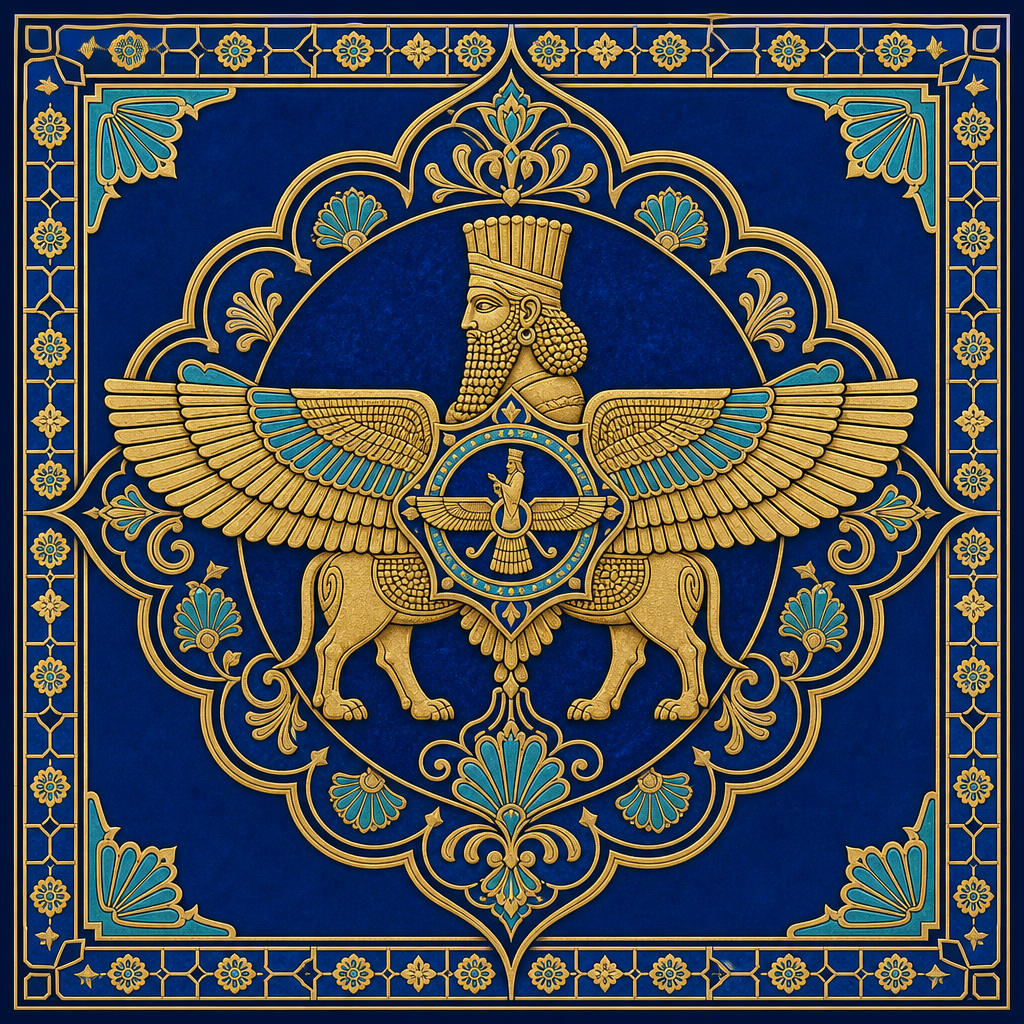
Persian Religion & Philosophy
Iran is the origin point of one of the world's oldest continuously practised religions and the transmission route for several ideas — cosmic dualism, a final judgement, a saviour at the end of time — that reshaped the religions around it.
Read this hub in PersianZoroastrianism, founded by Zarathustra somewhere in the eastern Iranian world in the second millennium BCE, was the state religion of three empires. Under the Achaemenids its ideas met Judaism during the Babylonian exile, and scholars have long traced the vocabulary of angels, apocalypse and resurrection to that encounter.
Later Iranian thought produced Manichaeism, which spread from Rome to China, and a Persian-language Sufism whose greatest writers — Rumi, Attar, Sanai — are read as poetry worldwide.
Quick answers
- What is Zoroastrianism?
- The monotheistic religion taught by Zarathustra, centred on Ahura Mazda, the moral choice between truth (asha) and the lie (druj), and the tending of a sacred fire as a symbol of purity — not an object of worship.
- Do Zoroastrians worship fire?
- No. Fire is a symbol of Ahura Mazda's light and order; prayer is directed towards it, not to it.
- What is Sufism?
- The mystical tradition within Islam concerned with direct experience of the divine; its Persian branch produced Rumi, Attar, Hafez and the Mevlevi and Nimatullahi orders.
- What was Manichaeism?
- A dualist religion founded by Mani in third-century Sassanid Mesopotamia, which spread as far as Roman Gaul and Tang China before being suppressed.
Explore the hub
Faiths of the plateau
Traditions born in or transformed by Iran.
Frequently asked questions
How many Zoroastrians remain?
Roughly 100,000–200,000 worldwide, chiefly the Parsi community of India and communities in Yazd, Kerman and Tehran, plus a substantial diaspora.
Did Zoroastrianism influence Judaism and Christianity?
Most historians of religion accept significant influence on post-exilic Jewish thought — particularly angelology, dualism, resurrection and eschatology — while debating its extent.
What is Mithraism?
The cult of Mithra, an Iranian deity of covenant and light, which in a substantially transformed Roman form became a major mystery religion of the imperial army.
Is Iranian philosophy only religious?
No. The Illuminationist school of Suhrawardi and the metaphysics of Mulla Sadra are systematic philosophy; earlier, Ibn Sina's Aristotelianism shaped medieval Europe.